
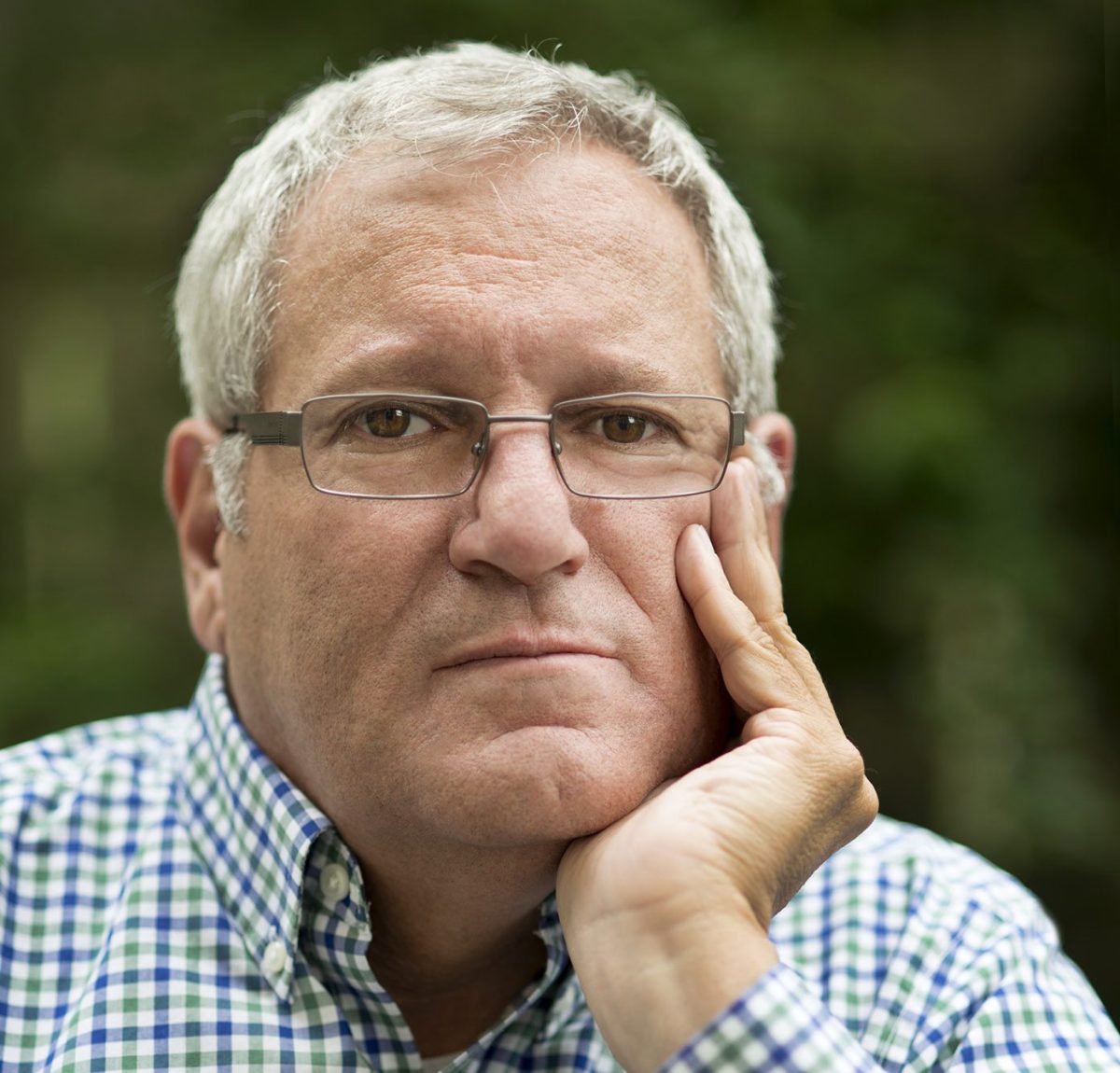
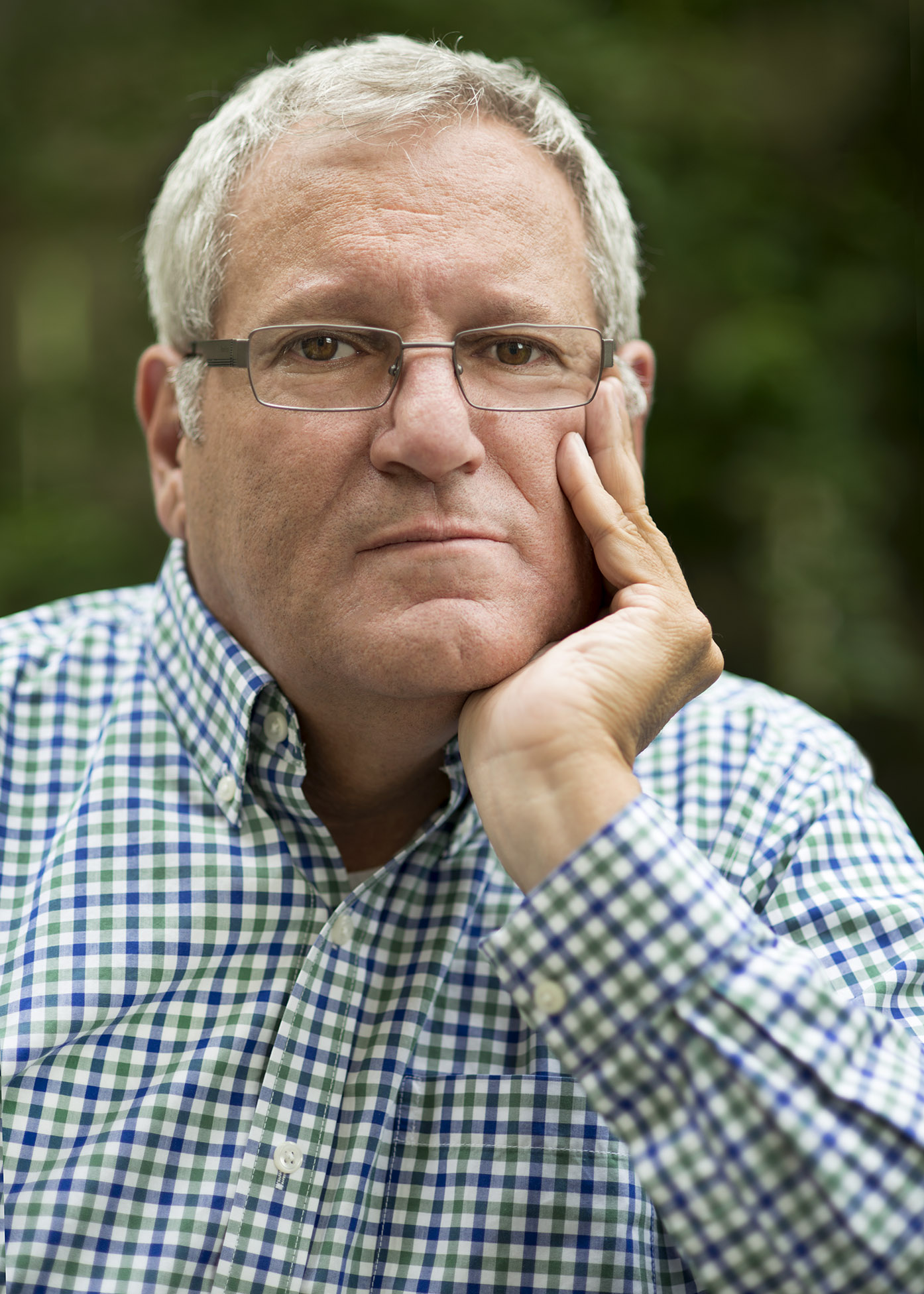
Gary Greco has served over 40 years in the U.S. intelligence community with the Defense Intelligence Agency (DIA) and the Office of the Director of National Intelligence, retiring at the rank of Senior National Intelligence Service. He began his career in the U.S. Army serving in the Republic of Korea and the Federal Republic of Germany. He attended the U.S. Naval War College and was serving in the Pentagon on September 11, 2001.
During his career, Greco provided operational support to Special Operations Forces in Panama, Somalia, Bosnia, Afghanistan, and Iraq. He spent most of his career in counterterrorism and operations support at DIA and served as the Senior Advisor to the Director of the National Counterterrorism Center. Greco currently works in the DIA Office of History.
CTC: You have worked in counterterrorism for more than 40 years, and across that span of time have led key counterterrorism organizations such as the Defense Intelligence Agency’s (DIA) Joint Intelligence Task Force Counterterrorism (JITF-CT) and served in other roles. What led you into the field of terrorism and counterterrorism, and what have been some of the more meaningful and impactful roles you have played in the CT community? As I understand it, you were pulled into the DIA as part of a hiring push after the 1983 Beirut and Marine Barracks bombing in Lebanon.
Greco: I had just served in West Germany, and Europe was rife with terrorist groups. So, I had some background with the threat posed by these groups. As you mentioned, I took a job shortly after the embassy bombings and the Marine Corps barracks bombings. I originally served in DIA’s Office of Security. At the time, the services saw terrorism as a security force protection mission. Fortunately, DIA Directorate of Intelligence staff officers, namely Harry Klein and Louis André—both Vietnam Special Forces guys and Middle East foreign area officers—were tasked to develop an organizational construct that put terrorism as a whole intelligence problem. They organized the office that would be responsible for current intelligence, indications and warning, and targeting out of one singular office.
This was a very unique organizational construct for DIA at the time, and there was great reservation about putting all that responsibility in one place. But Klein and André were very adamant in their plan for the office.
Luckily, they had some powerful backers, especially the then DIA director Lieutenant General Jim Williams, who actually was West Point Class of 1954. To do all that, I think we had less than 15 people. We had a huge span of responsibility. And I quickly fell under the influence of the mercurial and brilliant characters of Klein and André. I still see that period as a hallmark in my career.
CTC: What did you learn most from those individuals?
Greco: I learned a lot about leadership from both of them. They were under a tremendous amount of pressure. They were relatively junior guys, a Major and probably a GS-14 at the time. There were a lot of knives out for them. But what I did learn from them is that if you worked a terrorism issue for any length of time, you have to steel yourself, that you’re going to be wrong a lot, and that there are consequences to your mistakes in the terrorism and counterterrorism business. As a leader, you have to bear those mistakes, and owning them means replacing blame with personal accountability. You have to acknowledge the error and fix it quickly. You have to approach these mistakes with great humility, transparency, and confidence. It was an invaluable lesson that I learned for my own personal, professional growth, but I definitely got it from those guys.
CTC: Can you take us back to the mid- to late 1990s? What did the U.S. counterterrorism community look like during that period? And when you reflect on that time, what stands out to you the most?
Greco: We were still deep in Hezbollah and Palestinian groups, like the PFLP-GC [Popular Front for the Liberation of Palestine – General Command], and Iranian state sponsorship. Europe and Latin America groups had kind of fallen away because they had lost their financial benefactor from the Soviet Union and other Warsaw Pact countries. We were beginning to put together a threat picture posed by this weird mix of Egyptian groups and a grab bag of jihadists that were returning home after seeking jihad in various places. They were followers of that iconic figure and theologian Abdullah Azzam. I kind of referred to them as a jihadist movement. I didn’t look at them as al-Qa`ida at the time. That came a couple of years later. These jihadists were even in New York City. There was this array of returning jihad veterans that had landed in northern New Jersey and New York. They were getting involved in fraud scams and low-level crime. A lot of them had been wounded. So, we had this kind of comical grouping of one-arm, one-leg, one-eye nut jobs that admittedly we made fun of when they would screw something up. Even after the World Trade Center bombing in 1993, we were still kind of dismissive of these guys because the attack was not seen as serious, as one of the perpetrators had even gone back to the car rental agency to get his $400 deposit for the vehicle.
I must say, at the time, the U.S. Attorney’s Office in New York and the FBI field office there in New York were doing as good job as they could with the limited resources and focus that the offices put on it, but they frankly continued to work within their own silo. That’s an easy sketch of what it was like to be working during that period, from the start of the ‘90s to maybe 1995.
CTC: You talked about the creation of what would evolve into JITF-CT at DIA. On 9/11, and in the lead up to 9/11, you were serving as the chief of DIA’s Terrorism Warning Division. How was al-Qa`ida viewed at the time, and what type of resources did you and your team have?
Greco: I would say it took the Khobar Towers bombing and the East Africa Embassy bombing for us to receive funding that we could really cover down on these new threats. By then, we were focused on this threat, and we really began taking it seriously. We had some excellent people that we had been able to hire in the little bit of a budget plus-up we got after the Khobar Towers attack. A lot of people may not know that DIA was at the forefront of targeting al-Qa`ida, UBL [Usama bin Ladin] in Tarnak Farms outside of Kandahar, and a couple of [training camps] in Pakistan, at the time. This would have been circa ‘98, ‘99, 2000.1
It’s a whole interesting story that I’ve actually written about here [at DIA] in the work I’m doing on the history of CT and DIA. There were a lot of things going on that just did not catch the interest of the public or frankly senior decision makers. During that time period, as far as a community, we were superficially working together, but in reality, everybody was working within their own organizational silo.
CTC: What was it like at that time helping to support the senior decision makers and policy makers when it came to the issue of terrorism? People often refer to how during the 1990s the United States had more of a law enforcement mentality in terms of our approach to counterterrorism. And as you mentioned, during the 1990s, counterterrorism was more oriented around force protection.
Greco: You are correct. The law enforcement model kind of pervaded. The FBI was doing a good job. I would say circa ‘99, we really started. Bin Ladin had moved around that time from Sudan back to Afghanistan. He now was kind of holed up in Tarnak Farms, and we began a serious effort directed by the Chairman [of the Joint Chiefs of Staff] to begin targeting him. DIA and U.S. Special Operations forces were at the forefront of that. It was the first concentrated use of a drone that we were using to monitor the Tarnak Farms compound.2 Now, we only had like two hours of persistent surveillance, not like today, where we have more of an unblinking eye. Up until about 1995, NGA [National Geospatial-Intelligence Agency] had been a part of DIA. They were doing a great job at developing a pattern of life there on the Tarnak Farm compound. As a matter of fact, we saw this one lone individual pacing within the compound. We all got quite excited about that because NGA was able to measure this individual, and we found out that he was between 6’5” and 6’7”. And we knew bin Ladin was tall. So, it was like ‘tall man in white, pacing.’ That’s the way we would log the activity.
CTC: That kind of comes full circle given the efforts in Abbottabad, Pakistan, to try and understand who the figure was that would pace outside before the operation that killed UBL. It’s interesting to hear you talk about this because you can see the seeds of other counterterrorism methods that would evolve and play more central roles with find, fix, finish, and that methodology, and reliance on drones for leadership decapitation.
Greco: During that time period, myself and another senior CT member in DIA, we were able to go over and work with a partner nation that was involved in a highly contested counterterrorism operation in their country. The stunning thing about watching them is they had persistent surveillance on their adversary. I mean, literally 24 by 7. They followed them all over. They knew what cars they were in. It was stunning to us to see the level that they were able to bring us. They were developing a pattern of life. And I remember he and I having discussions when we got back to our headquarters: ‘What would we do if we had that?’ A couple of years later, we did have that, but we were thinking along those lines of how we would prepare a workforce for that, how we would manage the problem. We had a lot of discussions about that.
It came to bear fruit, probably three or four years later. That was kind of the opening for us of really thinking of how to do this. We did develop this pattern of life at Tarnak Farms. There was some argument about arming the drone. Believe it or not, several players that you wouldn’t think of argued against arming the drone. There was a bunch of testing that was done out at a facility out in the American West. There was the capability of doing it. The reason I believe we were never able to successfully launch some type of attack at that time was because we could not define down when there wouldn’t be collateral damage. Because at the time, bin Ladin had two of his families with him, and we could never convince the general counsels that we could 100 percent say we wouldn’t have collateral damage.3
CTC: We’ve spoken previously about your friend and colleague Ron Bucca,a a DIA reservist who worked as a fire marshal for the Fire Department of New York and who was tragically killed while responding to the attacks at the World Trade Center. Years prior, in 1993, Ron responded to the first World Trade Center bombing, and that event shaped how he viewed al-Qa`ida, as prior to 9/11, he strongly believed that the World Trade Center would be attacked again. What can we learn from a hero like Ron who appreciated the threat before others?
Greco: I definitely want to talk about Ronnie, but I’d like to go back to that summer prior to 9/11. That’ll lead us up to a conversation I had with Ronnie in the Pentagon just literally two or three weeks prior to 9/11. That summer before, NSA [National Security Agency] was doing a great job at picking up on jihadist communications, and amongst those discussions, there was this great expectation that something big was going to happen. We were getting so much of it, we started calling it ‘chatter.’ It became so persuasive that anyone working the threat at that time had this palatable feeling that we were going to get hit. Sadly, what we foresaw were attacks on embassies, military facilities overseas, not planes flying into buildings. That was a failure of imagination, but there was also, frankly, a failure in us being unable to convince senior decision makers of the threat.
Going back to Ron, our office had this really good fortune of being supported by several Army and Navy Reserve units. These guys were real force multipliers for us. They were mostly lawyers, bankers, cops, firemen from New York City, from Philadelphia, from Chicago. Ron was the ops officer for a small reserve intelligence detachment out of New York City. These guys became real experts in terrorism; many became qualified watch officers for us. They even had production responsibility for several groups. These guys really knew what they were talking about, and we weren’t afraid to use them in any venue, not only just doing their weekend drill. A lot of times they would come down to D.C. and brief alongside us. We saw no difference between them and other intel officers that we had working for us.
Ronnie, through his professional duties with the Fire Department in New York City, had been on the famous Rescue One, which is like their SWAT team. He was severely injured in a fall, and he then became a fire marshal. He became the fire department’s terrorist expert. He even had his own set of blueprints of the World Trade Center. He constantly studied them. He visited the site, spoke to tenants about their evacuation plans. He was a member of the New York City FBI Field Office’s Joint Terrorism Task Force. As you mentioned, he had responded to the first World Trade Center bombing, and he recovered evidence.
In the weeks prior to 9/11, Ron’s unit had done their two-week active-duty tour with us in Washington. During that time, Ron came over to my Pentagon office to discuss the ongoing threat in the chatter. And I will tell you, he totally believed that al-Qa`ida was going to come back and return to target the World Trade Center. We discussed this; I commented that we were going to have to take the first punch for us to respond. After that two-hour talk, I walked him out of the building, and that’s the last I saw him. He was killed in Tower Two. Over the years, I know from meeting his family members and his partner that in the days prior to 9/11, he was prepared for the attack. He’d been studying the blueprints, talking to anyone that would listen to him. And I really believe that when he ran up those stairs in Tower Two, he knew exactly what he was running towards.
CTC: The conversation that you just mentioned with Ron before the attacks, can you help us understand what led to his conviction to believe that the World Trade Center was going to be a target? Why did he feel so strongly about that?
Greco: As I said, he was a terrorism expert. He had access to classified systems at his reserve unit, and I believe he spent a lot of time there looking at production and message traffic. What he was basing this on was al-Qa`ida had attempted to get the USS Cole several times and other Navy ships there in the Aden Harbor. They had kept trying to do it. He overlaid that, that they would come back to the World Trade Center because they hadn’t been successful at it. That was the premise of his thinking. As I said, we spoke for two hours there in those weeks just prior to 9/11. Speaking to several of his family members, they remember that time period. They said he was consumed with what he thought was going to happen.
CTC: I think one of the startling things in hearing the story of Ron and his convictions about the al-Qa`ida threat and the World Trade Center, and then also the story of individuals like Michael Morell, who was serving as President Bush’s daily briefer at the time and was with him on 9/11 when the attacks happened, was just how people who were intimately working the threat weren’t surprised. They immediately knew the attacks were conducted by al-Qa`ida. From our conversations, I think that was abundantly clear to you as well, right after the attacks happened, that you knew the attacks were conducted by al-Qa`ida.
Greco: Absolutely. As a matter of fact, I was in the J34 office when the first plane hit tower one, and I immediately said, ‘These are the attacks and also we can expect multiple near-term, near simultaneous attacks,’ because that’s what they had done in East Africa.
You have to remember, the community that was following al-Qa`ida at the time was very small. I know that’s hard to believe now, but it might have been 20 people that really followed it from the entire community. I find it highly doubtful that anybody that truly was following al-Qa`ida at that time period would have been shocked at what happened. They would have been surprised, but the absolute immediacy, that we knew who it was, especially after we received the flight manifests with the names of the people involved. We saw that they were Saudis and Egyptians. That made us even more assured of ourselves.
CTC: You led and shaped the work of JITF-CT, DIA’s predecessor organization to what is now called the Defense Combating Terrorism Office, a unit which has always been tasked with providing terrorism indications and warning (I&W) to the department. In your view, how has I&W as a practice area evolved since 9/11?
Greco: I’ve had a lot of discussions with the DCT leadership, and what I tell them—because I had lived through up-and-down funding literally since I began in the office—is that when all else fails, you have to fall back on I&W. The key thing about CT I&W is that it’s impossible to forecast when and where there’s going to be the next terrorist attack. Because of the level of human activity, it’s almost impossible to detect or predict. We can and have reacted to terrorism over the years; building up force protection and awareness and a sense of environment has changed because of the result of the analysis that hinges on that. A lot of CT analysis postulates possible attack venues, but in the end, all you really do is harden a shell and you make the forces aware of the vulnerabilities and take appropriate actions to protect yourself.
It is like crime. Crime keeps happening and can be predicted, but now you have ubiquitous cameras, you have technical abilities to geo-fence and examine a criminal’s cell phone activities forensically after a crime. We have Stingray, technical devices to track electronic signatures. It’s amazing to me how we’ve kind of embraced a lot of that stuff that came out of the law enforcement model. We follow patterns. We know activity will reoccur, and we kind of resolve it through human and SIGINT [signals intelligence], but essentially you have to await the next event.
CTC: How transformative has technology been to I&W work?
Greco: In the history of modern terrorism, think of the time and distance from hopping on an airline or using a hidden gun and then taking a plane to Entebbe to using a quadcopter to fly an IED [improvised explosive device] into a Navy building in Bahrain. Terrorists are always going to be opportunists, but they are also technology driven, and we’re always a step behind. The classic dilemma of CT is if you overpredict. In the I&W community, we warn at every possibility, and you end up losing your decision maker audience. They tell you they think you’re overhyping the threat because it’s impacting ship visits, liberty calls. The Navy hates calling off a liberty call after guys have been stuck on a ship for three or four months, and here, these intel guys are saying there’s this threat out there. They don’t want to hear it.
CTC: The I&W space always seems like a difficult space to work in where there’s the danger and you’re potentially dismissed if you’re crying wolf too often when you’re just alerting decision makers about threats and what the information is telling you. But then, the one time when something gets through, or unfortunately happens, then you could be blamed for it. So there’s a danger of losing on both sides of the equation there.
Greco: Absolutely. The moral of I&W in CT analysis is appropriate at one end of the evolutionary spectrum of an organization or an apparatus or even a weapon system. But you have to change as the threat becomes something else, as an ideology, as a political party, as an army, as a new set of tactics becomes available; you have to adapt to it.
CTC: When you reflect on the past 25 years, when it comes to counterterrorism, what has the United States achieved? What has al-Qa`ida achieved?
Greco: Sadly, it took the death of 3,000 people and also thousands of people killed in the war on terrorism for us finally to take the problem seriously. We developed this highly capable counterterrorism apparatus that has hunted our foes across the world. It has protected us to a point where terrorism is now considered a nuisance. Al-Qa`ida has diminished to a point where they have gone back to where we began this conversation as a bunch of jihadists looking for a target. That’s the way I see the last 25 years.
CTC: When you think about the next decade, what terrorist threat or threats are you most concerned about?
Greco: I would say the ready access to harmful information, and how rapidly a curious person through a couple of keystrokes on the internet can become co-opted to action by a malign actor. A 13-year-old can now be convinced to action in mere days, where 40 years ago it would have taken years of spotting, assessing, recruitment, training. There’s little ability to interdict this threat. That’s what really keeps me up at night. CTC
Substantive Notes
[a] Ronald Bucca was a U.S. Army Green Beret who served in the Vietnam War and later worked as an analyst at the Defense Intelligence Agency. Bucca was also a 22-year veteran of the New York City Fire Department.
Citations
[1] Editor’s Note: For background, see Lisa Myers, “Osama bin Laden: missed opportunities,” NBC News, March 16, 2004.
[2] Editor’s Note: For background, see Lisa Myers, “Spy plane captured video of bin Laden,” NBC News, March 17, 2005.
[3] Editor’s Note: For background on these dynamics, see “Infighting Delayed Osama Hunt,” CBS News, June 25, 2003.
