
Abstract: On July 25, 2026, Abdul Ballout drove a van into the Christopher Street Day (CSD) Pride parade in Berlin and then attacked bystanders with a machete, killing one person and injuring 31 others. This article examines the attack as a critical test of Germany’s counterterrorism architecture. Despite having been assessed as a high-risk individual capable of serious politically motivated violence (Gefährder),1 with two documented attempts to join the Islamic State, two recent convictions that carried prison sentences, and active police monitoring, he was still able to rent a van and strike a high-profile soft target in central Berlin. The article argues that the attack was less an intelligence failure than a structural failure of response: authorities accurately identified the severity of the threat, yet legal, judicial, and operational measures did not align with that assessment and gave insufficient weight to Ballout’s proven commitment to jihadi violence. By tracing Ballout’s risk profile, missed intervention points, and the disconnect between intelligence warnings, court decisions, deradicalization measures, and surveillance practices, the article situates the case within a wider pattern of leniency and under-response in German jihadi terrorism cases over the past decade. It concludes by assessing the broader implications for German and European counterterrorism policy and outlining practical considerations for closing the gap between threat assessment and preventive action.
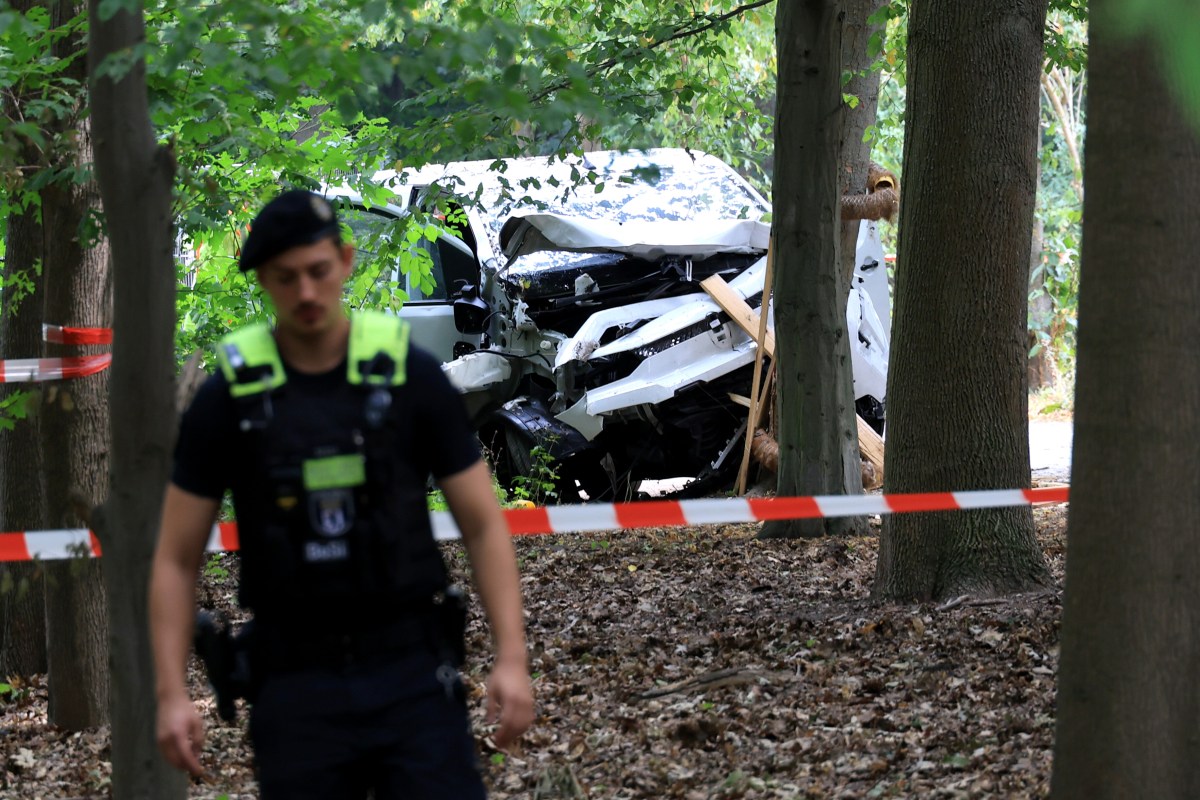
On July 25, 2026, around 10 pm, a Citroën SpaceTourer van was driven onto the Ahornsteig pedestrian path in Berlin’s Tiergarten park during Christopher Street Day (CSD) Pride celebrations, hit several pedestrians, and then crashed into a tree.2 The driver, emerging from the crashed van, reportedly attacked and injured several people with a stabbing weapon before fleeing the scene.3 One person, a 65-year-old Polish woman, was killed and 31 others were injured.4 The suspected perpetrator was identified within hours as belonging to the “Islamist scene of Berlin” and a wanted notice with his physical description and photo was issued by the police.5 The Federal Interior Minister Alexander Dobrindt at his press conference near the scene shortly after the attack identified him as 21-year-old Abdul Ballout,a a German citizen of Lebanese family background who was born and raised in Berlin.6
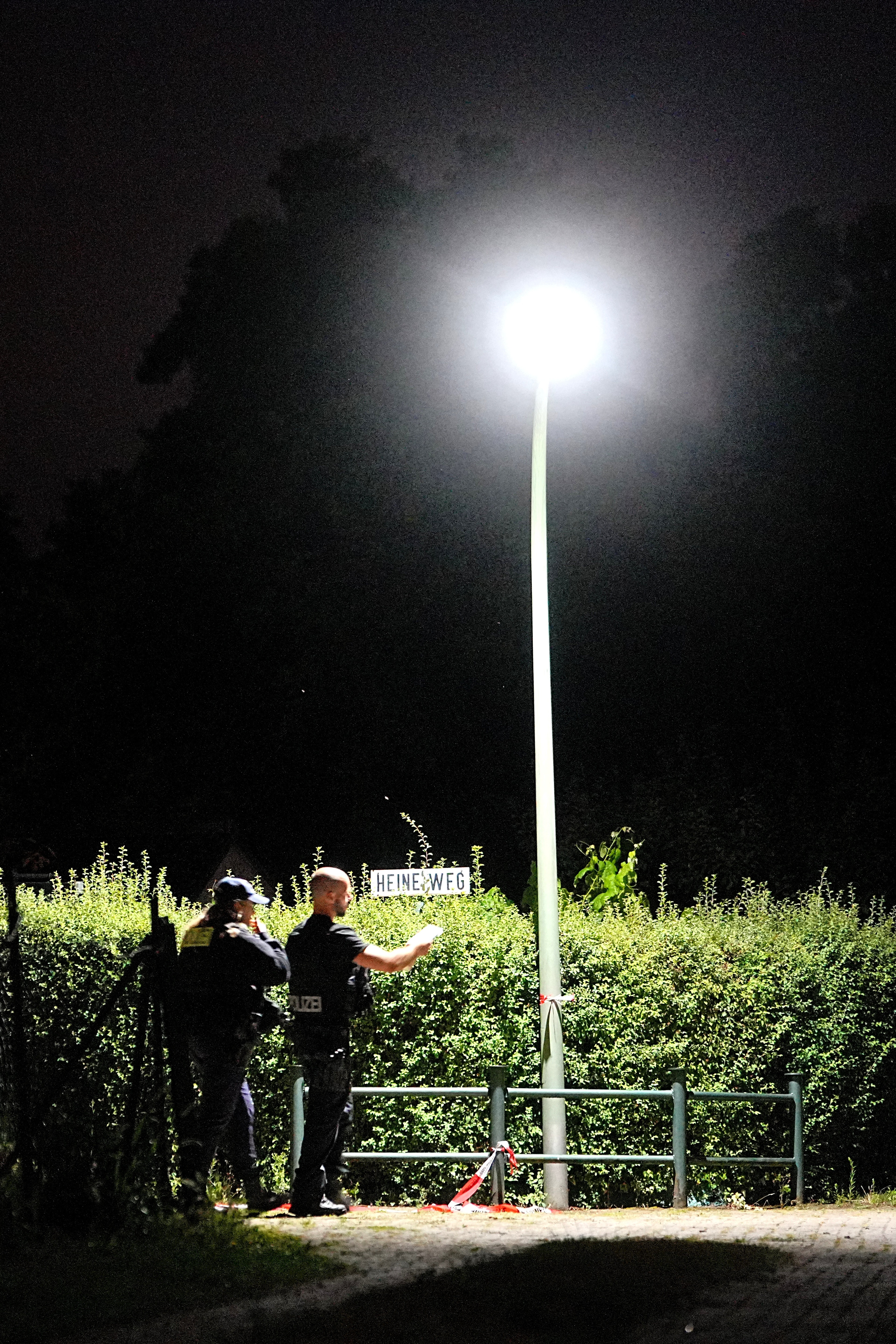
Investigators noted the passenger-side airbag in the attack van had deployed, which briefly raised the question of a second occupant. An Iranian man was reportedly detained that night as a possible passenger but later released. While authorities continued investigating the possibility of a second suspect, they treated Ballout as the main perpetrator.7 After an intense 20-hour manhunt, the German investigators tracked him down to a shed on a garden plot in Berlin-Spandau in the late afternoon of July 27.8 During the raid, Ballout allegedly attacked officers of the Berlin Special Forces SEK with a bladed weapon. They returned fire, fatally wounding him.9
The Perpetrator
Other details about the perpetrator emerged in the days that followed. Ballout, who was born in Berlin on July 2, 2005,10 was known to the police as a repeat offender and Islamic State supporter. Prior offenses included assault and robbery as a teenager for which he was found guilty on February 9, 2022, by the juvenile court at the Tiergarten District Court and received a non-custodial juvenile court directive requiring him to complete 40 hours of community work.11 On May 12, 2026, he was sentenced to one year and 10 months in juvenile detention by the same district court for preparing a serious violent offense endangering the state and two violations of the Associations Act for disseminating Islamic State propaganda.12 According to the Attorney General’s Office, he had intended to join the Islamic State in two instances—once via Turkey to Mauritania and the other via Turkey to Lebanon.13
More specifically, Ballout had been detained on May 16, 2025, at Nouakchott airport in Mauritania while reportedly attempting to join the Islamic State branch in the Sahel known as ISSP.14 His Mauritanian contact, who was reportedly supposed to help plan the route, was also arrested as part of a long Mauritanian intelligence investigation and infiltration of Islamic State networks.15 Mauritanian authorities reportedly transmitted the information to Germany and deported Ballout to Berlin via Istanbul on May 17, 2025.16 According to the flight itinerary, he departed Nouakchott on May 17 and was scheduled to arrive in Berlin in the early morning of May 18.17
On May 20, 2025, after spending about two days in Germany, Ballout reportedly traveled again from Berlin Brandenburg Airport via Turkey to Lebanon with the intent to reach Syria and join the Islamic State.18 He was arrested in Lebanon on July 23, 2025, and sentenced by a military court to three months in prison and a fine of 800,000 Lebanese poundsb for “incitement to religious and sectarian conflict.”19 He was sent back to Germany on November 17, 2025, where he was arrested on arrival.20 Despite being 20 years old at trial, his case was heard by the juvenile court at the Tiergarten District Court because the offenses were committed when he was 18 or 19.21
The court concluded in the main hearing that, in moral and intellectual development, Ballout stood equivalent to a juvenile. It based that finding in part on the fact that, at the time of the offense, he had no vocational training and was still living with his mother, and in part on the impression he made during the trial.22 Although he was sentenced on May 12, 2026, to one year and 10 months detention for preparing a serious violent offense endangering the state and disseminating Islamic State propaganda, the court ordered a preliminary or deferred probation.c He was therefore released from juvenile detention the same day and ordered to attend a deradicalization program, which consisted of 26 sessions.23 The judgment, which was not yet final, was appealed by the Attorney General’s Office who found it excessively lenient. Ballout remained free until July 25, 2026, but in over 10 weeks, he only attended two intake phase evaluation sessions with the deradicalization specialists at Violence Prevention Network (VPN). A third and final evaluation session to decide whether he would even be accepted into the full program was scheduled for the Monday after the Pride attack.24
The Investigation
The post-attack inquiry has so far found no crime-relevant traces of anyone else in the attack van.25 While he may have acted alone, that does not mean the path to the attack was solitary. For years, Ballout was close to a radical preacher whom German authorities believe spread extremist ideology; he had systematically pursued contacts with salafi-jihadis in Mauritania, Lebanon, and Syria and had close family ties to a high-profile terrorism convict and to foreign fighters affiliated with the Islamic State in Syria and Iraq.26
According to media reports citing investigation files and law enforcement reports, from at least 2024 Ballout was in continued contact with German-Egyptian preacher Amir al-Kinani, also known as Abu Azma, a familiar name to the German domestic intelligence services.27 Al-Kinani is described not only as Ballout’s religious mentor28 but also as his close confidant by Berlin’s State Criminal Police Office (LKA).29 d Born in Berlin in 1996, al-Kinani gave lectures at a mosque closely monitored by German authorities in the district of Neukölln.30 Starting from late 2021, he became a regular guest preacher at the German-speaking Muslim community (Deutschsprachige Muslimische Gemeinschaft, or DMG) in Braunschweig alongside figures such as Pierre Vogel, Abul Baraa, and Ibrahim al-Azzazi, long known as promoters of political salafi ideology in the German-speaking space. In 2022, the Lower Saxony counterintelligence service formally identified al-Kinani as a salafi preacher in the state’s official yearly account of extremist and intelligence threats.31
DMG was officially banned and dissolved by the Lower Saxony Ministry of the Interior in June 2024 due to its aggressive promotion of parallel societies, the superiority of sharia law, and antisemitic rhetoric.32 Lower Saxony’s minister of the interior and sport, Daniela Behrens, described the ban on the DMG in a statement as “a hard blow to the Salafist scene in Lower Saxony and beyond. By banning the scene, we are depriving German-speaking Salafist preachers of their most important platform for spreading their extremist ideology.”33 In September 2024, shortly after the dissolution of the DMG, al-Kinani left Germany and moved to Mauritania.34
The physical distance does not appear to have weakened the mentor-mentee relationship between Ballout and al-Kinani. In November 2024, the two traveled together on pilgrimage to Medina in Saudi Arabia.35 In May 2025, the two men reportedly exchanged 15 voice messages discussing Ballout’s planned relocation to Mauritania.36 In those messages, published in German media, al-Kinani offered to help him find an apartment and urged him to come.37 Ballout’s detention at Nouakchott airport on May 16, 2025, shows that he did act on a plan to travel. The purpose of the plan was revealed in a subsequent German interrogation, where Ballout said he had gone to Mauritania to join the Islamic State.38 e That account formed part of the case at his later trial on the foreign-travel charges.
Al-Kinani was far from Ballout’s only link to radical Islamist circles. Ballout came from a family with direct ties to international jihadism. His paternal aunt, Hanan, is married to Omar Bakri Muhammad, also known as Omar Bakri Fustuq,39 a Lebanese preacher long known in Britain and the Middle East as a leading figure in the Islamist scene and a founder of the U.K.-based salafi-jihadi network al-Muhajiroun.40 After living in the United Kingdom for two decades, Omar Bakri Muhammad left in 2005 and was barred from returning.41 In 2010, a Lebanese military court sentenced him to life in prison for terrorism offenses but later released him on bail pending retrial.42 He was imprisoned again on terrorism charges in 2014 and released in 2023.43
Two of Omar Bakri Muhammad’s sons, and Abdul Ballout’s cousins, joined the Islamic State.44 One cousin, Bilal Omar Bakri, was killed fighting for the Islamic State in Iraq in 2015.45 The other son, Muhammad, is described in Lebanese investigative files as having been held in prison in Iraq.46 According to the German State Criminal Police Office investigative reports, Ballout regarded Bilal as a role model.47 Files seized from his phone after he was deported from Lebanon included more than 100 photos of Bilal, and German investigators later found he had posted a picture of the cousin as a WhatsApp status in October 2024.48 In one photo taken during his 2024 trip to Medina with al-Kinani, Ballout is seen standing in front of the Prophet’s Mosque holding up a smartphone that shows a picture of his deceased cousin.49
Investigations show that Ballout treated his family ties to the two Islamic State fighters as both a source of openly expressed pride—especially in his glorification of his deceased cousin—and a resource he sought to mobilize in his efforts to join the organization. According to a report transmitted by Lebanese investigators to the German Federal Intelligence Service BND following his arrest in Lebanon in July 2025, Ballout, who was using the kunya “Abu Ibrahim al-Qahtani,”50 contacted individuals suspected of affiliation with the Islamic State through encrypted messaging applications and requested assistance in traveling to Syria.51 In those exchanges, he stated that he had been recommended by his two cousins, Bilal and Muhammad. Lebanese investigators assessed the claim as genuine rather than as a fabrication meant to secure access to the group.52 While Bilal, killed in 2015, could not have recommended him in 2025, the workable reading is that Ballout invoked the name of his dead fighter-cousin, and that of a second cousin, as a reference.
Even though Ballout initially denied having any active operational plans or intentions to join the Islamic State and commit terrorist acts, once deported from Lebanon, German authorities officially seized his smartphone. Forensic analysis revealed that starting from July 2025, Ballout had initiated contact with alleged Islamic State members via Telegram, explicitly stating “I want to fight, not just sit around” and using the family connections to prove his ideological commitment and bolster his aspirant jihadi credentials.53 Another revealing piece of digital evidence recovered from Ballout’s smartphone was a photo in which he posed with a covered face and a firearm in one hand while raising the index finger of the other in the tawhid gesture.54 f
How Ballout obtained the firearm in Lebanon, and whether he sent the photo to any alleged Islamic State contact to signal his combat readiness before crossing into Syria, remains unclear. What investigations established after the attack is that he was in contact with a Syria-based Islamic State associate, to whom he sent a video pledging allegiance to the group shortly before the attack.55 The contact was Sharmeena Begum, a British woman who left London for Syria in 2014, at age 15, to join the Islamic State.56 After the group collapsed, the Kurdish-led Syrian Democratic Forces detained her.57 She escaped from Al Hol camp in northeastern Syria in 2022 and then lived in hiding under a false name.58 How Ballout first reached her is not clear. What investigators established is that the two exchanged messages before the attack and that he sent her the allegiance video, which was meant to be released through Islamic State channels afterward.59 The German Federal Criminal Police Office (BKA) found no sign that she directed the attack. Syrian security forces arrested her in September 2026.60
Where Did the System Fail?
In assessing the failures that preceded the Berlin CSD attack, it may be tempting to search for a single decision point at which a different course of action might have altered the outcome. That framing is insufficient. The failure is not attributable to one discrete omission, but to the convergence of mutually reinforcing factors that together produced a systemic breakdown. These factors were neither exceptional nor narrowly case-specific; rather, they reflected routine features of the existing institutional architecture and point to broader structural deficiencies.
Gaps in Converting Intelligence and Risk Indicators into Effective Disruption
One of the most consequential failures preceding the attack was the inability to translate timely intelligence into effective disruption of a high-risk individual’s violent extremist activity, a recurring problem in recent European terrorism cases.g In Ballout’s case, the issue was especially stark: He was not an unknown foreign national, an individual of irregular status, or someone whose recent arrival might have limited the authorities’ visibility. He was born and raised in Germany, was already known to law enforcement, and had generated multiple risk indicators. The problem, therefore, was not the absence of warning. Intelligence from several agencies, domestic and foreign, had already identified him as a serious threat.
Before Ballout left Germany in May 2025 for Mauritania, the BND intercepted communications showing his initial plans to join the Islamic State.61 They officially alerted the Federal Criminal Police Office BKA on May 9, 2025. However, no action was taken, and on May 16, 2025, Ballout boarded a flight out of Berlin to Mauritania via Istanbul. After being denied entry in Mauritania, on May 20, 2025, he took a second flight from Berlin to Beirut. The German Federal Police only issued his border search warrant on May 28, 2025, 19 days after the original BND notification. This bureaucratic delay allowed him to leave German soil twice despite the BND having flagged his Islamic State travel plans on May 9.
The contrast became especially striking once Ballout reached Mauritania. Authorities in a comparatively low-capacity Sahel state appear not only to have obtained actionable intelligence on a German citizen seeking to join the Islamic State’s Sahel branch, but also to have acted on it effectively. They detained him at Nouakchott airport, transmitted the case information to Germany, and deported him.62 Germany, by contrast, despite jurisdiction over its own citizen and far greater institutional resources, did not convert that warning into effective restriction or disruption. After his return to Berlin, Ballout was still able to leave Germany again within days, this time for Lebanon, despite the documented nature of his intent. His subsequent arrest and conviction by a Lebanese military court added a second foreign warning point. By the time he was returned to Germany in November 2025, the record reflected not only extremist intent but repeated efforts to reach Islamic State-linked environments abroad.
In the period before the attack, Ballout’s own public online activity further reinforced this risk profile. While on conditional release and aware of being under active LKA surveillance of his phone, social media, and home entrance, he posed with a weapon on social media. This led to an apartment search on July 3, 2026, that recovered only a toy pistol.63 Even though the weapon was not real, the photo itself showed a willingness to publicly flaunt armed imagery while under active monitoring and subject to deradicalization conditions, underscoring ongoing risk and disregard for the constraints placed on him. The cumulative picture was therefore not ambiguous: Multiple intelligence, law-enforcement, and digital indicators pointed in the same direction.
Taken together, these episodes expose the core operational shortcoming. Foreign and domestic intelligence repeatedly identified Ballout as a committed Islamic State supporter, yet that knowledge did not produce timely restrictions on his mobility or freedom of action. The failure was therefore not informational but translational. Warning was available, but disruption was not commensurate with the risk it revealed.
Reversed Order of Prioritization
A related failure lay in how the courts prioritized Ballout’s case once they had convicted him. In May 2026, he was found guilty of preparing a serious violent offense endangering the state and of disseminating Islamic State propaganda. His broader risk profile had also been formally recognized by the security authorities. Yet, the court placed greater weight on largely subjective factors that supported a softer rehabilitative approach. These included his partial confession, claimed distancing from the Islamic State, and mandatory participation in deradicalization contact sessions. In effect, the official risk assessment was displaced by a preference for conditional release and behavioral correction.
That emphasis sat uneasily with the operational record. By May 2026, Ballout had made repeated and concrete efforts to reach Islamic State-linked territory, had been arrested abroad, and had generated both foreign and domestic warnings. Treating such a profile primarily as a deferred probation and rehabilitation case, rather than as evidence of a high-commitment security threat, reversed the appropriate order of priorities. The problem was one of sequencing. Rehabilitation could reasonably form part of the response, but only after the immediate risk to public safety had been adequately contained. Prosecutors immediately appealed the decision on preliminary or deferred probation, arguing that it underestimated the danger he posed, but pending that appeal, Ballout remained at liberty under probationary supervision.64
Following the attack, Interior Minister Alexander Dobrindt publicly called the court’s May 2026 decision to release Ballout incomprehensible for someone with that level of radicalization and risk classification.65 In response, the federal government adopted a 10-point plan in September 2026, presented by Dobrindt and Justice Minister Stefanie Hubig, aimed at improving protection against Islamist terrorism.66 The plan proposed to explicitly strengthen the statutory weight of the public’s security interest in probation and deferred-probation decisions and to require clearer justification when juvenile law is applied to 18- to 20-year-olds. Hubig, while acknowledging the value of deferred probation in some cases, also affirmed the appropriate order of priorities, noting that “the law must clearly state that a deferred probation may only be ordered if it is justifiable with regard to the public’s security interests.”67
Soft Sentencing Culture and Weak Post-Release Oversight
A comparison of terrorism sentencing practices across several European jurisdictions suggests that Germany’s approach to terrorism-related offenses is comparatively lenient, with sentences for preparation or terrorist-organization membership often in the three- to four-year range, or around five years when combined with other offenses, compared with roughly five to six years in Belgium, around seven years in the United Kingdom, and seven to eight years or more in France.h Ballout’s sentence went further still. The court applied juvenile criminal law to a 20-year-old defendant and imposed a prison term that fell below even the already modest German baseline, further softening the sentence with an order for preliminary or deferred probation. Even Ballout’s defense lawyer expressed surprise at the judge’s decision to release his client from detention.68 Such outcomes raise concerns that too much leniency toward defendants who have already demonstrated operational intent can create preventable gaps in public safety.
This pattern has appeared in several recent German cases in which known or repeatedly flagged Islamist extremists moved from clear risk indicators to serious violence despite prior convictions, police monitoring, detention, deportation efforts, or post-release supervision. Anis Amri, a Tunisian national whose asylum claim had been rejected, carried out the 2016 Breitscheidplatz Christmas market attack after prior convictions, radicalization indicators, classification as a Gefährder, and months of surveillance linked to Islamist contacts and suspected weapons-seeking. Deportation efforts stalled over documentation issues, surveillance ended in September 2016, and he killed 12 people and injured dozens a few months later with a truck.69 Official reviews later highlighted repeated failures in surveillance intensity, threat assessment, and interagency coordination.i
The October 2020 Dresden knife attack by 20-year-old Abdullah Al Haj Hasan raised similar questions about post-release risk management. He had been convicted under juvenile criminal law for supporting the Islamic State and planning a suicide attack, remained in Germany under tolerated-stay status because deportation to Syria was blocked, and was classified as a Gefährder after release. Although placed under post-release supervision, required to report to police, subject to observation, and having attended VPN deradicalization sessions, he stabbed two tourists five days later, killing one and seriously injuring the other.70
The 2024 Solingen festival stabbing by Issa Al Hassan revived the same issue in the context of failed removal, radicalization monitoring, and terrorism-linked risk assessment. His asylum claim had been denied and his transfer to Bulgaria was ordered under the Dublin rules,j but he evaded removal and remained in refugee accommodation. Investigators later found that he had shared Islamic State material, contacted Islamic State-linked channels, and received attack guidance shortly before the assault, which killed three people and injured at least eight. The Islamic State claimed the attack.71
The common thread of these cases is not identical fact patterns, but a recurring mismatch between observable warning signs and the legal and operational responses that followed. When sentences fall short of the preventive threshold—or when monitoring, detention, and removal fail to compensate for that shortfall—the result is not merely a question of proportionality. It is a question of whether the criminal justice system is prepared to treat demonstrated readiness for terrorist violence as the concrete public-safety risk it has repeatedly proven to be.
Misunderstanding and Misuse of Available Tools
Ballout’s track record at the time of the trial, together with the official assessment of the security authorities, pointed to a high-risk individual displaying a sustained commitment to the Islamic State rather than an early or superficial stage of radicalization. Against that background, the court appears to have mistakenly treated compulsory participation in a deradicalization program as a substitute for detention instead of as a conditional, evidence-based measure. Ordering a preliminary probation release before the VPN had even assessed whether Ballout was suitable for the program, while treating participation as a key condition for later suspending the sentence,72 shows a basic misunderstanding by the court of what these tools are and how they work.
Programs designed to help people exit radicalization and violent extremism can be valuable, but they are not for everyone, and their value depends on how and when they are used.73 They are narrow instruments for testing and supporting disengagement over time, not shortcuts around detention. They tend to succeed more often with lower-commitment or less ideologically hardened cases, and with people who are actively seeking support to leave, when those efforts include strict conditions and ongoing evaluation.74 More importantly, such programs are most effective when engagement is voluntary, as genuine disengagement cannot be compelled.75 They are not a default alternative to detention for someone already showing high operational intent. Treating them that way creates a record of measures taken while the actual risk remains largely uncontained.
In Ballout’s case, the limited nature of his engagement with the deradicalization program made that distinction especially important. He claimed to have distanced himself from the Islamic State and promised to live lawfully, but those assurances were thin when set against the rest of the record. Wiretapped conversations suggested continued caution and concealment when discussions moved toward radical content, raising the possibility that he was engaging in deceptive tactics rather than genuinely working to disengage.76
Operational Response Not Fully Aligned with High-Risk Rating
Ballout’s case exposes a consequential disconnect between formal threat classification and operational follow-through. In May 2026, Ballout was reassessed by Germany’s Joint Counter-Terrorism Center (GTAZ)k Risk Management Working Group using the BKA’s RADAR-iTEl instrument and placed in the highest-risk, or “red,” category.77 Yet, that designation produced only limited operational consequences. Because intensive surveillance in the preceding weeks had yielded no concrete indications of attack planning, physical observation was discontinued and only limited technical monitoring remained in place.78
This outcome points to a structural weakness in Germany’s risk-management architecture. RADAR-iTE is a rule-based prioritization tool, not a predictive instrument. It can aggregate known risk factors and help allocate surveillance resources, but it cannot determine when an individual will move from extremist commitment to attack planning. That limitation creates a prevention dilemma: Authorities may correctly identify a high-risk individual while still treating the absence of immediate operational indicators as a basis for reducing intrusive measures.
Despite Ballout’s established risk profile, operational measures were scaled back before the risk had been adequately contained. The later discovery that Ballout in fact possessed three cell phones, while only one was known to or monitored by authorities, further underscores the fragility of the operational posture.79 It suggests not only an intelligence blind spot, but a practical mismatch between the level of risk formally assigned to him and the scope of monitoring actually applied.
Lastly, scaling back close surveillance after only about 10 days,80 while resources are limited and the number of high-risk Islamist cases in Berlin alone already runs into the mid-double digits,81 acknowledges the real constraints on capacity. Continuous, around-the-clock monitoring of these individuals in both the physical and digital domains is inherently difficult to maintain. Courts and authorities need to take those limits into account. Issuing release or probation orders that depend on intensive monitoring that cannot realistically be sustained creates a risky gap between the threat assessment and the practical response.
Implications and Considerations for German and European Counterterrorism
The Berlin CSD attack illustrates a broader challenge for German and European counterterrorism: Authorities may identify a high-risk individual yet still struggle to translate that knowledge into timely, legally sustainable action. In Ballout’s case, the warning indicators were unusually dense—foreign intelligence, prior convictions, jihadi travel attempts, extremist family and network ties, and a formal high-risk assessment. The threat was recognized, but the institutional response did not match the known level of risk.
At the German level, the case exposes weak links among intelligence assessment, criminal justice decisions, probation supervision, deradicalization programming, and police monitoring. At the European level, it shows how attacks can develop through transnational pathways involving foreign travel, warnings, cross-border contacts, and post-attack links abroad. Addressing these vulnerabilities requires an integrated approach that connects domestic risk management with Schengen mobility controls, Europol-supported analysis, and terrorism-related alerts.
These gaps do not point to a single remedy or a uniform response across jurisdictions. Instead, they highlight areas where German and European authorities could better align existing legal, judicial, and operational tools with documented terrorism risk. The considerations below are intended to inform that assessment rather than prescribe a fixed model.
Binding escalation protocols for high-risk terrorism cases. Germany could consider clearer legal and operational consequences when an individual is placed in the highest terrorism-risk category. A red-level assessment could prompt an interagency review of available restrictions, including passport and travel measures, reporting obligations, residence restrictions, electronic or technical monitoring, and renewed judicial consideration of detention or custody-compatible alternatives. This would preserve judicial discretion while helping courts and agencies consider the full operational significance of the assessment when making release or supervision decisions.
Requiring multi-agency terrorism-risk statements before release, probation, or sentence suspension. In cases involving support for a terrorist organization, foreign-fighter travel, attack preparation, or repeated indicators of extremist violence, courts could receive a structured assessment prepared jointly by police, intelligence, prison, probation, and intervention specialists. It could address the defendant’s operational risk, monitoring feasibility, limits of available deradicalization measures, and consequences of noncompliance. This may reduce the likelihood that rehabilitation claims or courtroom impressions outweigh a documented pattern of operational intent.
Treating deradicalization as a complement, not a substitute, for custody or control. Before relying on a deradicalization program as a condition of release, a court could seek a provider assessment of the individual’s motivation, possible deception or false compliance, and suitability for the program. Participation could then form part of a broader risk-management plan rather than serve as evidence that the risk has already diminished.
Aligning surveillance expectations with operational capacity. Before ordering release or probation in a high-risk terrorism case requiring intensive physical and digital surveillance, a court could request confirmation from the responsible police authority that the monitoring can be sustained. If not, the court could reconsider custody or an alternative arrangement. Any reduction in surveillance should follow a documented review of whether the remaining measures adequately cover the person’s movements, contacts, devices, and accounts. State interior authorities could then assess whether sufficient resources remain available for the contemplated monitoring plan.
Strengthening mobility restrictions for demonstrated foreign-fighter aspirants. Repeated attempts to reach Islamic State-linked environments abroad should prompt rapid travel-disruption measures, including border alerts, legally permissible passport restrictions, and Schengen-wide notification. Germany could consider clearer timelines for converting credible travel intelligence into border action, while the European Union could assess how related warnings are shared across relevant border, police, and migration systems.
Improving domestic and European handling of foreign warnings and subsequent security hits. German systems could treat foreign terrorism alerts as grounds for timely, structured reassessment by the responsible federal and state agencies rather than as background information. At the E.U. level, alerts in the Schengen Information System, Europol analytical channels, and interoperability tools could help ensure that a border, airport, or police hit rapidly reaches the competent national counterterrorism authority. Clearer workflows may also be needed to specify who would act, within what timeframe, and under which legal authority.
Developing a European standard for post-conviction management of terrorist offenders. Although E.U. member states retain different sentencing, prison, and probation systems, the risks posed by terrorist offenders increasingly cross borders. The European Union could explore minimum standards covering specialized probation, pre-release information exchange, validated risk-assessment tools, structured prison-to-community transitions, and independent evaluation of rehabilitation programs. These standards could distinguish lower-risk radicalization cases from individuals with operational intent, foreign-fighter aspirations, or direct terrorist-network ties.
Taken together, these measures cannot eliminate the threat of lone-actor or low-tech attacks; no democratic counterterrorism system can. They can, however, reduce a more preventable failure: cases in which authorities recognize both extremist commitment and operational intent but do not align intelligence, judicial decisions, custody, supervision, and disruption accordingly. The central test is not whether every threat can be stopped, but whether credible warning leads to timely, proportionate, and enforceable action. CTC
Adrian Shtuni is CEO and Principal Consultant of Shtuni Consulting LLC. He is also an Associate Fellow with the International Centre for Counter-Terrorism in The Hague. X: @Shtuni
Nicolas Stockhammer is Director of the Center for Terrorism and Extremism Research at Danube University Krems (Austria), Senior Research Fellow at The Soufan Center, and Non Resident Fellow at the Counter Extremism Project. X: @Nic_Stockhammer
© 2026 Adrian Shtuni, Nicolas Stockhammer
Substantive Notes
[a] This is unusual as the practice of German law enforcement agencies is to only provide the first name and the initial of the last name.
[b] This was the equivalent of $8.92 USD at the time of sentencing.
[c] In German law, Vorbewährung—preliminary or deferred probation—is a youth-court device under the Youth Courts Act. A prison sentence is imposed, but the court postpones the decision on whether to suspend it. That is possible if the conditions for suspending the sentence on probation are not yet met, or otherwise if the court is not convinced that the convict will refrain from reoffending. The decision on probation is then postponed for a period of six months. During that waiting period, the person is free under conditions. Afterward, the court either formally suspends the sentence or orders it to be served.
[d] The Landeskriminalamt (LKA), or State Criminal Police Office, is a central state-level law enforcement agency operating within each of the 16 German states, subordinate to the respective state’s ministry of the interior.
[e] What role, if any, the preacher played in Ballout’s decision to join the group—and whether al-Kinani knew of that stated purpose—remains unclear.
[f] The raised index finger in that photo is the tawhid gesture. On its own, the finger can simply mean “one God,” including in ordinary Muslim contexts. More specifically, in salafi-jihadi usage, especially by Islamic State militants, it stands for the belief in the absolute oneness of God and is treated as a public sign of allegiance to that creed and to the group’s cause. Islamic State fighters and supporters have used it repeatedly in propaganda photos and videos, often while armed, masked, or in front of a flag, so that the gesture functions as both a religious statement and a marker of affiliation. When the tawhid gesture is paired with a firearm and concealment, as in the case of Ballout’s picture, it matches the visual language Islamic State and aligned fighters have traditionally used to signal commitment.
[g] As Peter Gill’s analysis of 52 jihadi attacks across eight European countries between 2015 and 2018 shows, the preventive difficulty often stems not from a lack of intelligence warning but from the disconnect between fragmented or institutionally dispersed knowledge and the timely action needed to stop an attack. Peter Gill, “Explaining Intelligence Failure: Rethinking the Recent Terrorist Attacks in Europe,” International Journal of Intelligence and CounterIntelligence 33:1 (2020): pp. 43-67.
[h] Terrorism expert Peter Neumann has summarized functional equivalents as follows: German sentences for §89a StGB (preparation of a serious state-endangering violent act) or terrorist-organization membership typically fall in the three- to four-year range (or around five years when combined with other offenses). By comparison, Belgian practice often starts at a five-year minimum for participation-type offenses and averages around six years in published judgments; U.K. averages for membership/involvement in a banned terrorist organization run around seven years; French sentences for terrorist association offenses are regularly seven to eight years and frequently higher. See Peter R. Neumann, “1/ Weil es Nachfragen gab: Wie hoch sind Strafen für Terrorismusdelikte im internationalen Vergleich? …,” X, August 1, 2026.
[i] The 2021 final report of the Berlin House of Representatives inquiry committee (Untersuchungsausschuss “Terroranschlag Breitscheidplatz”) concluded that the sum of mistakes and failures by police (especially LKA Berlin), domestic intelligence, and other agencies—including insufficient surveillance intensity, understaffing, the incorrect assessment that Amri had cooled off due to drug dealing, incomplete investigation of his network, and poor interagency information exchange—made the 2016 attack possible or facilitated it, as summarized by chairman Stephan Lenz. “1. Untersuchungsausschuss ‘Terroranschlag Breitscheidplatz,’” Abgeordnetenhaus von Berlin, August 9, 2021.
[j] Under the Dublin rules, an asylum claim must generally be examined by the one E.U. member state designated as responsible—here, Germany—so Issa Al Hassan’s claim was rejected there and he was ordered to be transferred back. But because he evaded removal, he remained in refugee accommodation. See “Regulation (EU) No 604/2013 of the European Parliament and of the Council,” Official Journal of the European Union, June 26, 2013.
[k] Established in 2004 in response to the security paradigm shift triggered by the 9/11 attacks, the GTAZ serves as Germany’s central interagency coordination and communication platform for countering Islamist terrorism, facilitating the systematic exchange of intelligence and operationally relevant information across federal and state security authorities.
[l] Developed by the German Federal Criminal Police Office (Bundeskriminalamt, or BKA) in cooperation with forensic psychologists from the University of Konstanz, it is a structured risk assessment and actuarial tool designed to evaluate and prioritize known Islamist extremists and potential attackers (Gefährder) in Germany.
Citations
[1] Christian Unger, “21 Jahre alt, Gefährder – Warum griff bei Abdul Ballout das Jugendstrafrecht?” Berliner Morgenpost, July 29, 2026.
[2] “Islamistischer Anschlag in Berlin? Was wir wissen und was nicht,” NTV, July 26, 2026.
[3] “Verdächtiger soll zu islamistischer Szene gehören,” Tagesschau, July 26, 2026.
[4] “Wegner: offiziell 31 Verletzte bei CSD-Anschlag,” Süddeutsche Zeitung, July 28, 2026.
[5] “Islamistischer Anschlag in Berlin? Was wir wissen und was nicht;” “Gemeinsame Pressemitteilung – Anschlag im Umfeld des Christopher Street Day – Wer kennt diesen Mann,” Berlin Public Prosecutor’s Office, July 26, 2026.
[6] “Er entschied sich für Terror statt Deradikalisierung,” Frankfurter Allgemeine Zeitung, July 26, 2026; “Verdächtiger vom CSD Deutscher mit libanesischem Hintergrund,” Die Zeit, July 26, 2026.
[7] “Gab es einen zweiten Täter?” T-Online, July 26, 2026.
[8] Axel Lier et al., “Er ist tot! CSD-Terrorist Abdul Ballout (21) erschossen,” Bild, July 27, 2026.
[9] Ibid.
[10] Wassim Nasr, “Info @FRANCE24 source régionale ‘Ballout, qui a commis l’attentat de Berlin, a été arrêté le 16.05.25 …,’” X, August 5, 2026.
[11] Julian Würzer and Christian Unger, “Beobachtet, verurteilt, entlassen: Warum Abdul Ballout frei war,” Berliner Morgenpost, July 28, 2026.
[12] “Das ist über den Tatverdächtigen Abdul Ballout bekannt,” T-Online, July 27, 2026.
[13] Ibid.
[14] Nasr.
[15] Ibid.
[16] Ibid.
[17] Ibid.
[18] Madlen Haarbach, “Update: Das steht im Urteil gegen Abdul Ballout: Gericht sah ihn als ‘prägbaren Menschen’ und gab ihm eine Chance,” Der Tagesspiegel, July 28, 2026.
[19] Haarbach.
[20] Friedrich Steffes-lay, “Kontakt zum IS, Erpressung, Pausenhof-Schlägerei – Die vielen Verfahren des Abdul Ballout,” Die Welt, July 26, 2026.
[21] Björn-Hendrik Otte, “Wann gilt Jugendstrafrecht?” Tagesschau, July 27, 2026.
[22] Ibid.
[23] Alexander Fröhlich, “‘Müssen das Jugendstrafrecht auf den Prüfstand stellen’: Berlins Justizsenatorin fordert Konsequenzen nach CSD-Anschlag,” Der Tagesspiegel, July 27, 2026.
[24] Stefanie Dazio and Geir Moulson, “Questions mount after deadly Berlin Pride attack. Here’s what to know,” Associated Press, July 27, 2026.
[25] “Nach CSD-Anschlag im Berliner Tiergarten: Bundesanwaltschaft stellt Ermittlungsverfahren gegen Abdul Ballout ein,” Der Tagesspiegel, August 11, 2026.
[26] Yassin Musharbash, “Zwei Cousins des CSD-Attentäters Abdul B. waren IS-Kämpfer,” Die Zeit, July 28, 2026.
[27] Asia Haidar and Sara Wess, “CSD-Attentäter stand in Kontakt mit Salafistenprediger,” Der Spiegel, July 31, 2026.
[28] Ibid.
[29] Roberto Jurkschat, “Wie Salafisten junge Menschen in Berlin radikalisieren,” RBB|24, July 30, 2026.
[30] Jurkschat.
[31] “Verfassungsschutzbericht 2022,” Bundesministerin des Innern und für Heimat, June 20, 2023.
[32] Nadine Conti, “Tiktok-Salafisten-Verein verboten,” Taz, June 12, 2024.
[33] “Kampf gegen Islamismus und Salafismus,” Niedersächsischer Verfassungsschutz, June 12, 2024.
[34] Jörg Diehl, Florian Flade, and Roman Lehberger, “Der Terrorist und sein Scheich,” Tagesschau, July 31, 2026.
[35] Haidar and Wess.
[36] Ibid.
[37] Ibid.
[38] Diehl, Flade, and Lehberger.
[39] Musharbash.
[40] “Proscribed terrorist groups or organisations,” UK Home Office, July 7, 2026.
[41] “Lebanon frees Muslim cleric Omar Bakri Muhammad on bail,” BBC, November 24, 2010.
[42] Ibid.
[43] “Pro-Islamic State (ISIS) Media Outlets Celebrate Release Of Al-Qaeda-Linked Jihadi Figure Who Spent 10 Years In Lebanese Prison On Terrorism Charges,” MEMRI, March 30, 2023.
[44] Musharbash.
[45] “Pro-Islamic State (ISIS) Media Outlets Celebrate Release Of Al-Qaeda-Linked Jihadi Figure Who Spent 10 Years In Lebanese Prison On Terrorism Charges.”
[46] Musharbash.
[47] Matthias Gebauer, Asia Haidar, Sara Wess, and Wolf Wiedmann-Schmidt, “Der Onkel ein Hassprediger, der IS-Cousin ein Idol,” Der Spiegel, July 30, 2026.
[48] Ibid.
[49] Nikolai Antoniadis et al., “Der Gefährder aus der Mitte,” Der Spiegel, July 29, 2026.
[50] “‘Ich fühle mich wie im falschen Film’: Sein Anwalt war selbst überrascht, dass CSD-Terrorist freikam,” Bild, July 30, 2026.
[51] Musharbash.
[52] Ibid.
[53] Zain Salam Assaad et al., “‘Ich will kämpfen und nicht nur herumsitzen,’” Die Zeit, July 29, 2026; Gebauer, Haidar, Wess, and Wiedmann-Schmidt.
[54] Ulrich Kraetzer, “Und dann saß der spätere CSD-Attentäter plötzlich im Flugzeug nach Mauretanien,” Der Spiegel, September 23, 2026.
[55] Frank Klaus, “IS contact woman of CSD attacker arrested,” Bild, September 25, 2026.
[56] Josh Baker, Sara Obeidat, and Joe Kent, “Friend who inspired Shamima Begum to join IS mocks her as non-believer,” BBC, March 22, 2023.
[57] Florian Flade, “Kontaktperson des CSD-Attentäters in Syrien festgenommen,” Classified (blog), September 24, 2026; “Nach Anschlag in Berlin: Kontaktperson des CSD-Attentäters in Syrien festgenommen,” Der Tagesspiegel, September 25, 2026.
[58] Ibid.
[59] Ibid.
[60] Ibid.
[61] Kraetzer.
[62] Diehl, Flade, and Lehberger.
[63] Pascal Bartosz et al., “Hätte der CSD-Anschlag verhindert werden können?: Der Fall Abdul Ballout – Rekonstruktion eines Scheiterns,” Der Tagesspiegel, July 27, 2026.
[64] “GBA ermit-telt zu CSD-Anschlag / BVerfG zu Auf-nah-me-zu-sagen für Afghan:innen / Amt-s-ent-he-bung von Karim Khan,” LTO, July 27, 2026.
[65] “Dobrindt kritisiert Bewährungsstrafe für Attentäter,” NTV, July 26, 2026.
[66] “Sicherheit stärken, Freiheit bewahren, Radikalisierung verhindern,” Die Bundesregierung, September 16, 2026.
[67] Jan Drebes und Kerstin Münstermann, “Beim Jugendstrafrecht geht es nicht um Kuscheljustiz,” August 23, 2026.
[68] Christian Gehrke, “‘Im falschen Film’: Jetzt packt Anwalt von Abdul Ballout aus,” Focus, July 30, 2026.
[69] Georg Heil, “The Berlin Attack and the “Abu Walaa” Islamic State Recruitment Network,” CTC Sentinel 10:2 (2017).
[70] Julika Enslin, “The Evolution of the Islamist Terror Threat Landscape in Germany Since 2020,” CTC Sentinel 18:5 (2025).
[71] Reiner Burger, “Issa Al Hasan zu lebenslanger Haft verurteilt,” Frankfurter Allgemeine Zeitung, September 12, 2025.
[72] Felix W. Zimmermann, “So begrün-dete das AG Tier-garten die Frei-las-sung Abdul Bal-louts,” LTO, July 27, 2026.
[73] Oliver Pieper, “Germany: How effective are exit programs for Islamists?” Deutsche Welle, July 29, 2026.
[74] Georgia Holmer and Adrian Shtuni, “Returning Foreign Fighters and the Reintegration Imperative,” Special Report, United States Institute of Peace, March 1, 2017.
[75] Ibid.
[76] “‘Wir haben sehr viele Hochrisikopersonen,’” Tagesschau, July 27, 2026; Assaad et al.; “Extremismus-Berater zu Abdul B.: ‘freundlicher Eindruck,’” Die Zeit, July 26, 2026.
[77] Jörg Diehl, Florian Flade, Martin Kaul, and Roman Lehberger, “BKA stufte Abdul B. als ‘Hochrisikoperson’ ein,” Tagesschau, July 27, 2026.
[78] Diehl, Flade, Kaul, and Lehberger.
[79] Florian Flade, “Abdul B. soll Bekennervideo an IS-Kontakt geschickt haben,” Tagesschau, September 14, 2026.
[80] Diehl, Flade, Kaul, and Lehberger.
[81] “Polizei: ‘mittlere zweistellige Zahl’ Gefährder in Berlin,” Die Zeit, July 27, 2026.
