
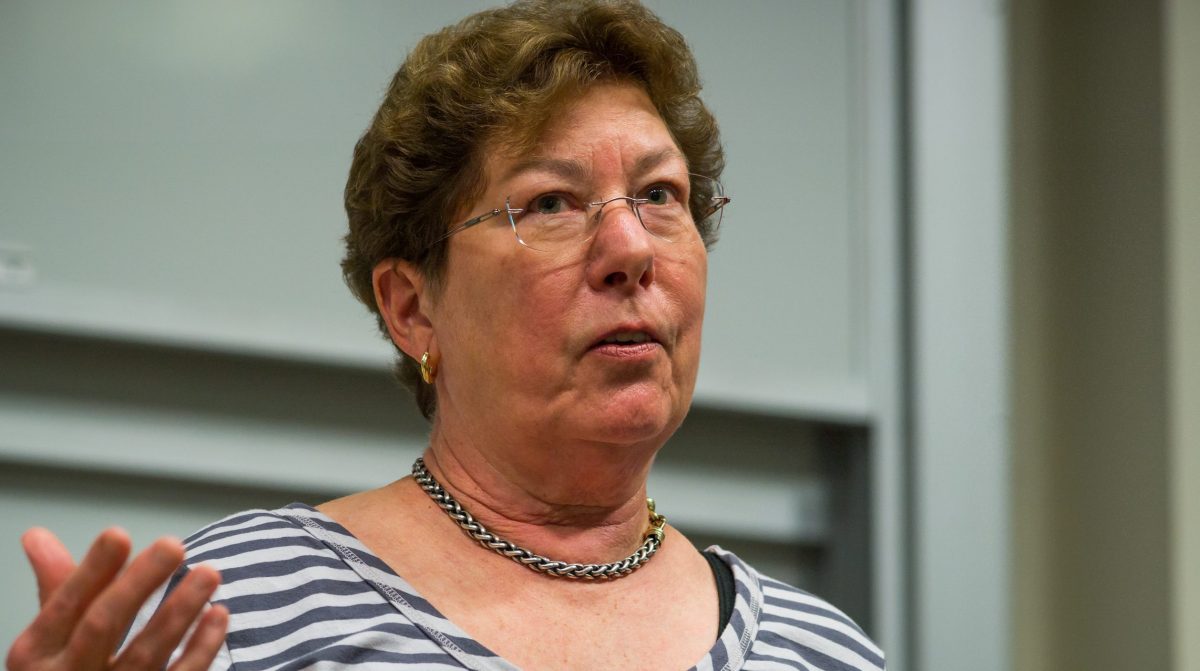
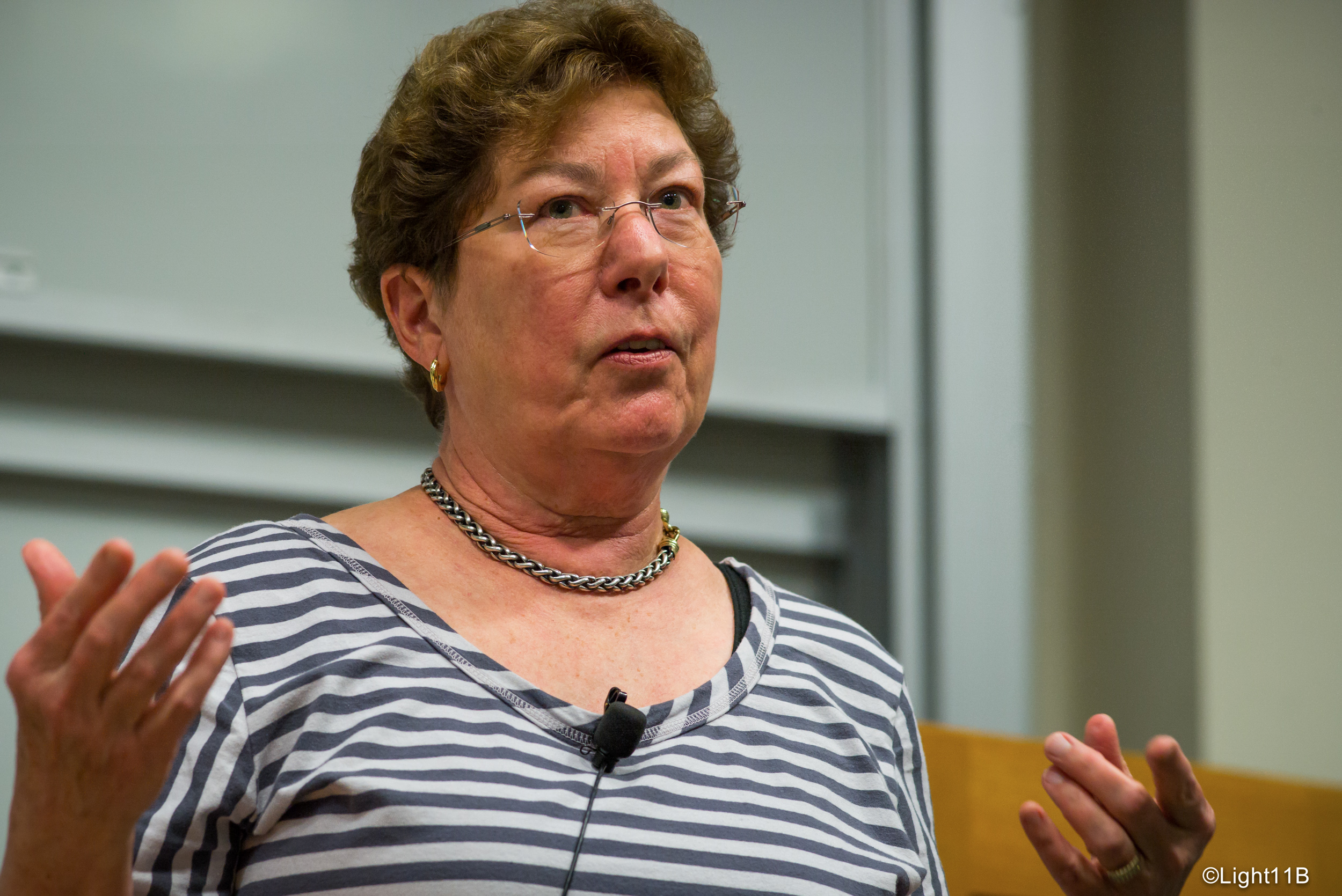
Dr. Martha Crenshaw is a senior fellow emerita at the Center for International Security and Cooperation (CISAC) at the Freeman Spogli Institute for International Studies (FSI) and a professor of political science by courtesy at Stanford. She was the Colin and Nancy Campbell Professor of Global Issues and Democratic Thought and professor of government at Wesleyan University in Middletown, Connecticut, where she taught from 1974 to 2007.
Crenshaw has written extensively on the issue of political terrorism; her first article, “The Concept of Revolutionary Terrorism,” was published in the Journal of Conflict Resolution in 1972. In 2011, Routledge published Explaining Terrorism, a collection of her previously published work. With Gary LaFree, she is the author of Countering Terrorism (Brookings Institution Press, 2017). Crenshaw received her PhD from the University of Virginia in 1973.
CTC: Twenty-five years after 9/11, what do you think are the most significant accomplishments in the terrorism studies field, and what are the areas where you think terrorism research still has some advances to make?
Crenshaw: It’s an enormous enterprise now, so summarizing everything about it is a difficult thing to do. At the time of 9/11, the amount of research on terrorism was much smaller, and now it’s grown fast and gone in many different directions with many disciplines.
The study of terrorism was always interdisciplinary. It’s become even more so. In terms of accomplishments, there are many; I’m not a pessimist about the state of studying terrorism. I think one of the accomplishments that’s often overlooked is data collection, which sounds sort of boring and mundane. But years ago, when you began to study terrorism, it was really quite a struggle to get information about what you might want to know, whether it was a particular case or aggregate statistical information. Now we have so many databases that we can barely list them. Prominent among them, of course, would be the Global Terrorism Database,a which came about because of government funding. It’s an important incident database that’s used by many researchers, and its creation was an asset to terrorism research. There are many other databases that go beyond terrorism, such as ACLED,b the Armed Conflict Location & Event Data resource.
In addition to these large-scale databases, we also have many more case studies. If you wanted to know, for example, about al-Shabaab in Somalia years ago, you would have been hard-pressed to find information; you would perhaps go through The New York Times and find some references. Now, there are many detailed case studies, often based on primary research. There are complaints that there’s not enough primary research within the terrorism studies field. It is not easy, but there is some primary research, although it is not as extensive [as it would be] if you were working in a field that did not involve violence.
However, I can’t say that we have a big overarching theory of terrorism, unlike the subject of deterrence; I don’t think that one big theory is really possible or even desirable. Analysis of terrorism has gone in many, many more directions than the study of other subjects, such as deterrence. Yet, a mark of the growing maturity of the field is that we now have critical terrorism studies.1 You have to reach a certain level of accomplishment in terms of theorization and explanation for people to start developing a ‘critical studies’ aspect of what you’ve been studying. I regard that critical approach as an accomplishment as well—we’re looking back reflectively on what we’ve done and [asking], ‘Were we too influenced by government? Are we creating terrorism by seeing terrorism, by propagating the image?’
CTC: Are there major questions you think that scholars have been unable to address?
Crenshaw: There are still lots of questions, and generating questions is an important contribution in any field of study. One thing that constantly strikes me is that we are still arguing over definitions of the concept of terrorism. I thought after 9/11 that what terrorism is would no longer be contested. The 9/11 attacks presented a clear example that we could all agree on. It was a horrifying model case. Yet, we’re still arguing about meaning. Prominent voices still equate terrorism with particular ideologies as opposed to seeing it as a method or a strategy. We still are fuzzy about what is terrorism, and what is not, such as criminality. Are drug cartels terrorists? This is still a live question. Furthermore, particularly after the attack on the U.S. Capitol, when is mob violence terrorism—or violent riots, violent protests? Is Antifa terrorism? We’re still arguing over the same things all these years later. We’ve made some progress, but it’s still a conundrum.
Beyond that, several questions still puzzle me. One is, when do terrorists change strategies? What leads to the different methods that they use? One answer, of course, is that the availability of technology determines tactics. Because methods of violence are available—because there are drones, AI [artificial intelligence], or weapons of mass destruction—they are inevitably going to be used; terrorists will take advantage of technological opportunity. Another argument would be to point to the substitution effect: Governments block what terrorists can do, so they find alternatives. Hijackings and smuggling explosives onto aircraft began to fail because governments were forewarned. Terrorists then switched to other methods.
But there are other arguments, such as that methods are determined by ideology. The ‘New Terrorism’ school2 gained popularity for a while, presenting the idea that religious motivations lead to highly indiscriminate and destructive terrorism, and that groups with more secular ideologies are likely to be more discriminating. We’re still arguing about this point, and it would be important to know the answer if we’re concerned about terrorists adopting AI, or if we’re concerned about their getting ever more destructive weaponry. For example, we’re currently asking how and why drones are feasible for terrorism. That’s still a big open question that could use more research.
CTC: Do you think terrorism scholars should continue to focus on terrorism as an isolated phenomenon, or should terrorism increasingly be studied alongside other related forms of political violence?
Crenshaw: I would lean certainly toward the latter approach. Terrorism is one form of political violence, and obviously, the problem is distinguishing it from other forms of political violence, not from other forms of action whether political or military. I’ve argued for a long time that we were neglectful in ignoring the role of terrorism in civil wars,3 instead seeing it as a standalone phenomenon used by militant groups in stable, peaceful situations and disrupting an established order. Terrorism is commonplace in civil wars, which makes it, of course, hard to distinguish from the other myriad forms of violence present in civil wars. It’s extremely important to understand the relationship, not seeing civil war and terrorism as the same thing, but understanding the connection between them.
Clarifying the relationship between terrorism and other forms of what we regard as standard military combat is also important—for example, as I mentioned earlier, the use of drones. Drones are a method of warfare, but militant non-state actors use them as well. When is this terrorism? When is it simply warfare? How do we deal with groups that use terrorism but are militarily powerful?
Hezbollah, at one point Hamas, and some of the pro-Iranian Iraqi militias such as Kata’ib Hezbollah present military threats, and yet these groups also use terrorism. How do you make that distinction? It’s not enough to say, ‘Because this is a military conflict, whatever goes on in it is not terrorism. Terrorism is something else.’ Or ‘because this is a civil war, whatever goes on in that context is not terrorism.’ At the same time, I don’t hold to the notion that if the non-state actor in question actually holds territory, their violence cannot be terrorism.4 I don’t agree that, ‘If violence is in a civil war and the violent group is holding territory, whatever they do is not terrorism.’ It’s terrorism regardless of whether or not the actor holds territory. Non-state actors in civil war situations—take the Algerian revolutionc as a case in point—often hold territory. These are still active disputes and subjects for further research.
CTC: We want to talk about your own work. You mentioned the Algerian Revolution, which of course was the subject of your PhD research. It’s really hard to overstate the overall impact of your influence and impact on the field. Are there any particular contributions that you’ve made that you’re especially proud of and that you think have withstood the test of time particularly well?
Crenshaw: I’m very pleased that the work on the use of terrorism by the FLN [Front de Libération Nationale] during the Algerian War, a book that was originally published in 1978,5 has only this year been translated into French and published in France. It was interesting to see that study resurrected, and now published in France, where it had not gotten much attention at the time of its original publication.
I’ve also been pleased that the 1981 article on the causes of terrorism has stood the test of time.6 It’s been republished often and is frequently cited. It was one of my early works. You’re eager at that point in your career to contribute something that will make an impact. I worked hard on that study to boil it down into one short article, and I recall that the first time I presented the argument was at a seminar at the University of Cardiff where Paul Wilkinson was then teaching.
I would also note my work in the 1980s on organizations, which argued that an organization using terrorism shares many characteristics of any other political organization.7 Instead of viewing terrorists as a group of madmen who are beyond reason and beyond even trying to understand what they’re trying to do, I found it helpful to view them through a political organization lens, since they face many of the same problems as other organizations. At the time, I did not have detailed research to back up that claim, but since then other scholars have built on the idea and added a lot of data. Another point that I made then and did not develop thoroughly is that there are rivalries among these organizations—even though they might share the same ideology, they don’t always get along. Competition can be an important determinant of behavior and of the effectiveness of counterterrorism policy.
Looking back, I’ve had a good career. It’s given me a lot of pleasure, despite the tragic nature of the subject.
CTC: If you were to complete your PhD again today, what would you be drawn to in terms of a topic or methodological approach?
Crenshaw: Well, a scholar today looking for a PhD topic would find much more data. They would also have a much wider choice of what they might study. At the time that I began to work on my PhD, a case study was pretty much what was available to you. Today, scholars have access to a range of datasets, and probably would not go for a single case study. They would likely adopt a comparative case study approach. Case selection would be enormously important. In a modern American graduate school, students would likely be expected to do some quantitative or statistical research at a fairly sophisticated level, and preferably collect and code their own data, which can be extremely laborious, time consuming, and expensive. They might need to construct a mathematical model. So, it would probably be more daunting for them than it was for me when I completed my PhD, since I could write something through my own historical research using what I could find in libraries, information that was much less comprehensive than it is today.
There are still so many questions to look at, regardless of method. Why do groups that are operating in a local conflict expand outside the borders of the country? Why did al-Shabaab act against Somalia’s neighbors? There are some immediate answers, but when you look at the question closely, it’s actually very complicated as well as important to the security of outside actors who need to know when a local group is going to turn on them. Is the reason ideology? Is it that a local group is blocked at home [by counterterrorism forces or other forms of pressure]?
CTC: How serious of a threat does terrorism pose to the United States today when compared to 25 years ago? In your view, how does that threat compare to other types of threats, including strategic competition?
Crenshaw: On the eve of 9/11, during that summer, which I remember quite vividly, the sense of threat in the United States was acute, as high as I had ever known it, and I think as high as ever since. Everybody in the intelligence agencies, in the academic world, those who followed the subject, everybody was absolutely on high alert, apprehensive that something was going to happen. Entire conferences combining expertise from government and academia focused on: What is going to happen? What is al-Qa`ida going to do? The level of threat had been building from about 1998 onward. But everybody was completely taken by surprise on September the 11th.
That level of apprehension doesn’t exist now, largely because over the intervening years, we have, if not eliminated, at least severely diminished, the particular threats from al-Qa`ida and ISIS.
At the same time, we can always be taken by surprise, as Israel was on October 7, 2023. It’s critical to avoid complacency: Avoid thinking, ‘We’ve dealt with the threat and no need to worry.’ The threat may not be eliminated even if it might be contained. Surprise isn’t always due to complacency. On the eve of 9/11, warning signs weren’t dismissed but some important pieces of information were overlooked. Some crucial bits of the puzzle weren’t put into place in time. In the end, the danger of surprise is still there.
It is also important that the United States not interpret the threat of terrorism as being exclusively against us, against our territory, our forces, our citizens. We neglect at our peril civil wars and instability elsewhere because we’re focused on other issues. Local problems can quickly become global problems.
CTC: When you think about how terrorism has evolved in terms of the behavior of terrorist groups and their tactics over the past 25 years, what stands out to you about the threat?
Crenshaw: I would point to the impact of the internet. Digital communication has made an enormous difference to all forms of interactions, including terrorism, of course. Terrorists can communicate via social media, raise money, recruit followers, publicize their message, and even livestream an attack in order to mobilize supporters. All these means are new, as methods of communication for violent groups have expanded enormously.
If you think back to the 19th century, anarchists and revolutionaries could write pamphlets explaining what they were doing and try to get people to join them. Nowadays, they have greater access and can also go undetected. As far as I can see, attempts to restrict illicit access to media have not been particularly successful. Authorities can block one channel, but then another channel pops up.
These developments have also made a difference to those of us trying to study terrorism. What can we say about an organization whose members are simply online followers? Is this an organization like other organizations? It’s harder and harder to know who might be making decisions [for the organization]. It’s hard to know how much of their activity is strategic and how much is not.
As I see it, many groups—even well-established groups that existed before the social media revolution—were willing to sacrifice control over the use of violence for the ability simply to act, and to do so unpredictably. Calling on followers, wherever they might be, to use any means available to them—such as driving a vehicle into a crowd—is inherently unpredictable because the actor who is instigating violence doesn’t know when and where and who and how. Many groups that hope to succeed do wish, I think, to control the use of violence. I myself puzzle over how to treat this type of violence—particularly whether it should be seen as an organized strategy. It can be part of an organized strategy, but it’s also dependent on the individual volunteer to do it. This is a very important shift that we need to understand. Fortunately, a lot of researchers are working on this, on terrorist use of social media, tracking it as well as gathering information on the use of encrypted devices and other means of concealment.
CTC: When you think about the terrorist threat of tomorrow or in the future, what worries you the most?
Crenshaw: Well, I don’t really know, and I guess that’s the worry. It’s hard to see what direction terrorism might take. I’ve talked about surprise, and I think that’s always the risk—that there is something we simply haven’t foreseen. I also think, as a caution, that we are always interested in terrorist use of new methodologies, new techniques, new forms of communication and organization, and new forms of using violence, for example their use of WMD or whatever sort of methods they can acquire. But if we look back at some of the most disastrous attacks in recent years, they have not involved extremely exotic methods. Attackers have often very cleverly used a combination of old methods. In the case of 9/11, we did not expect training a pilot to fly the aircraft so that the aircraft is the explosive. We thought hijackings were a thing of the past, but they were adapted to a new form. These tactics depended as well on a willingness and capacity to organize a large plot that required multiple operatives to exist underground in a strange country for a year without revealing the conspiracy. It didn’t require high tech at all to do that.
The Hamas attack on October 7th didn’t involve extremely sophisticated methods, but astute exploitation of vulnerabilities on the Israeli side and a willingness to commit atrocities and accept the opprobrium and outrage that would follow. Both cases involved the willingness to kill massive numbers of civilians and not care about the consequences. I don’t know what specifically we should be afraid of, except to keep all these factors in mind. I also hope that our counterterrorist forces, such as we still have them, are thinking hard about not resting on old assumptions, but realizing what we do not know. There are certain definitive threats that we fear, such as that terrorists might use weapons of mass destruction. We’ve been afraid of such a development for quite a long time, but I think the greater worry is surprise.
CTC: Looking back at the last 25 years of counterterrorism, what did the United States get right, and what did we get wrong in terms of our counterterrorism policy?
Crenshaw: In the aftermath of 9/11, the persistence and scope of the counterterrorism effort was impressive. The mobilization of resources had begun before 9/11 because the threat had been growing and expanding. The CIA had created a team to deal with al-Qa`ida.d That team was extremely interested in AQ, but struggled in terms of resources to gather and interpret intelligence—for example, to have enough people with foreign languages who could read the intelligence and who had the sufficient level of security clearance to access it.
Then, after 9/11 enormous resources began to pile in. People were moved from the Russia desk to work on terrorism, for example. It was sometimes difficult to absorb the overload of talent coming into the counterterrorism fight. The end results were extremely impressive. Cooperation with our allies around the world also increased enormously. I think that in some cases we did not always take their warnings seriously, but we flung ourselves wholeheartedly into close cooperation. The support from allies was enormously important in all areas.
At the same time, we failed to see that some of the things we were doing helped to create the problem and maybe made the problem worse.8 The Soviet invasion of Afghanistan and our support for the mujahideen, understandable at the time, of course, in light of Cold War dynamics, created opportunities for bin Ladin to create al-Qa`ida. Furthermore, prior to 9/11 we moved into the Middle East in response to Iraq’s invading Kuwait, which was widely appreciated and admired in the region and around the world. It seemed appropriate to stop Saddam Hussein from invading a smaller neighbor because he wanted their resources. But at the same time, we created more fuel for the fire that bin Ladin was setting in Saudi Arabia and for the rise of militant Islamism. I think we were not fully aware that Islamists had been on the move for 10 years, at least. When we moved against the Taliban in Afghanistan, we made inroads against al-Qa`ida. We drove bin Ladin into hiding in Pakistan. But by invading Iraq, we created another set of circumstances that were propitious for the reincarnation of first al-Qa`ida and then ISIS in the Iraq-Syria theater. Of course, I don’t think we could have predicted the Arab Spring and the civil war in Syria, which further increased opportunities for ISIS.
I don’t know whether it was possible to foresee the consequences of these actions. They seemed wise and appropriate to many at the time, but thought needs to be given to questioning decisions: ‘If we do this, here’s the upside. But what about weighing the benefits against the downsides? What might be the negative consequences of what we do?’ It is well not to proceed too quickly, particularly without asking experts on the region and on a range of threats.
It concerns me that the U.S. seems to have a constant wish to return to the threat of great power competition. We’re more comfortable dealing with that kind of threat, it seems. We find it easier to understand, easier to predict. Not that there are not terrible surprises [in great power competition], but perhaps we’d rather be in the familiar domain of warfare with one army pitted against another army, or air force against air force, where superior military capabilities can be brought to bear, where information on the adversary is more available because you have tracked them for years. Our temptation to return to that threat may not be misplaced, since there’s a real threat [in the great power competition realm], but it doesn’t mean that we should ignore the threat from non-state actors.
CTC: Counterterrorism is oftentimes described as a toolbox. There are a lot of different tools in this toolbox: military responses, intelligence, public diplomacy, countering terrorist financing, et cetera. Given the nature of how terrorism has evolved—you mentioned social media, for example, and its influence after 9/11—are we using the right tools in response? Do we need to consider using more of certain tools and less of others?
Crenshaw: I would always put a priority on intelligence. There’s no substitute for gathering intelligence, even in very difficult circumstances. I don’t want to underestimate the difficulty of sorting out signals from noise in any field, especially now that we have means of collecting information that often overwhelms us with quantity. We need the ability to sort all that data. This task has become more and more of a challenge for the intelligence agencies. The extent to which sorting signals from noise could be given over to automated methods is unclear. I don’t know how well that can be done; a human contribution will always be needed to understand and interpret results. For good intelligence, we also need to continue cooperating with other governments. Often a local government is going to have the kind of sources and assets that will give you critical information. Then you’ve got to have analysts who are knowledgeable enough to say, for example, ‘This looks to be a local group, but we think it has potential to expand its operations and ambitions.’
Military responses are important, sometimes necessary. There’s been a debate in academia as to whether a decapitation strategy—removing the leadership of a group—works in terms of defeating the organization. Good intelligence is essential to know who the real leader is, where leaders are at practically every moment of the day, especially because they’re trying to elude surveillance. The United States did this very, very well in the fight against al-Qa`ida and ISIS. We began to perfect intelligence collection, even under battlefield conditions, and get it analyzed quickly, understanding that information is only valuable for a short period of time. All this effort requires extensive resources. Military force works when you have good intelligence behind it. It doesn’t work—it’s just blunt military force—if you can’t identify your real target, if you end up making mistakes that then create more support for the adversary.
Cutting off terrorist financing has also been important, although it is hard to do. There are so many ways for terrorists and criminals—because this is an aspect that they share—to gather funds, move money around, and invest in all kinds of licit and illicit enterprises. Although cutting off financing has proved difficult, that’s not to say that it’s not worth doing, even if it’s an uphill battle.
Public diplomacy and political and economic assistance attempt to win hearts and minds, to undermine the appeal of violent extremist groups by improving conditions [and] by creating more stable regimes in countries that are at risk, aiming to prevent failed and failing states. The policy is difficult to sell to taxpayers who have to support it, in part because the results are likely to be slow. It’s still important to invest in diplomacy and assistance. It would improve counterterrorism if we could do more to prevent state breakdown in areas of the world where it’s now become all too common, Africa being a prime example. It’s hard for governments to build support for policies that aren’t immediately visible, where the payoff is in a very uncertain future, but it’s important to do those things.
A last policy or counterterrorism practice area has been rehabilitation of individual ‘formers,’ as they are called. Nobody’s quite sure how well rehabilitation programs have worked. Different governments have tried different approaches to reintegration of former terrorists. It’s obviously important to try, but these efforts can result in people who have been released from prisons who might still be committed to the cause that put them in prison in the first place. Rehabilitation and reintegration are still big problems that we haven’t figured out. I am not sure that there have been good case studies of what actually works, of what kind of intervention is likely to work.
There’s still a lot of other problems for counterterrorism that haven’t been solved, such as the issue of the role of foreign fighters. In the United States currently, the intelligence agencies are being reduced in capabilities, with a number of people fired from the agencies, and a lack of resources. This situation is not going to bode well for effective counterterrorism.
CTC: Do you think that analytical frameworks to think about terrorism or counterterrorism have evolved in line with the threat?
Crenshaw: In terms of the analytical frameworks being used by the intelligence agencies, I really don’t know. There’s still as ‘overclassification’ of information, for example. There’s an opacity that blocks critical appraisal of the analytical frameworks being used. Scholars outside government knew more in earlier decades, when there was more collaboration between academic and government communities and more sharing of information that didn’t involve access to really sensitive material. We don’t have that now. So, we academic analysts, as outsiders, know little except what we read in the press or other public documents. We try to ascertain the accuracy of open-source information as best as possible, but our knowledge is imperfect.
Academic researchers make an effort to keep up with the changes that are affecting terrorism, for example, to what extent are they likely to rely on AI? How could AI help terrorists? Is there already evidence that it’s of use to select targets, conduct surveillance, or gather background information? Just as the rest of us are using various search mechanisms in our research, terrorists have become more sophisticated. We have to assume that they are exploiting these opportunities, even if we lack direct knowledge of what the adversary is doing. Academic researchers have an incentive to look for new topics for research, to find ways to say something original and new, so they are attuned to changes in the object of study. This is not to say that researchers are not historically minded, but we look for what might be new and different in a threat. I don’t know whether today’s government analysts are looking through old lenses or whether they are looking for innovative ways to approach terrorism. For instance, do government analysts assume that all terrorism comes from the same ideological direction? The information available to the public does not necessarily reflect what’s really going on in the intelligence community.
A last point in terms of the value of academic research is that there is more open-source information out there than government analysts have time to keep up with. Most of us try to manage as best we can, but it is daunting. A contribution of academic research is having a grip on what’s available in the public domain. Researchers survey the field to identify important and reliable findings and sum up what’s known. There’s even inside knowledge about different conflict situations in the open-source literature. As for myself, as I have admitted, I can’t keep up with everything published. All the same, an academic researcher has more time to summarize and interpret relevant information that would be useful for counterterrorism agencies that do not have the time. Government analysts are already overwhelmed with classified information, I assume, which presents a daunting task in itself. Academic research can fill a significant gap. CTC
Substantive Notes
[a] Editor’s Note: The Global Terrorism Database (GTD) “is an open-source database including information on terrorist events around the world from 1970 through 2020.” It is maintained by the National Consortium for the Study of Terrorism and Responses to Terrorism (START) at the University of Maryland. See “About GTD,” START, n.d.
[b] Editor’s Note: Based in the United States, ACLED is “an independent, impartial global monitor that collects, analyses, and maps data on conflict and protest.” See “About ACLED,” ACLED, n.d.
[c] Editor’s Note: The Algerian Revolution was a war fought by the Algerians for independence from France from 1954 to 1962.
[d] Editor’s Note: This is a reference to the unit known as Alec Station. For background, see Mark Mazzetti, “C.I.A Closes Unit Focused on Capture of bin Laden,” New York Times, July 4, 2006.
Citations
[1] Editor’s Note: For background, see Assaf Moghadam and Anthony C. Marco, “The October 7, 2023 Attacks and the Maturation of Terrorism Studies,” Studies in Conflict and Terrorism, July 2025.
[2] Editor’s Note: For context on the ‘New Terrorism’ school, see Martha Crenshaw, “The Debate over ‘New’ vs. ‘Old’ Terrorism” in Ibrahim A. Karawan, Wayne McCormack, and Stephen E. Reynolds eds., Values and Violence: Intangible Aspects of Terrorism (Dordrecht, Netherlands: Springer, 2008).
[3] Editor’s Note: Martha Crenshaw, “Transnational Jihadism & Civil Wars,” Daedalus 146:4 (2017): pp. 59-70.
[4] Editor’s Note: For context about this debate, see Victor Asal, Luis De la Calle, Michael Findley, and Joseph Young, “Killing Civilians or Holding Territory? How to Think about Terrorism,” International Studies Review 14:3 (2012).
[5] Editor’s Note: See Martha Crenshaw, Revolutionary Terrorism: The FLN in Algeria, 1954–1962 (Stanford: Hoover Institution Press, 1978).
[6] Editor’s Note: Martha Crenshaw, “The Causes of Terrorism,” Comparative Politics 13:4 (1981).
[7] Editor’s Note: Martha Crenshaw, “Theories of Terrorism: Instrumental and Organizational Approaches,” Journal of Strategic Studies 10:4 (1987); Martha Crenshaw, “The Logic of Terrorism: Terrorist Behavior as a Product of Strategic Choice” in Walter Reich ed., Origins of Terrorism: Psychologies, Ideologies, Theologies, States of Mind (Washington, D.C.: Woodrow Wilson Center Press, 1998).
[8] Editor’s Note: Martha Crenshaw and Gary LaFree, Countering Terrorism (Washington, D.C.: Brookings Institution Press, 2017); Martha Crenshaw ed., The Consequences of Counterterrorism (New York: Russell Sage Foundation, 2010).
