
Abstract: On February 22, 2026, the leader of the Cártel de Jalisco Nueva Generación—one of Mexico’s most powerful criminal organizations—died in an operation launched by Mexican federal security forces. The killing of “El Mencho” took place amid a broader shift in Mexico’s security approach under President Claudia Sheinbaum. Her administration has stepped up targeted operations against mid- and top-level criminal leaders, a trend widely interpreted as a return to the “kingpin strategy” implemented during President Felipe Calderón’s mandate two decades ago. This article examines whether after nearly two years in office, Sheinbaum’s security operations have coincided with shifts in violence, based on an analysis of political violence data from ACLED for Mexico. This article argues that security operations have corresponded with uneven shifts in patterns of violence. In some states, they have likely contributed to violence spreading or even intensified criminal competition. Elsewhere, reduction in violence likely reflects criminal adaptation rather than the dismantling of criminal organizations and networks. Heightened pressure exerted by security forces has pushed criminal groups into less overt use of violence and remote violence, further fueling rising levels of forced disappearances in Mexico, or the use of drones and improvised landmines.
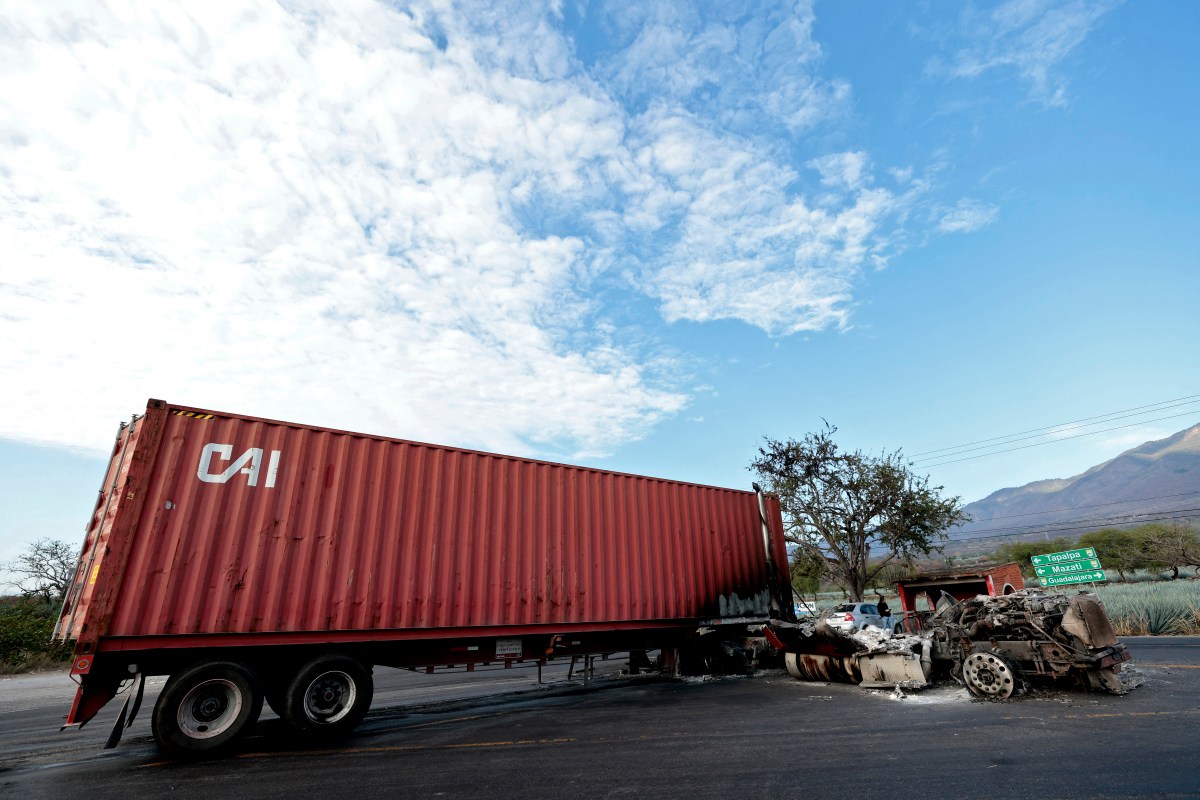
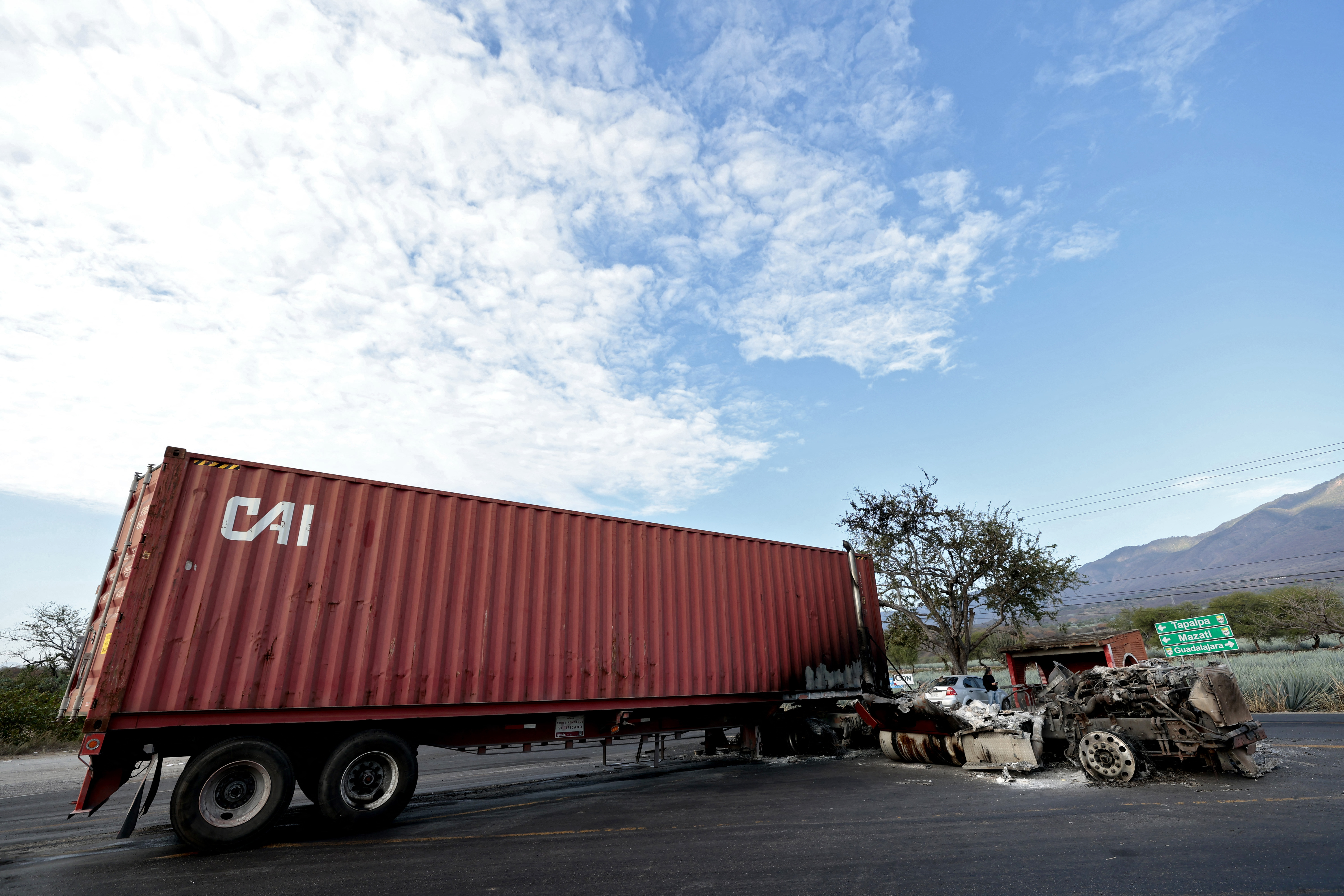
On February 22, 2026, Mexican federal security forces launched a raid at a ranch in Tapalpa, Jalisco that led to the killing of “El Mencho”—Nemesio Oseguera Cervantes, the leader of the Cártel de Jalisco Nueva Generación (CJNG), one of the most powerful criminal organizations in the country.
The operation took place amid a broader reshuffling of Mexico’s criminal landscape following the arrest of a founder of the Sinaloa Cartel, Ismael “El Mayo” Zambada, in July 2024, which led to the outbreak of an internecine war between the cartel’s rival factions. Against this backdrop, the death of El Mencho raised questions about the likelihood of internal fragmentation within the CJNG and the wider consequences for territorial disputes between criminal organizations across Mexico.
When discussing violence and conflict in Mexico, emphasis is often placed on criminal groups and how they relate with one another. Discussions around security forces and their operations tend to revolve around their ability, or inability, to reduce or prevent violence, which often overlooks the role that they play in shaping criminal dynamics in the first place. This article focuses on this premise and examines how security policy under the presidency of Claudia Sheinbaum may be shaping criminal dynamics, and whether, after nearly two years in office, Sheinbaum’s security operations have coincided with shifts in violence.
The article first provides a brief overview of the previous government’s security policy in Mexico and how those policies have impacted criminal dynamics. Using conflict event data produced by the Armed Conflict and Location Event Data (ACLED), it highlights how criminal dynamics have already experienced significant shifts in recent years following the Sinaloa Cartel’s rift, and it proceeds to identify states recording the most significant shifts in violence trends in 2025 and 2026.
While it is still early to conduct a full assessment of Sheinbaum’s policy, the article contends that security operations have led to uneven shifts in violence trends within the country. In the state of Morelos, for example, violence levels increased between January and August 2026 compared to the same period in 2025, likely as a result of intensified criminal competition prompted by efforts to dismantle criminal extortion networks. Meanwhile, in hotspots of violence, Sinaloa and Michoacán, and in Jalisco, violence levels during the same period declined, although in the former two, violence has spread to new municipalities, while in the latter, it likely reflects a tactical retreat, enabled by the CJNG’s hegemony in that state. Overall, heightened security pressure by Mexican authorities has further contributed to the acceleration of an emerging trend, whereby criminal groups have been turning to remote and less overt forms of violence likely to avoid exposure, while still reaching new territories and rivals over that same span of time.
Leveraging Conflict and Event Data to Understand Shifts in Criminal Dynamics
This article examines the security approach adopted under Mexican President Claudia Sheinbaum’s government, and whether it has contributed to shifts in violence trends involving non-state armed groups. The analysis uses conflict event data from ACLED covering the period January 1, 2018, to August 28, 2026.1
ACLED collects political violence and demonstration events and reports information on the event type, date, actors involved, type of interaction, and georeferenced locations. The information is collected from a combination of open sources, including traditional and new media, reports from international institutions and non-governmental organizations, and local partner data. The analysis relies on political violence events, defined by ACLED as “the use of force by a group with a political purpose or motivation, or with distinct political effects,”2 which, in the case of Mexico, encompasses the violent activities of non-state armed groups such as criminal organizations, categorized in ACLED dataset under the political militia actor type.
ACLED’s dataset classifies conflict events into three disorder categories: political violence, demonstrations, and strategic developments. This article focuses on political violence, which includes the use of physical force by or against a specific individual or group. It therefore excludes threats, or the destruction of properties, including damages associated with the setting of roadblocks by criminal organizations, which ACLED tracks less systematically under strategic developments. The political violence disorder category encompasses the following event types and sub-event types: battles: armed clash and non-state actor overtakes territory or government regains territory; explosions/remote violence: air/drone strike, grenade, chemical weapon, suicide bomb, shelling/artillery/missile attack, and remote explosives/landmine/IED; protests: excessive force against protesters; riots: mob violence; violence against civilians: abduction/forced disappearance, attack, and sexual violence.
To assess changes in violence patterns involving criminal organizations in Mexico, this article examines the number of events, a variable that measures the frequency of violence rather than its intensity. It is important to note that ACLED relies on information reported by open sources. As a result, the number of events and reported fatalities are likely underestimates and might be subjected to biases in reporting, but ACLED data can still be used to identify broader trends and conflict patterns.
The article explores temporal and geographic overlaps between clashes between non-state armed groups and state forces, and clashes between non-state armed groups and their targeting of civilians. However, it does not test for statistical correlation or causal relationship between these trends. Consequently, while the article explores several hypotheses that may explain shifts in the observed violence trends, they should be considered alongside other contextual dynamics that are also likely influencing patterns of violence.
To ensure clarity and consistency throughout the article, this study defines its principal terms and distinguishes violence involving non-state armed groups’ from armed interactions involving state forces. “Non-state armed group violence” includes political violence events and all interactions involving political militia and identity militia actors.3 It includes symmetrical interaction between non-state armed groups and asymmetrical actions involving non-state armed groups, including non-state armed groups targeting civilians.a The symmetrical interaction with state forces is analyzed separately to understand patterns in the state’s security response to violence.
Changes in geographical patterns of violence in Mexico were identified through the disaggregation of events along Mexico’s administrative divisions as well as identification and analysis of trends at the state and municipal levels in the country.
The analysis of non-state armed groups’ mode of violence relies on two ACLED variables: the sub-event type and the notes, which can provide useful additional details, such as the use of specific weapons.
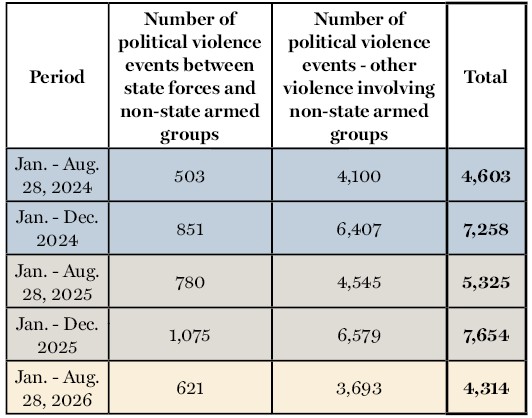
Before examining recent shifts in violence patterns, Table 1 presents the baseline number of political violence events involving non-state armed groups recorded in Mexico between January 1, 2024, and August 28, 2026. The data is disaggregated by violence involving non-state armed groups and violent interaction between non-state armed groups and state forces. It provides yearly political violence figures, as well as violence levels between January, 1 and August, 28 to allow comparison with 2026 and data available at the time of publication.
Table 1: Political Violence Events Involving Non-State Armed Groups in Mexico (January 1, 2024 – August 28, 2026)
Beyond the Kingpin Strategy
The removal El Mencho and eight other CJNG members in February 2026 rekindled debate over President Sheinbaum’s security approach and whether her administration is reenacting the “kingpin” strategy that defined Felipe Calderón’s war on drugs, launched in 2006.4
The “kingpin” strategy, as implemented throughout Calderón’s mandate, consisted of decapitating criminal organizations by targeting high-ranking members. Between 2006 and 2012, security operations led to the killing and arrest of some of the most-wanted organized crime group leaders in Mexico, including Beltrán Leyva, Arellano Félix, and Sinaloa Cartel and Gulf Cartel leaders.5 These operations contributed or led to the fragmentation of Mexico’s main criminal organizations into smaller factions, reshuffling the country’s criminal landscape. Pre-established alliances and territorial arrangements broke down and shifts in the balance of power among warring criminal groups intensified competition, which led to skyrocketing levels of violence in Mexico. After spiking in the early 2010s and surging again in the second half of the decade, homicides declined between 2020 and 2023, but have remained high until today.6
While the strategic targeting of criminal leaders continued under Calderón’s successor, Peña Nieto,7 the election of Andrés Manuel López Obrador (AMLO) of the National Regeneration Movement (Morena) in 2018 marked a significant shift in Mexico’s approach to organized criminal organizations. AMLO campaigned on the “Hugs not Bullets” approach, emphasizing the need to tackle organized crime through social spending to tackle economic incentives that had drawn Mexico’s population to join criminal ranks.8 Although the militarization of security continued under his presidency—with the creation of the National Guard and its later incorporation into the military9—his mandate was resolutely less confrontational to Mexico’s criminal organizations. As early as 2020, a little over a year after AMLO took office, ACLED recorded a 15 percent decrease in clashes between security forces and non-state armed groups compared to the previous year.
After coming to power in October 2024, AMLO’s political heir, President Claudia Sheinbaum, did not formally rebuke AMLO’s approach and reinforced her administration’s commitment to addressing the social causes of crime.10 Yet, during her first year in office, the government under took more direct action operations against criminal organization than under her predecessor’s mandate, with clashes between security forces and non-state armed groups increasing by 26 percent in 2025 compared to the previous year.
Several factors have contributed to the surge in direct confrontations. First, the government inherited the severe deterioration in security in the state of Sinaloa. The arrest of Ismael Zambada “El Mayo” in the United States in July 2024 led to the outbreak of the Sinaloa Cartel’s war that pitted the Los Mayos and Los Chapitos factions against each other. The intensification of criminal competition in Sinaloa prompted heightened security operations prior to Sheinbaum’s arrival in power11 and mobilized much of the federal security capabilities early in her mandate. Second, since taking office in January 2025, the administration of U.S. President Donald Trump has issued threats of tariffs and foreign military intervention to pressure the Mexican government into curbing drug trafficking and migrants flows.12 The moves effectively prompted Sheinbaum’s government to demonstrate steadfast efforts to curb organized crime. As a result, clashes between Mexican security forces and criminal groups intensified in the first quarter of 2025. Security operations concentrated in Mexico’s violence hotspots, such as in the states of Sinaloa and Michoacán, and in states bordering the United States, with the deployment of 10,000 Mexican security personnel in February 2025.13 In addition, U.S. authorities have played a crucial role in Mexican security operations by providing intelligence. Although conducted by Mexican forces, the operation that led to the killing of El Mencho relied on U.S.-provided intelligence to identify CJNG’s hideout.14
While heightened confrontations between security forces and high-value targeting of criminal organizations under Sheinbaum share similarities with Calderon’s kingpin approach, the government’s strategy differs from the earlier model in several respects. Sheinbaum’s approach has notably prioritized greater use of intelligence to dismantle criminal groups’ financial operations and targeted middlemen and regional leaders,15 which, in the medium term, could disrupt supply and operational networks and harm criminal organizations’ operational base, rather than removing a leader, who is more easily replaced. In addition, Sheinbaum’s government has further rolled out law enforcement operations along with several social programs, including the Plan Michoacan for Peace and Justice in November 2025,16 which, if successful, might weaken the conditions that enable criminal groups to draw or coerce individuals into their activities.
Overall, Sheinbaum’s security approach took a more confrontational turn than her predecessor’s but differs from the traditional kingpin strategy applied under Calderón. Still, irrespective of the government in power or the approach adopted, security forces have historically played a significant role in shaping criminal dynamics in the country. The remaining sections of this article seek to assess the footprint that Sheinbaum’s security approach is leaving on conflict trends in Mexico and the country’s criminal landscape.
An Already Shifting Criminal Landscape
When assessing the effects of President Sheinbaum’s security operations on the reshuffling of criminal dynamics in 2025 and 2026, it is important to account for preexisting instability. Sheinbaum took office in October 2024 amid significant shifts in Mexico’s criminal landscape. Her administration began a little over a month after the outburst of the Sinaloa Cartel’s factional war between Los Chapitos and Los Mayos, one of the most kinetic criminal disputes in the country in recent years. As noted earlier, the conflict was triggered by the arrest of Sinaloa Cartel’s founder Ismael Zambada “El Mayo” in the United States in July 2024, after his nephew Joaquín Guzmán Loera, one of Los Chapitos’ leaders and son of El Chapo, betrayed him.17
The dispute translated into a severe increase in non-state armed groups’ violence in the state of Sinaloa, with at least 116 events in the third quarter of 2024, double the level recorded during the previous quarter, and doubling again to 330 events in the fourth quarter. The Los Chapitos and Los Mayos turf war and competition for control of criminal economies had already concentrated in the state of Sinaloa. But in 2025, it spilled over into nearby northern states, including the state of Durango, one of the Sinaloa Cartel’s strongholds, and Baja California Sur, where factional wars spread. Violence also rose from 2024 to 2025 by 21 percent and 50 percent in the Baja California and Sonora states, where disputes between factions allied with Los Chapitos and Los Mayos surged to secure strategic control over smuggling and trafficking routes along the U.S. border.18
Yet, the surge in violence in northern states cannot solely be attributed to infighting between Los Chapitos and Los Mayos, or to proxy wars through their allies. The Sinaloa Cartel’s weakening has also led to opportunistic incursions from rival criminal groups and the formation of new alliances. For instance, the Nayarit state saw several violent incidents in 2025 linked to the CJNG and the Sinaloa Cartel’s movement to secure access to trafficking corridors.19 Meanwhile, the perceived weakening of the Sinaloa Cartel likely led to increased competition at border crossing points in Tijuana, which is home to a fragmented criminal landscape.20
Shifts in violence patterns in those states in 2025 provide evidence of the ongoing reshuffling of criminal disputes and territorial control that the Sheinbaum administration faced shortly after coming into office. The killing of CJNG leader El Mencho and the subsequent arrest of the cartel’s senior figures in 2026 further produced an aftershock in Mexico’s criminal landscape. While the targeting of the CJNG leadership structure has thus far not resulted in significant factional war along the lines of the Sinaloa Cartel’s conflict, the following section examines where overlapping restructuring processes are producing changes in 2026, and how heightened security operations might be feeding into those patterns.
Uneven Patterns of Violence Reduction in 2026
Between January and August 2026, non-state armed group violence decreased by 19 percent nationwide compared to the same period in 2025.b (See definition of non-state armed group violence provided earlier.) However, the downward trend is not a uniform pattern across Mexico’s states. In the Sinaloa and Michoacán states, where security efforts have been most significantly concentrated, violence levels decreased by 29 percent and 15 percent respectively, although violence appears to be relocating across new municipalities as turf wars persist. Meanwhile, in Morelos state, non-state armed groups’ violence increased by nearly 78 percent in 2026, despite ongoing raids to dismantle extortion networks, suggesting that security operations might have indirectly contributed to heightened competition between criminal groups. In contrast, the state of Jalisco is experiencing a 41 percent drop in violence in 2026, though this drop may be the result of criminal adaptation rather than increased security pressure in the state.
Modest security gains in Sinaloa and Michoacán as criminal disputes persist and spread
As two of Mexico’s most violent and criminally competitive hotspots, the states of Sinaloa and Michoacán have been home to some of the largest deployments of security forces in the country in the last two years. Despite a 29 percent and 15 percent respective decrease in violence in each state in the first eight months of 2026 compared to the same period in 2025, disputes have spread to new areas, highlighting the limitations of security efforts in high-intensity and significantly fragmented conflict theaters and how security pressure applied in one area can have a spillover impact on criminal activity and violence in other areas.
As of May 2026, over 13,000 federal personnel were reportedly deployed in Sinaloa, and over 12,500 in Michoacán as part of the Michoacán Plan for Peace and Security launched in November 2025.21 Reinforced security operations have further led to some of the highest levels of clashes between security forces and non-state armed groups in those states in 2025. For example, in 2025, ACLED records at least 179 clashes between non-state armed groups and security forces in Michoacán and 240 clashes in Sinaloa, representing an 86 percent and 176 percent increase, respectively, compared to the previous year.
In Sinaloa State, non-state armed groups’ violence dropped by 33 percent between January and July 2026 compared to the same period in 2025. The decrease in violent incidents is particularly pronounced in the municipality of Culiacán, the epicenter of the disputes between Los Chapitos and Los Mayos, a gain attributed to the “deterrent effect” of security forces’ presence, but also to the tactical victory of El Mayo’s faction over Los Chapitos territories in the city.22 The further decrease in violence in Culiacán in July and August 2026 has been attributed to the killing of Los Chapitos local commander Cristhian Guadalupe Pérez Pérez, also known as “El Texas” or “El 01,” during a federal operation on July 8, 2026.23 However, the concentration of security operations in and around Culiacán has likely shifted the conflict’s epicenter to Sinaloa’s southern municipalities, with violence levels doubling in Mazatlán and experiencing a five-fold increase in Escuinapa in 2026 compared to the previous year.
The displacement of violence away from areas experiencing heightened security pressure is not isolated to Sinaloa. A similar trend can be observed in the state of Michoacán. Security efforts throughout 2025 and the launch of the Plan Michoacán for Peace and Justice in November 2025 coincided with a 31 percent decrease in violence in the municipality of Apatzingán in 2026 and a 55 percent decrease in violence in the municipality of Buenavista in 2026. Nevertheless, between January and July 2026, violence progressively increased elsewhere in Michoacán, including avocado-producing municipalities in the central-western municipalities and in the Purépecha plateau.24
Arrests, Operation Enjambre, and the intensification of disputes over extortion markets in Morelos
Unlike in other states, where security operations coincided with a decrease, or at least stagnation, in violence, in Morelos, efforts to dismantle extortion networks did not yield significant security improvements in the first eight months of 2026 and instead contributed to heightened competition between criminal groups.
Throughout 2025, state and federal authorities conducted a series of operations targeting local criminal leaders involved in extortion schemes. For instance, raids in Yautepec in July 2025 led to the arrest of members of La Nueva Empresa, and in October 2025, the arrest of the leader of Los Acapulcos in Cuautla, a local faction tied to the criminal organization Guerreros Unidos.25 In both municipalities, the operations were followed by an uptick in violence in 2026: Between January and August 2026 alone, recorded violence was nearly double the total reported in Yautepec throughout the whole of 2025, and five times the corresponding annual total in Cuautla. Against the backdrop of Morelos’ increasingly fragmented criminal landscape,26 the targeting of regional leaders and the disruption of extortion networks have likely created opportunities for rival groups to compete for control of local extortion markets.
Additional security efforts in the Morelos in 2026—part of Operation Enjambre, a cross-state federal initiative launched in 2024 to investigate and dismantle networks of corruption and suspected collusion between local authorities and criminal groups—may help weaken criminal organizations but have thus far not translated into a reduction in violence. By mid-June 2026, federal authorities had arrested 85 former and current public officials throughout the country as part of the operation, including at least six in Morelos for alleged ties with organized crime groups and participation in extortion schemes. For example, this included officials in Amacuzac, the municipal president of Cuautla, the mayor of Atlatlahucan, and the former mayor of Yecapixtla in Morelos.27 Still, violence levels after the arrests in June and July 2026 have remained at high levels in those municipalities.
Reduced violence in Jalisco as the CJNG reorganizes and adapts
Throughout 2025 and the first half of 2026, state and federal authorities have also intensified law enforcement operations in Jalisco state, the stronghold of the CJNG. Those operations have coincided with a 41 percent drop in violence throughout the first eight months of 2026 compared to the same period in 2025, which, in light of the CJNG’s hegemony in the state, likely reflect criminal adaptation rather than the effectiveness of the measures. The CJNG has faced limited competition from rival groups over the control of its turf in Jalisco, giving it greater latitude to lower its operations and limit the needs to resort to public displays of violence during heightened security pressure.
In 2025, authorities multiplied raids and criminal assets seizures, including the destruction of drug-production laboratories.28 The intensification of security efforts throughout 2025 and 2026 culminated in an operation in Tapalpa and the killing of the CJNG’s leader on February 22, 2026, and the subsequent deployment of 2,000 military personnel throughout the state. It also featured the arrests in April 2026 of additional CJNG leaders César Alejandro “El Güero Conta” in Zapopan and Audias Flores Silva “El Jardinero” in neighboring Nayarit state.29
Unlike in other states, where the results of law enforcement operations appear more limited, in Jalisco violence levels declined significantly: Gang violence decreased by 21 percent between 2024 and 2025 and by another 42 percent between January and July 2026 compared to the same period in 2025. The contrast with violence trends in other states should not, however, be interpreted as evidence that security efforts have successfully dismantled the CJNG. The criminal organization has remained active in other states. It notably continues to engage in turf wars with rivals in Baja California and Michoacán and, throughout 2026, has deployed several large-scale coordinated roadblocks in the country, particularly in Michoacán, as a show of force against security operations targeting its members.30 The security operations and removal of CJNG leaders have also thus far not led to a visible fragmentation of the group, nor the internecine conflict observed in Sinaloa.
Instead, in the author’s view, the drop in violence in Jalisco more likely reflects CJNG’s tactical retreat, at least in its home territory, and a temporary reduction in visible violence in the face of heightened security pressure. Unlike in other settings in Mexico where severe criminal fragmentation has been reported and observed, the reduction in the intensity of CJNG’s operations is enabled by the hegemony the criminal group has exerted over the state and the organization’s coherence and ability to withstand the loss of its leader. These dynamics have arguably shielded the group thus far from opportunistic incursions in its stronghold by rival criminal organizations or factions.
Criminal Groups’ Adaptation in Response to Security Pressure
Security operations during the Sheinbaum administration have targeted important linkages between criminal organizations and colluding political actors, disrupting leadership structures and criminal groups’ sources of revenue and material. These interventions are reshaping Mexico’s criminal landscape, altering violence levels, and realigning the balance of power between criminal groups as well as the geography of conflict among criminal actors. By increasing the risks associated with territorial presence and open confrontation, security pressure appears to be changing how criminal organizations execute violence. For example, since 2024, criminal organizations in Mexico have increasingly resorted to less overt forms of violence and warfare techniques that limit their exposure, including forced disappearances, and more remote forms of violence such as drone strikes.
In 2026, the Sheinbaum government highlighted a drop in homicides across the country, which officials have widely attributed to the implementation of reinforced security measures and operations.31 The discovery of mass graves and cremation ovens in Jalisco in March 2025 has, however, highlighted the severe forced disappearances crisis Mexico faces.32 With about 128,000 people considered missing as of June 2025,33 the discovery brought the government’s homicide figures under renewed scrutiny. Jalisco’ capital of Guadalajara had the highest number of forced disappearances, a trend largely attributed to the CJNG as a means for the organization to exert control while staying off the authorities’ radar. The targeting of madres buscadoras, human rights activists searching for missing relatives, has also been on the rise in recent years,34 suggesting that organized crime groups have deliberately sought to avoid drawing attention to their methods.
At the same time, criminal groups have increasingly resorted to the use of remote violence to reach their enemies through limited exposure. Criminal groups in Mexico previously relied on commercial drones for surveillance or to ship drugs. However, in more recent years, criminal groups in the country have been using armed drones with improvised explosives as an attack vector. While this tactic has remained confined to Mexico’s most severe conflict theaters, such as in Sinaloa and Michoacán, their use has grown significantly since 2024. In 2026, ACLED records at least 54 drone strikes launched by non-state armed groups, and is on track to reach similar levels recorded last year.c Explosive-laden drones are also currently being used by Mexican cartels to repel security forces, target rivals, and establish territorial control by terrorizing the local population.35
Criminal groups’ heightened sophistication and use of remote violence is further evidenced in the Michoacán state, where, in addition to drone strikes, the use of improvised landmines has followed a similar upward pattern. Between January and August 2026, ACLED records at least 33 events involving the use of remote explosives, landmine or IED, reaching similar levels recorded for the whole of 2025. The tactic has allowed groups to achieve control over agricultural exploitation remotely, on crops such as avocado and lime, coveted for extortion revenues and the prevention of advances from rivals, while raising the risks for farm workers who remain on the frontline of such a tactical shift.36
Against a backdrop of reinforced security forces deployment and presence on the ground, criminal groups’ concealed and remote forms of violence may expand further, which in the long run risks further complicating security and investigative efforts.
Conclusion
Like those of previous administrations, President Sheinbaum’s security approach is contributing to the ongoing reshaping of Mexico’s criminal underworld, which finds itself at a critical juncture amid internal challenges for two of its main criminal organizations.
Despite certain similarities, interpreting Sheinbaum’s security policy as a mere revival of the kingpin strategy would be reductive, given efforts to bring longer-term measures to address the structural drivers of criminal activity through, for instance, increased social spendings and the development of infrastructure. While operations during Sheinbaum’s tenure have indeed targeted high-ranking criminal figures, they have also aimed at middle-ranking figures and key operational actors, including financial specialists. Similarly, the militarization and additional deployments have come alongside efforts to disrupt corruption networks between criminal organizations and political and institutional actors. Still, considerable challenges remain, as illustrated by the collusion allegation surrounding Morena Sinaloa governor Rubén Rocha Moya.37
Security operations have coincided with uneven shifts in violence across states. In some areas, violence has declined, although the case of Jalisco illustrates that such a decrease should not necessarily be interpreted as a security gain and could, in fact, reflect criminal groups’ deliberate shift in tactics. Heightened security pressure on criminal groups can also lead to some adverse secondary effects, driving the spread of violence to new areas, as seen in Sinaloa, or contributing to intensifying criminal competition in Morelos’ fragmented settings.
Despite some preliminary results, it is still early to fully assess the successes and shortcomings of President Sheinbaum’s security policy to combat criminal organizations in the country. Each state is shaped by its own local criminal dynamics or institutional capacities, which can affect the outcome of security operations. Still, the uneven shifts in violence levels can offer some valuable lessons. The displacement of violence at municipal levels, for instance, is a pattern that could also be replicated at a wider scale. As such, concentrating operations in a specific state is likely to create new hotspots of criminal competition in the future, which highlights the need for a comprehensive approach to security in the country. In addition, to better understand the conditions under which violence is most likely to decrease, future research should consider how the local level of criminal fragmentation—in other words, how many criminal groups are competing for territorial control and the criminal market in a given area—affects the outcome of security operations and the likelihood of triggering violent competition among rival groups.
Finally, considering the emergence of criminal groups’ growing reliance on covert violence, future assessments of security gains and their impact on criminal activities can rely on violence patterns and levels, but should also account for criminal activity that is less visible. Information on criminal economies, particularly extortion, may offer a better indication of the extent to which criminal groups exercise control over a certain territory or population than just the number of violent incidents. Trends identified through event-data analysis should therefore be interpreted alongside other factors that such data cannot fully capture, including the longer-term effects of social policies and the broader approach to crime prevention that the Sheinbaum administration seeks to establish. CTC
Sandra Pellegrini is a conflict analyst specializing in political violence, non-state armed actors, and organized crime. She currently serves as ACLED’s Regional Team Lead for Latin America and the Caribbean, coordinating data collection and analysis across the region. Her work spans conflict monitoring, trend analysis, and research coordination, with regional experience across Latin America and the Caribbean, Eastern Europe, and Central Asia.
Her previous roles include work with intergovernmental organizations and conflict-monitoring and prevention mechanisms, notably the OSCE Special Monitoring Mission to Ukraine and the OSCE High Commissioner on National Minorities. She has also worked in the non-governmental sector, with professional experience in Bolivia, Chile, Haiti, and Honduras.
© 2026 Sandra Pellegrini
Substantive Notes
[a] Symmetrical actions generally refers to confrontation between two armed actors with the capacity to retaliate, such as clashes between two criminal organizations or clashes between a criminal group and security forces. Asymmetrical actions refers to interactions where only one of the parties can participate in an armed engagement, typically when one armed group targets civilians, which are by definition unarmed, or when an armed group uses remote-warfare tactics such as a drone strike or IED explosions without an identifiable target or victim.
[b] Between 1 January and August 28, 2025, ACLED records 4,906 political violence events involving non-state armed groups, aside from violent interactions with state forces, against 3,807 events over the same period in 2026.
[c] Last downloaded on September 2, 2026. These figures were established relying mostly on open news coverage. Those reports rely principally on criminal groups’, security forces’, and the affected population’s own reporting and therefore the number of strikes are likely underreported, especially in remote areas. The continuous risks of reporting on criminal groups’ activities often lead to self-censoring of journalists, which further complicates obtaining access to comprehensive and reliable figures.
Citations
[1] Clionadh Raleigh, Roudabeh Kishi, and Andrew Linke, “Political instability patterns are obscured by conflict dataset scope conditions, sources, and coding choices,” Humanities and Social Sciences Communications, February 25, 2023.
[2] “ACLED Codebook,” Armed Conflict and Event Data Location, last accessed on August 20, 2026.
[3] Ibid.
[4] Stephanie Brewer, “The death of El Mencho and the Pyrrhic victories of the ‘war on drugs’ in Mexico,” Washington Office on Latin America, March 4, 2026.
[5] “Explainer: How Mexico’s drug cartels fragmented,” BBC Monitoring, January 15, 2018.
[6] Oscar Contreras Velasco, “Unintended consequences of state action: how the kingpin strategy transformed the structure of violence in Mexico’s organized crime,” Trends in Organized Crime 28 (2025).
[7] Patrick Corcoran, “Mexico President Reprises Controversial Kingpin Strategy,” InSight Crime, June 6, 2017.
[8] Gladys McCormick and Linnea Sandin, “‘Abrazos no Balazos’ —Evaluating AMLO’s Security Initiatives,” Center for Strategic & International Studies, December 13, 2019.
[9] Fabiola Sánchez, “Mexico’s Congress puts National Guard under military command despite criticism. Why does it matter?” Associated Press, September 25, 2024.
[10] Cassandra Garrison and Ana Isabel Martinez, “Mexico’s Sheinbaum Rolls out security strategy to strengthen police, intelligence,” Reuters, October 8, 2024.
[11] Mark Stevenson, “Mexico appears to abandon its ‘hugs, not bullet’ strategy as bloodshed plagues the country,” Associated Press, November 7, 2024.
[12] Vanessa Rubio-Márquez, “Despite Trump’s threats, Mexico is of fundamental importance to the US economy,” Chatham House, February 2025.
[13] Lizbeth Díaz, “Mexican troops deployed to border as part of deal to pause US tariffs,” Reuters, February 5, 2025.
[14] Julian E. Barnes and Maria Abi-Habib, “U.S. and Mexican Officials Deny C.I.A. Had Lethal Role in Mexico Operation,” New York Times, May 12, 2026.
[15] Jacques Coste, “The missing Elements in Sheinbaum’s Crime-Fighting Strategy,” Americas Quarterly, March 27, 2025.
[16] Presidencia de la República, “Presidenta anuncia Plan Michoacán por la Paz y la Justicia; ‘la seguridad se sostiene con justicia, desarrollo y respeto a la vida,’” Gobierno de México, November 4, 2025.
[17] Elías Camhaji, “Kidnapping theory gains traction in ‘El Mayo’ case: Ambush, betrayal and secret contacts with the US,” País, July 30, 2024.
[18] María Fernanda Arocha and Sandra Pellegrini, “How the Sinaloa Cartel Risk is Redrawing Mexico’s Criminal Map,” Armed Conflict Location & Event, May 7, 2025.
[19] Anayeli Tapia Sandoval, “Narco se reacomodaría en Colima, Nayarit y Quintana Roo tras presión en el norte de México,” Infobae, May 29, 2025.
[20] María Fernanda Arocha and Sandra Pellegrini, “How the Sinaloa Cartel Risk is Redrawing Mexico’s Criminal Map,” Armed Conflict Location & Event, May 7, 2025.
[21] Sandra Solís, “Hay 13 mil 300 militares desplegados en Sinaloa; Gobierno del Estado no contempla pedir refuerzo,” Línea Directa Portal, May 5, 2026; Enya M. Contreras, “Luego del asesinato de Carlos Manzo, el gobierno de Sheinbaum desplegó más de 12 mil elementos y sumó vehículos blindados Black Mamba para enfrentar al crimen organizado en Michoacán,” El Imparcial, April 15, 2026.
[22] “Sinaloa’s War of the Splinters: Fighting Crime in Mexico under U.S. Threat,” International Crisis Group, July 7, 2026.
[23] Marcos de Vizcarra, “‘A la Sierra ni se acerquen’: la guerra se fracciona en Sinaloa y arrecia la violencia en Mazatlán,” País, August 9, 2026.
[24] Elizabeth Guzmán, “Michoacán mantiene vigilancia en Meseta Purépecha tras hechos violentos,” Milenio, May 19, 2026.
[25] “Golpe a la extorsión en Morelos: Detienen a 6 presuntos integrantes del grupo ‘La Empresa,’” El Financiero, July 25, 2025; Juan Castillo, “Quién es ‘La Vara,’” presunto líder de Guerreros Unidos detenido en Morelos,” Infobae, October 28, 2025.
[26] Lidia Arista, “Morelos es disputado por 11 organizaciones criminales; corrupción de autoridades, clave para su operación,” Expansión Política, May 25, 2026.
[27] SPR Informa, “¿Qué es la Operación Enjambre? El operativo que ya suma 85 funcionarios detenidos por presuntos vínculos con el crimen,” June 16, 2026.
[28] Luis Herrera, “Cae la cantidad de narcolaboratorios encontrados y destruidos en Jalisco,” Reporte Indigo, June 1, 2026.
[29] Rocío Muñoz-Ledo, “¿Quién es el jardinero, ‘el segundo al mando del CJNG’ y posible sucesor del Mencho, y cómo lo detuvieron?” CNN, April 28, 2026.
[30] “Los violentos ‘narcobloqueos’ de carreteras que paralizaron partes del estado mexicano de Michoacán, bastión del Cartel Jaslico Nueva Generación,” BBC News Mundo, August 19, 2026.
[31] Paulina Flores Ramírez, “El Gobierno presume de que los homicidios van a la baja en todo el país,” País, May 12, 2026.
[32] “Mexico: The state must investigate the finding of mass graves in Jalisco and Tamaulipas,” Amnesty International, March 18, 2025.
[33] Comisión Interamericana de Derechos Humanos, “Informe sobre desapariciones en México,” Organization of American States, February 9, 2026.
[34] “México: Desaparecer otra vez: Violencias y afectaciones que enfrentan las mujeres buscadoras en México,” Amnesty International, July 8, 2025.
[35] Vanda Felbab-Brown, “How Mexican cartels are using drones, now and in the future,” Brookings, February 19, 2026.
[36] Sandra Pellegrini, “Security operations to protect avocado production reshape criminal risks across Michoacán,” Armed Conflict Location & Event Data, August 27, 2026.
[37] Victoria Dittmar and Parker Asmann, “The InSight Take: Rubén Rocha Moya’s Alleged Sinaloa Cartel Ties Highlight Criminal Governance in Mexico,” InSight Crime, April 30, 2026.
