
Abstract: On December 14, 2025, two Islamic State supporters carried out the first mass casualty terrorist attack on Australian soil, targeting the Jewish community in the Sydney suburb of Bondi. This article analyzes the Bondi massacre, what the attack involved, and how it differs from earlier jihadi attacks in Australia. The article also examines how the attack came about, combining the currently available information on the pathways of the alleged attackers with the broader context of the Islamic State’s approach to transnational mobilization and its recent efforts to exploit the war in Gaza to regain some global momentum. In doing so, this article identifies how the Islamic State’s post-Gaza adaptations contributed to the deadliest jihadi terror attack in Australia’s history.
On December 14, 2025, two men carried out a mass shooting and attempted bombing attack at Bondi Beach in Sydney, Australia. The attack targeted a Hanukkah celebration, killing 15 people and wounding 40 others. The terrorists unveiled two Islamic State flags at the scene as a precursor to the shooting.1 Within days, the Islamic State claimed—via its Al Naba newsletter—to have inspired the attack by having “consistently incited the targeting of Jews and Christians during their holidays and gatherings” and credited the attackers with having “answered the call and carried out the recommendations to target holidays and gatherings.”2 It was the 12th jihadi attack in Australia since the Islamic State declared its ‘caliphate’ in mid-2014, but its consequences were unprecedented, causing more fatalities than all earlier jihadi attacks in Australia combined. It was also the deadliest jihadi attack in a Western country since 2017, and the deadliest Islamic State attack targeting Jewish people in the movement’s history.a
This article examines the antisemitic mass murder in Bondi in the context of prior Australian jihadi activity and post-October 7 shifts in the Islamic State’s approach to transnational mobilization. It first examines the attack itself, including the evidence of substantive planning and Islamic State inspiration. The article then situates the Bondi shooting in the context of over 25 years of jihadi activity in Australia, showing how it differs from earlier plots and attacks in crucial respects and what this means for the threat environment. The article also explains how the attack can be understood as an outcome of the Islamic State’s exploitation of the war in Gaza and its strategic adaptation in order to regain some global momentum. The article concludes by examining what is currently known about the radicalization and mobilization of the two men alleged to have carried out the attack, to help explain how such an unprecedented event occurred in Australia.b
The Bondi Attack
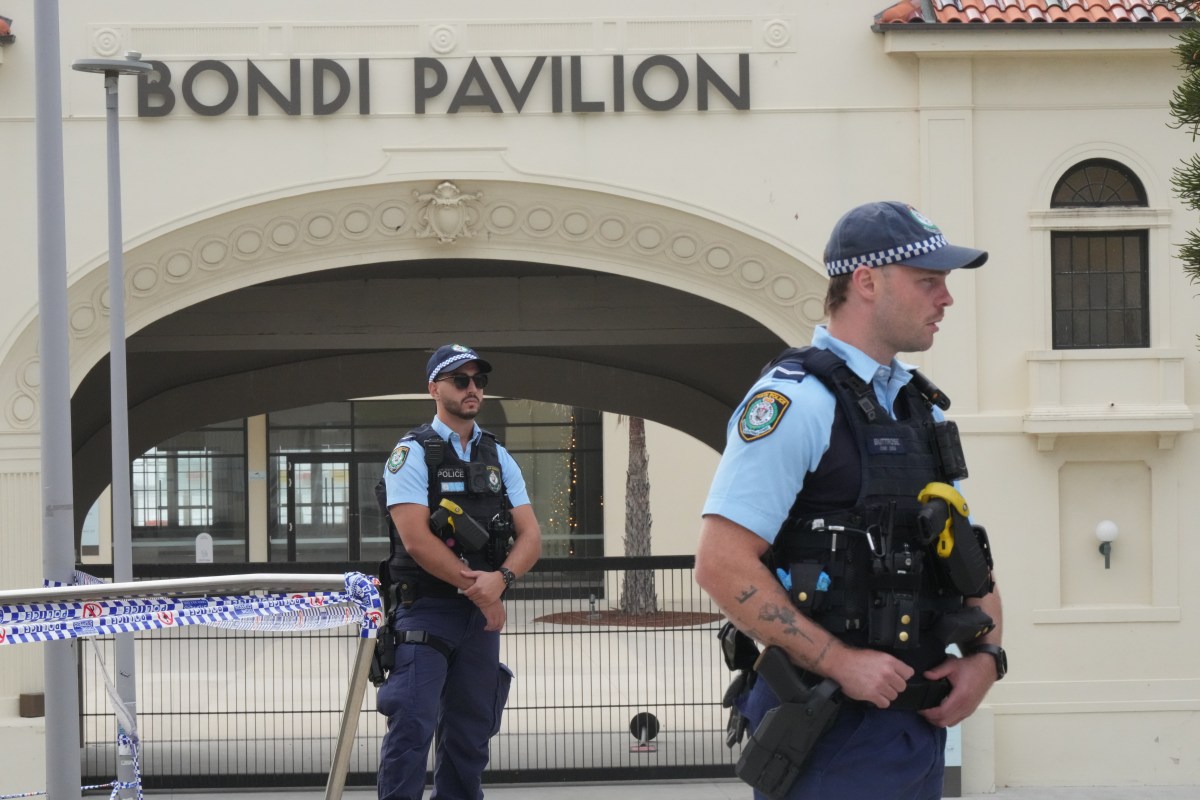
On the evening of December 14, 2025, two men drove to the Sydney suburb of Bondi. They parked near a footbridge overlooking Archer Park, where the annual Chanukah by the Sea festival was being attended by roughly 1,000 people.3 They removed two single barrel shotguns and a Beretta rifle from the car, along with multiple improvised explosive devices (IEDs)c and placed homemade Islamic State flags on the front and rear windshields of their vehicle.4 They threw the IEDs in the direction of the festival, but they failed to detonate.d The younger gunman positioned himself on the footbridge and began firing at the festival attendees approximately 50 meters away.5 The older gunman had remained standing by the vehicle when he first began firing at the event. A nearby man, Boris Gurman, tackled the older gunman and wrestled the firearm from him. However, the gunman used another firearm and fatally shot Boris, before killing his wife, Sofia Gurman.6 The Gurmans were the first two fatalities of the attack, which would claim the lives of 15 people and wound 40.7
The older gunman then joined the younger gunman on the footbridge where they continued to fire at the festival. Dozens of people were shot within minutes. Civilians fled and took shelter, others feigned death to avoid being targeted, and many protected others with their bodies. Bondi lifeguards ran toward the gunfire to treat the wounded, even as the shooting continued.8 After several minutes of firing, the older gunman left the footbridge and walked toward the festival, continuing to shoot people while the younger gunman fired from the footbridge. A bystander named Ahmed al-Ahmed raced toward the older gunman and disarmed him, while another man, Reuven Morrison, threw a brick at the now disarmed gunman.9 However, both al-Ahmed and Morrison were soon shot, Morrison fatally, by the younger assailant firing from the footbridge. The older gunman walked back to bridge, picked up another firearm, and continued shooting.10
At this point, New South Wales (NSW) Police officers (some on duty at the Hannukah event and some newly arrived in response to the shooting) had begun engaging the gunmen. The officers found themselves immediately outgunned, as their handguns had a far shorter range than the attackers’ rifle and shotguns.11 One police vehicle was fired at from 70 meters away as it arrived.12 Several police officers advanced toward the footbridge from different directions and engaged the gunmen. Two officers, Jack Hibbert and Scott Dyson, were wounded by gunfire from the attackers.13 The older gunman was fatally shot by Detective Senior Constable Cesar Barraza, using his Glock 19 service weapon, from around 40 meters away.14 The younger gunman was then shot and wounded, and police moved in and arrested him.15
As emergency services secured the area, established a crime scene, and tended to the victims, counterterrorism authorities sought to make sense of the event, discovering that it had been planned in support of the Islamic State over the preceding months. The NSW Joint Counter Terrorism Team (JCTT), consisting of the Australian Security Intelligence Organisation (ASIO), the Australian Federal Police (AFP), NSW Police, and the NSW Crime Commission, established a new investigation named Operation Arques.16 At 11:50pm that night, they conducted a search of the family home of the two men identified as the shooters, seizing two phones, a homemade wooden firearm, a bow with 12 arrows, and a copy of the Qur’an with highlighted passages.17 The next day, the NSW JCTT searched an Airbnb in the Sydney suburb of Campsie where the two men had stayed before the attack, seizing additional weapons and devices.e Videos from one or more of the seized phones revealed the men had engaged in outdoor firearms training near Goulburn,18 in regional NSW, in late October 2025.19 The NSW JCTT also found a 15-minute video, filmed in October, of the two men in front of the Islamic State flag claiming responsibility for their forthcoming “Bondi attack.”20 The two men had also traveled to the southern Philippines from November 1 to November 29, 2025, and had conducted a reconnaissance visit to Bondi from their Campsie accommodation two days before the attack.21
The NSW JCTT soon initiated legal proceedings.f They alleged that the dead gunman was 50-year-old Sajid Akram, who had immigrated to Australia from India in 1998, and that the surviving gunman was 24-year-old Naveed Akram, Sajid’s son.22 On December 17, 2025, the NSW JCTT charged Naveed Akram with one count of engaging in a terrorist act, 15 counts of murder, 40 counts of attempted murder, and other counts involving discharging a firearm with intent, displaying a prohibited symbol, and placing explosives in a public place.23 The attack was unprecedented in the Australian context, in terms of the scale, complexity, and the specific targeting.
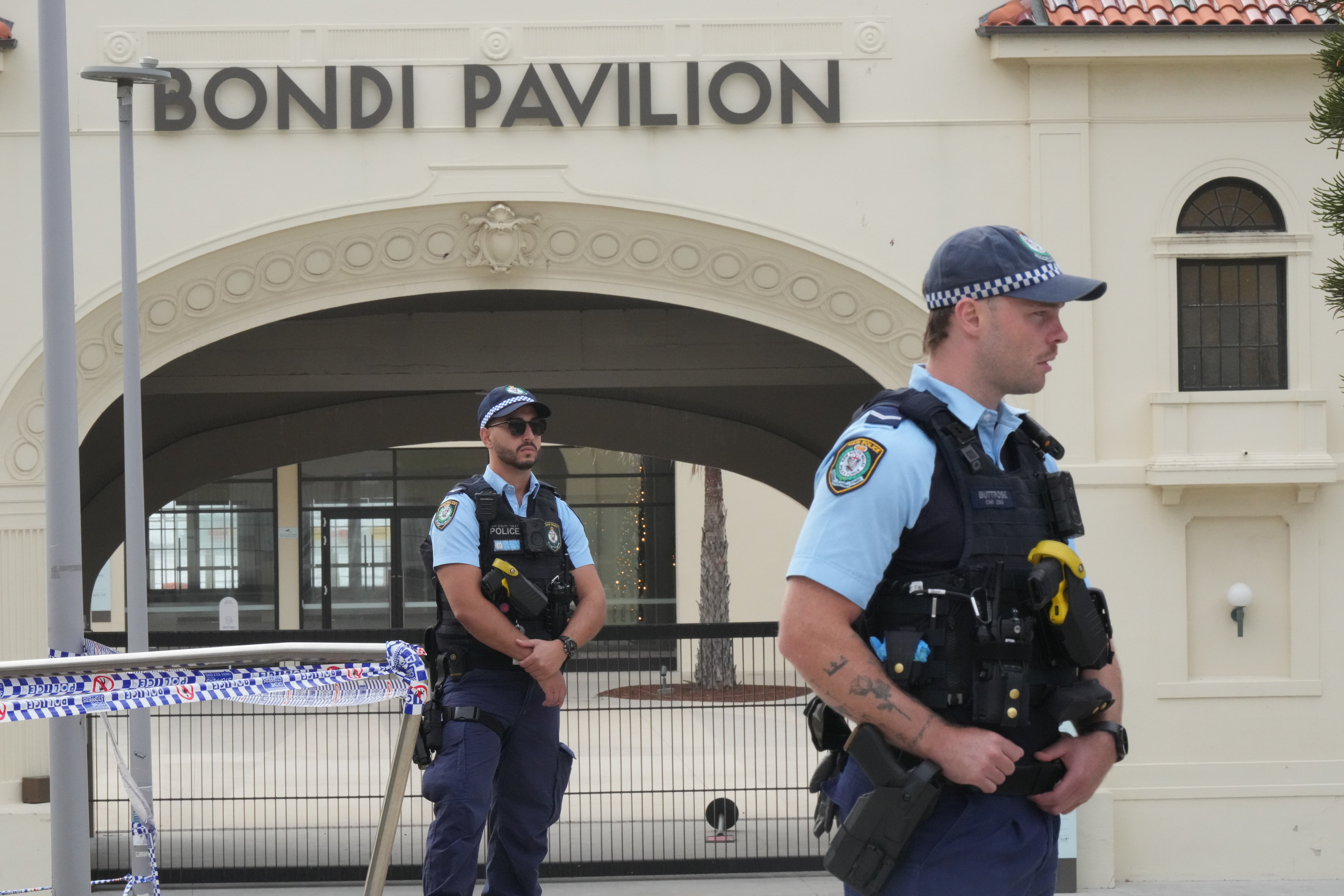
targeted a Hanukkah celebration there. (AP Photo/Mark Baker)
The Bondi Attack in the Context of Australian Jihadism
Before the Bondi massacre, 34 jihadi plots had occurred in Australia according to a dataset maintained by one of the authors.g This began with a small number of highly ambitious but unsuccessful plots: three bombing plots from 2000-2005 with connections to al-Qa`ida and Lashkar-e-Taiba, followed by a mass shooting plot by supporters of al-Shabaab in 2009.h However, the emergence of the Islamic State dramatically changed the threat landscape, resulting in 30 jihadi plots between September 2014 and December 2024, 11 of which resulted in attacks that killed or injured people.
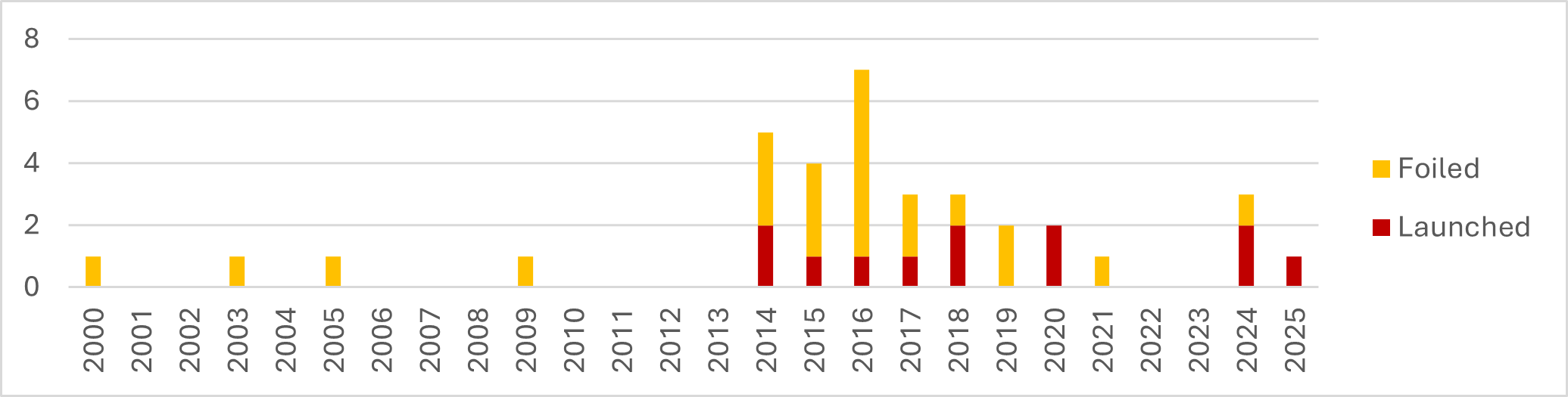
The Islamic State-linked attacks began after the group’s spokesperson Abu Mohammed al-Adnani’s September 22, 2014, call to arms and lone jihad, “Indeed Your Lord is Ever Watchful.”24 The immediate aftermath saw the September 23 stabbing of two police officers from the Victorian JCTT, followed by additional attacks over the next decade.25 Until Bondi, these tended to be low capability attacks, largely in keeping with the Islamic State’s public guidance, and primarily involved stabbings. Some of the disrupted plots inspired or instigated by the Islamic State in Australia were also relatively unsophisticated. However, there were highly significant exceptions, such as the December 2016 Federation Square plot and the July 2017 Sydney plane plot.26
As a result of the successful disruption of the most ambitious plots, and the more rudimentary nature of those plots that resulted in actual attacks, for the first 25 years of the 21st century Australia avoided an onshore mass casualty jihadi terror attack.i The 11 jihadi attacks in Australia prior to Bondi each killed between zero and two people, resulting in a total of seven fatalities (excluding the perpetrators).27 Through a combination of good fortune, gun control measures, and effective counterterrorism (including the extensive use of travel restrictions to prevent local jihadis from gaining training experience abroad), Australia had not experienced the scale of jihadi violence seen in Europe and North America.28 The December 14, 2025, Bondi massacre changed this. It was the 35th jihadi plot in Australia, and the 12th attack. The perpetrators caused more than double the total fatalities of all earlier jihadi attacks in Australia.
The Bondi attack differed from Australia’s earlier jihadi incidents in several important ways, including the firepower that the attackers had on hand. Australian jihadis traditionally faced great difficulties when seeking to acquire firearms.29 This was due to gun control laws (introduced after a mass shooting in Tasmania in 1996) that outlawed ownership of the deadliest types of firearms and established a layered license regime for other types, based on needs such as sporting and hunting, and because of black market dealers being wary of drawing counterterrorism attention.30 In several of the earlier foiled plots, the aspiring perpetrators struggled to obtain firearms, often providing opportunities for counterterrorism authorities to infiltrate plots on the premise of providing access to such weapons.31 Only three of the 11 earlier jihadi attacks in Australia involved firearms, and these included rudimentary shotguns and a revolver that was around 70 years old.j In contrast, the alleged Bondi attackers legally owned six firearms, and used three in the attack, “enabling sustained fire across the site.”32 Another difference is that the earlier attacks were almost always perpetrated by lone actors.k The Bondi attack, in contrast, was carried out by a father-son dyad acting as a two-shooter team, increasing the harm they were able to cause.33
The most crucial difference was the target. The 11 prior attacks mostly targeted police officers or random members of the public. Of the 34 prior plots, only two had focused on Jewish targets. One was the 2000 failed bombing plot instigated by al-Qa`ida, which targeted Israeli diplomatic offices in Canberra and Sydney, and a Jewish community figure in Melbourne.34 The other was an alleged plot in April 2024 for which details are currently unclear, but involved several teenagers who reportedly targeted “Jewish and Assyrian people.”35 By targeting a Jewish religious celebration, the Bondi massacre differed dramatically from most of Australia’s earlier jihadi plots.
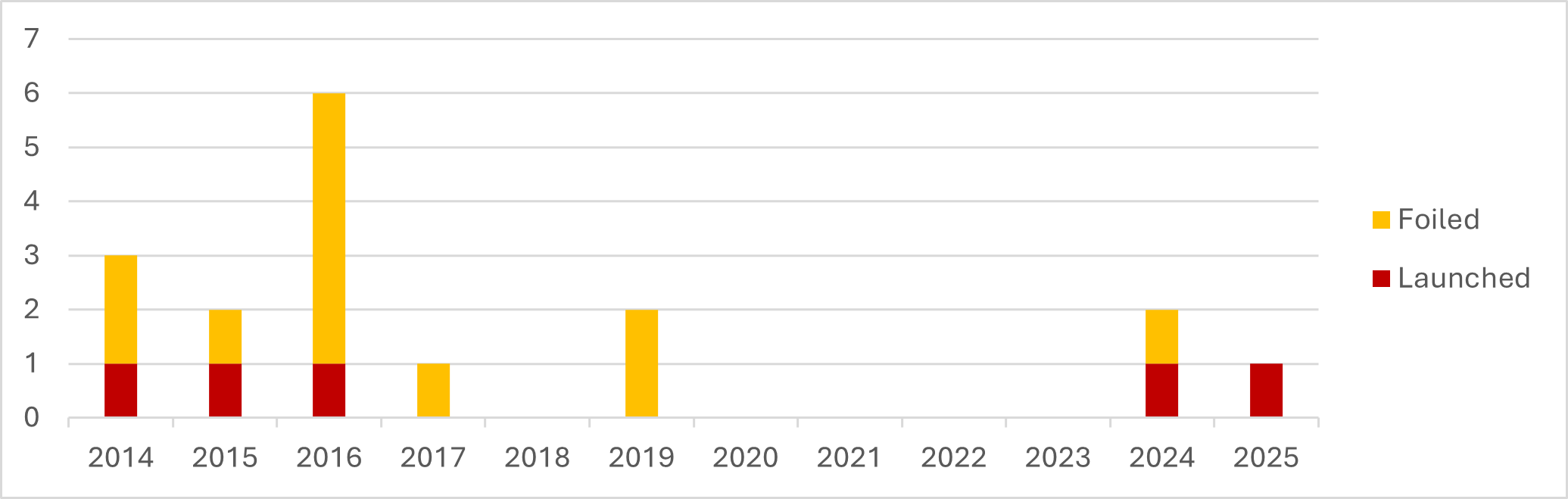
Moreover, the Bondi attack occurred in the context of a small increase in jihadi plots in Australia that appear to have focused on religious targets, reflecting a wider international trend. As Figure 1 shows, jihadi plots in Australia declined after the Islamic State’s setbacks in the Middle East; there were no publicly known jihadi terror plots in Australia in 2022 and 2023. This changed in April 2024 with the Sydney stabbing of an Assyrian Christian bishop closely followed by the aforementioned alleged plot by Sydney teenagers reportedly including Jewish and Assyrian people as targets.36 Therefore, to understand how the Bondi massacre came about, it is necessary to examine the Islamic State’s post-October 7 approach to transnational mobilization, which led to an increased frequency of plots throughout Western countries and an increased emphasis on Jewish targets.
The Islamic State’s Post-Gaza Targeting of Jewish Communities
Antisemitism has a long history within the global jihadi movement, as evident in Usama bin Ladin’s Declaration of Jihad against the Americans and his 1998 declaration in the name of the then World Islamic Front, the Jihad against the Jews and Crusaders, both containing conspiratorial references to what they called the Jewish-Crusader Alliance.37 Al-Qa`ida had proven adept at combining this antisemitism with its efforts to “exploit the deep symbolic value of Palestine and Jerusalem” when mobilizing support.38 In contrast, the Islamic State tended to focus on Palestine with far “less intensity and continuity than al-Qaeda” and emphasized that the Palestinian cause should not outweigh the movement’s global ambitions, despite having “vehemently lashed out at Jews as irreducible enemies on religious grounds.”39 The Bondi attack can be understood in part as a consequence of the Islamic State no longer ceding this rhetorical territory, shifting to effectively exploit the war in Gaza to regain some global momentum.
The Islamic State’s capacity for violence had been steadily declining from 2018-2023, despite the movement’s effort to offset its territorial losses in Syria and Iraq by expanding its provinces elsewhere, most successfully in Africa. The Islamic State appeared to struggle in 2023, with a decline in claimed activities in most parts of the world (the exceptions being the Sahel and the Philippines).40 BBC data shows that the Islamic State had claimed 838 attacks worldwide from January-November 2023, compared to 1,811 the previous year.41 Moreover, the Islamic State initially seemed slow to take advantage of the war in Gaza in the first months after October 7, 2023. While al-Qa`ida and its affiliates released multiple statements calling for global terrorist attacks in support of Palestinian armed groups, the Islamic State initially avoided public comments on the conflict.42 A key exception was an October 20, 2023, editorial in Al Naba, in which the Islamic State went to great lengths to frame that conflict as part of its global struggle but avoided the ideological accommodation of Hamas that had been evident in al-Qa`ida’s statements.43
However, the Islamic State ended 2023 by increasing its efforts to exploit the war to mobilize followers into new attacks, including a renewed focus on attacks in the West. One early indicator was that the Islamic State returned to claiming responsibility for attacks in Europe. The October 16, 2023, murder of two Swedish soccer fans in Belgium marked the first time the Islamic State claimed responsibility for an attack in Europe since the Vienna attack of November 2, 2020.44 Additionally, the December 2023 issue of Islamic State Khorasan’s English-language magazine Voice of Khurasan featured the cover story “The Nation Deserving Holocaust the Most”45 and was laden with antisemitic tropes, as well as an infographic that detailed various strategies to “confront Jew[s]” including “targeting Jews wherever they can be found” as well as suggesting tactics including “guns from black market.”46 l
On January 4, 2024, the Islamic State released a speech by its spokesperson, Abu Hudhayfah al-Ansari, entitled “And Kill Them Wherever You Find Them,” which clarified the group’s perspective on the Gaza conflict and set the parameters for its transnational mobilization narratives.47 The speech placed the Gaza war at the center, while framing the conflict within the Islamic State’s core mobilization themes and claiming activity in over 30 countries.48 It denounced Hamas, their Iranian patrons, and the broader “Axis of Resistance” as “Rafidah” who were co-opting the Palestinian cause.49 Through this framing, the Islamic State took credit for the suicide bombings that killed around 100 people in the Iranian city of Kerman.50 Additionally, the speech denounced Israel and its Western backers along with the Arab states.
Most importantly, in relation to Bondi, the speech included an explicit call to arms that echoed the infamous “Indeed Your Lord Is Ever Watchful” speech by then Islamic State spokesperson al-Adnani in September 2014 that precipitated the wave of attacks that took place across the West from 2014 onward.51 The January 2024 speech similarly sought to inspire sympathizers to undertake terrorist attacks in their home countries and provided sanction for a range of tactics, suggesting that perpetrators “detonate explosives … [and] shoot them with bullets.”52 The call to arms stated that:
we call you to action today, to reenergize your activities, and to bring to life the blessed attacks in the heart of the Jews’ and Christians’ homelands … Chase your preys whether Jewish, Christian or their allies, on the streets and roads of America, Europe, and the world.53
The speech encouraged adherents to “kill them by the worst of means, turn their gatherings and celebrations into bloody massacres.”54 It explicitly stated that its targeting advice sought to ensure that any resulting attacks matched the movement’s strategic and ideological logic, stating that followers should:
seek easy targets before hard ones, civilian targets before military one[s], religious targets like synagogues and churches before others, for this will satisfy the soul and will demonstrate the characteristics of the battle, as our battle with them is a religious one and we kill them wherever we come upon them in response to Allah Almighty’s command.55 m
It did not take long before these renewed efforts to inspire attacks in the West showed results, with multiple attacks in Europe occurring from October 2023 onward.56 Nesser and Nasr, drawing on Nesser’s Jihadi Plots in Europe Dataset (JPED), have noted that even though “there was a significant decrease in Islamic State-related attack plotting across Western Europe following the territorial defeat of the caliphate in 2019, plotting and attacks never ceased, and ticked up in 2023-2024.”57 Marone’s Jihadist Terrorism in Europe Database (JTED) shows that Europe experienced 15 jihadi attacks over the 15 months from October 2023 to December 2024 compared to three jihadi attacks in the preceding 15 months.58 This surge in jihadi activity in Europe had multiple drivers, including the increased propaganda production, ongoing cultivation of an online ecosystem, and the operational reach of Islamic State Khorasan, all alongside the explicit exploitation of the Gaza conflict.59 Nesser and Nasr highlighted that “injustices against Palestinians have once again featured as a partial motive and trigger for jihadi plots in Western Europe.”60 Moreover, according to JTED data, three of the 15 attacks from October 2023 to December 2024 were aimed at Jewish and Israeli targets, compared to only one in the preceding seven years.61 One plot foiled in 2024 was a plan by two Islamic State supporters in the United Kingdom to conduct a mass shooting attack targeting a march against antisemitism and then travel to predominantly Jewish suburbs in north Manchester to murder more people.62
The themes established in “And Kill Them Wherever You Find Them,” including increased targeting of Jews, continued to manifest over the subsequent years. Issue 40 of Voice of Khurasan, released in October 2024, ended by declaring that “we renew and repeat our encouragement to individual lions to make diligent efforts to target Jews and Christians. Target them especially in the crusader America and Europe, in the heart of the Jewish homeland, and the land of al-Quds and al-Maqdis (Palestine)!”63 On September 18, 2025, an editorial in issue 513 of Al Naba reiterated calls to “carry out daring and courageous operations targeting Jewish and Christian gatherings and neighborhoods everywhere, especially in Crusader European countries.”64 On October 2, 2025, an Islamic State supporter in the United Kingdom murdered two people at a Manchester synagogue, and the attack was widely celebrated by Islamic State supporters online.65 That same month, the two alleged Bondi perpetrators were training with firearms in remote NSW and recording a video for their planned attack.
Analyzed in this context, what stands out is the extent that the Bondi attack correlates with the mobilization themes and targeting advice promoted by the Islamic State since the “And Kill Them Wherever You Find Them” speech. The attackers’ use of IEDs and firearms matched the speech’s call to “detonate explosives … [and] shoot them with bullets.”66 Their target selection matched the Islamic State’s increased emphasis on attacking Jewish people, and was also consistent with the guidance to “seek easy targets before hard ones” and religious targets over secular targets.67
The consistency with which the targeting and tactics of the Bondi massacre were aligned with the Islamic State’s strategic logic is one of the attack’s most distinctive features compared to Australia’s earlier jihadi attacks. This consistency was not evident in several earlier incidents. The perpetrator of the December 2014 Lindt Cafe siege infamously brought the wrong flag and demanded that police bring him the correct one;68 the plotters behind the October 2015 murder of NSW Police employee Curtis Cheng were rebuked by their Syria-based contact for not attacking a random member of the public and not filming the attack;69 the perpetrator of the June 2017 Brighton siege claimed the attack in the name of both al-Qa`ida and the Islamic State, at odds with the Islamic State’s insistence that loyalty be to it alone.70 Moreover, some jihadi attacks in Australia had resembled instances of suicide-by-cop rather than acts calculated to follow the Islamic State’s guidance and inflict maximum damage to advance its cause. In contrast, the Bondi massacre resembles the more ambitious jihadi plots Australia had experienced.
This raises the question of the relationship between the Bondi perpetrators and the Islamic State’s global movement. In six of Australia’s earlier jihadi plots (including some of the most ambitious plans such as the September 2014 plot to initiate a months-long kidnapping and murder campaign or the 2017 plot to bomb an Etihad flight and create a chemical weapon), the plotters in Australia were receiving direct instructions from Islamic State figures abroad.71 Based on the publicly available information, the Bondi attack does not currently appear to resemble this model. The Australian Federal Police have emphasized that there is currently “no evidence to suggest these alleged offenders were part of a broader terrorist cell or were directed by others to carry out an attack” nor that their travel to the southern Philippines meant that they “received training or underwent logistical preparation.”72 This is consistent with the language contained in the Islamic State’s claims of inspiring the attack.
“The Pride of Sydney”
The Islamic State formally recognized the Bondi attack in issue 526 of Al Naba, in an article entitled “The Pride of Sydney.” The article fell short of the traditional press release style of Amaq News Agency, which historically “dubbed each perpetrator a ‘Soldier of the Caliphate,’”73 and instead acknowledged the perpetrators as having:
answered the call and carried out the recommendations to target holidays and gatherings. They armed themselves with the Prophetic methodology and set off without looking back, plunging unarmoured into the Hanukkah celebration and turning it into a scene of mourning.74
The Islamic State, and al-Qa`ida before it, has a long history of encouraging what it has frequently referred to as “lone jihad.”75 As originally theorized by jihadi strategist Abu Musab al-Suri, the jihadi movement succeeded in building a “system, not an organisation” to facilitate and inspire “individual and small cell jihad.”76 Even though the Islamic State explicitly disavowed al-Suri’s strategic doctrine over a decade ago, much of its current approach to transnational terrorism appears to fulfill al-Suri’s vision.77 This strategy was initially operationalized by Anwar al-Awlaki in particular, via al-Qa`ida’s English language online magazine Inspire, which he and his co-editor viewed as “a direct extension and realization of al-Suri’s vision.”78 This “system” reached greater potential when the Islamic State integrated it into its full spectrum social media campaign from 2014 onward.79 Since September 2014, the Islamic State prioritized “lone jihad” narratives as a key pillar of its ability to launch operations in the West. The release of “Indeed Your Lord is Ever Watchful,” and its translation into English in the fourth edition of Dabiq, served as a crucial catalyst for inspiring a wave of lone actor terrorists undertaking predominantly low-capability jihadi attacks across the West, including in Australia (see Figure 1).80
Al-Suri’s logic of autonomous attacks has proven an enduring and effective one, and despite a nadir in recent years, it remains a key element of the jihadi operational arsenal. What has always been central to this system is English (and other European) language propaganda. In much of the Islamic State’s recent propaganda, it has sought to restate its incitement guidance for Western-based operatives. This continuity is reflected in “The Pride of Sydney,” which stated that:
[The Islamic State] is not eager to claim all these blessed attacks officially, especially since its name is already engraved upon them through its methodology and the blood of its mujahideen.81 n
The Islamic State more emphatically took credit for the Bondi attack just over two months later. On February 21, 2026, al-Furqan Media released the first speech from the Islamic State’s spokesperson, Abu Hudhayfah al-Ansari, in nearly two years. The new speech, “Guidance Has Become Clearly Distinguished from Error,” again claimed credit for the Bondi attack, treating it as one of the movement’s global successes for 2025:
Ask the corpses of the Jews in Sydney, the Christians in [New] Orleans. Ask the Russians in Moscow and their lackeys in the Caucasus. Ask the temples of the Rafidites in Kerman and Oman, and ask them in Khorasan and Pakistan. Ask every region of this world about the heroic acts of our soldiers and the strikes of our lions.82
The Islamic State’s consistent emphasis on encouraging supporters to follow its “methodology” but otherwise act on their own initiative continued to produce results more than two years after the Gaza war broke out. This is shown by the Bondi attack occurring as part of a broader spike in anti-Western plots inspired or instigated by the Islamic State in the Middle East, Europe, and the United States during December 2025, predominantly targeting holiday events such as Christmas markets.o The February 2026 speech appeared to allude to the foiled December plots, declaring that “there is sufficient evidence for this in the great losses Crusader Europe has faced this year to secure their festivals, and how their streets have turned into fields of war.”83 These December 2025 operations are yet to be publicly assessed for any central coordination from the Islamic State; however, Garofalo has highlighted that the system functions without a requirement for central coordination, and notes that “unlike direct operational command, enablement consists of the creation of an ideological and symbolic ecosystem that makes the action violent, legitimate, expected and replicable.”84 While not all its operations in the West or against Western targets should be presumed to be autonomous operations—and the Islamic State deploys claims of involvement or inspiration for strategic purposes that should therefore not be taken at face value—the information available on the alleged Bondi perpetrators is currently consistent with an autonomous attack by individuals within the Islamic State’s “ideological and symbolic ecosystem.”
Local Networks and the Bondi Attack
Understanding what enabled the Bondi massacre to be so different from earlier jihadi attacks in Australia requires examining how the attackers radicalized to extremism and mobilized to violence.p Current information is limited, but there is evidence that Naveed Akram, the alleged younger gunman, once had face-to-face social connections, through a street preaching group and prayer center, with at least two Islamic State supporters who belong to what became known as the el Matari network.q The key figure was Isaac el Matari, a Sydney man arrested in Lebanon in September 2017 for trying to join the Islamic State, at the age of 18, but released in June 2018 before returning to Australia.85 Upon return, he described himself as Australia’s “General Commander” for the Islamic State86 and developed bombastic plans to lead an insurgency in NSW, envisioned to involve around 1,000 people and take place over the course of around five years.87 The plans centered on a series of armed assaults with firearms, unlike the stabbings seen in most actual attacks in Australia. El Matari was arrested in July 2019, but continued plotting violence from jail for some months afterwards.88 He also briefly plotted with Tukiterangi Lawrence, another Islamic State supporter, in the prison.89
El Matari was later convicted for plotting a terrorist attack, planning a foreign incursion, and being a member of the Islamic State.90 His plans were described by the sentencing judge as “grandiose,” reflecting how utterly unrealistic his goals were.91 However, while his ambitions were implausible, the prospect of one or more deadly acts of violence arising in the process of seeking to achieve them was real. Naveed also participated in street preaching activities with another member of the network, Youseff Uweinat, whose role centered on encouraging young people to support the Islamic State. Uweinat was arrested in December 2019 and was later convicted of advocating terrorism and being a member of the Islamic State.92
The el Matari network had a range of connections to Islamic State members and supporters worldwide, at a time when the movement’s setbacks in Syria and Iraq were making it harder for Australian sympathizers to form direct links with the group. For example, one member of the network, Radwan Dakkak, communicated with an Islamic State contact in Syria to see if they could assist el Matari’s attempt to join Islamic State Khorasan; an Islamic State-affiliated Shiekh in Kenya to translate religious material and promote the Sheikh’s teachings; and an Islamic State supporter in the United States to assist the production and distribution of material from Ahlut-Tawhid Publications, an unofficial outlet in support of the Islamic State.93
Figure 2 provides an indication of the el Matari network’s importance for jihadi activity in NSW. From October 2017 to March 2024, there were only two publicly known jihadi plots in NSW, and both were associated with this network. One was el Matari’s plotting through much of 2018 and 2019, and the other was also in 2019, by the prisoner Tukiterangi Lawrence who developed a plan to threaten or attack prison staff in their homes and who a few months later loosely participated in el Matari’s insurgency idea.94 There were no other publicly known plots in NSW until the post-October 7 uptick that began with the April 2024 stabbing of an Assyrian bishop.
Counterterrorism authorities maintained pressure on the el Matari network well after the 2019 arrests.r However, what actions were taken by authorities in relation to the Akrams remains unclear and highly contested. ASIO began a six-month investigation of Naveed Akram in October 2019, after el Matari’s arrest but before Uweinat’s, reportedly due to his associations with both men.95 In ASIO’s later description, the investigation concluded that Naveed Akram “did not adhere to or intend to engage in violent extremism at that time.”96 What happened next regarding any assessments and information sharing about the Akrams, by ASIO, NSW Police, and other elements of the NSW JCTT, remains unclear and is being examined by the Royal Commission on Antisemitism and Social Cohesion.97
It is also unclear if either Akram had any ongoing connections to the el Matari network after 2019, as information on their activities from 2020 to late 2025 remains limited. However, some information on other aspects of their activities during this period is available, including their acquisition of firearms. In June 2020, two months after ASIO’s investigation of Naveed concluded in April 2020, Sajid Akram applied for and obtained a firearms license. He legally purchased six firearms in the lead-up to Bondi.98 This included three firearms purchased on a single day in September 2023 and three more over the next two years, with the most recent purchase in September 2025, the same month that Al Naba reiterated the Islamic State’s calls for attacks on Jews and Christians in Western countries.99
Other information on the Akrams’ activities prior to the Bondi attack involves their international travel. This includes their travel to Mindanao in November 2025. Scholars have noted that it is unlikely that foreigners could train with Islamic State-aligned groups in the southern Philippines in 2025, due to the improved security situation, and the AFP has stated that they found no evidence of the Akrams engaging in such training or logistical preparation.100 However, the AFP also made clear that they were not claiming that the Philippines travel was unrelated to the attack, with the Commissioner stating that the AFP were “not suggesting that they were there for tourism.”101 Most recently, Philippine authorities announced that they had arrested a Jordanian national in Mindanao for visa violations, and that he had a connection to the Akrams, but there is little further information.102 In addition to the Mindanao visit, counterterrorism authorities have also shared that they are investigating other travel undertaken by Naveed and Sajid, both individually and together.103 This includes an unconfirmed media report that, at some point before the Bondi attack, the two Akrams traveled to Central Asia with the aim of reaching Afghanistan, but were turned back in Kyrgyzstan.104
There is also information suggesting changes in the Akrams’ personal circumstances in 2025. At some point in the six months before the Bondi attack, Sajid and his wife separated, resulting in both Sajid and Naveed moving out of the family home. Police have said that they are examining whether, prior to that, the mother had “kept them in check.”105 Similarly, at some point in 2025 Naveed left his job as a bricklayer, either due to being laid off or quitting after a boxing accident.106 At this point, it is not possible to identify the relative importance of the changes in their personal circumstances, which coincided with the Islamic State’s renewed emphasis on attacks in Western countries in the lead-up to the attack.
Conclusion
Based on currently available information, some aspects of the radicalization and mobilization of the alleged attackers look familiar to the processes seen in many Western jihadi plots elsewhere: Close-knit individuals with varying associations with local extremist networks, withdrawing voluntarily or involuntarily from their broader social environment, reportedly seeking international jihadi connections with uncertain success, all the while propelled to varying degrees by violent conflicts abroad, transnational mobilization efforts by armed movements, personal circumstances, and individual choices.
However, several features are less familiar in the Australian context. The first is the potential range of international connections. The Akrams had some sort of association with the el Matari network (which was connected to Islamic State members and supporters in Lebanon, Syria, Kenya, and the United States) and had engaged in unexplained travel to the Philippines and possibly elsewhere themselves. This may have contributed to the targets, tactics, and political communication of the Bondi attack correlating so strongly with the Islamic State’s global terror campaign. The second unfamiliar feature is the specific composition of the cell, allegedly a father-son duo proficient with firearms. The third unfamiliar feature is the absence of effective pre-emption. Unlike comparable plots in Australia, the attackers were not disrupted by JCTT intervention nor impeded from acquiring firearms or leaving Australia. The last difference is the sustained planning, which was more extensive than earlier jihadi attacks in Australia. The Akrams were allegedly engaging in rural firearms training for months in advance and as early as October 2025 recording a video noting their target as Bondi.107
Prior to the Bondi attack, counterterrorism authorities had successfully disrupted every mass casualty jihadi plot on Australian soil, while measures beyond specific disruptions (such as gun control and travel restrictions) had helped to ensure that most attacks that did occur tended to cause few deaths. This was an internationally unusual track record that was not likely to last indefinitely. Investigations continue into the local dynamics of how the attackers became involved in terrorism and launched the attack, and the Royal Commission on Antisemitism and Social Cohesion is seeking to identify “any lessons for security and law enforcement agencies to prevent and respond to similar attacks in the future.”108 However, in the global context the December 14, 2025, Bondi massacre can be understood as a consequence of the Islamic State’s post-2023 exploitation of the war in Gaza to remobilize its transnational support. As announced in the January 2024 “And Kill Them Wherever You Find Them” campaign, this mobilization effort took care to not let the Israel-Palestine conflict overshadow the movement’s global revolutionary goals and wider range of enemies, while including a renewed focus on attacks in Western countries with a greater emphasis than before on Jewish targets.
Much of this global campaign was consistent with the Islamic State’s earlier calls for autonomous attacks, which built on the groundwork theorized by strategists like al-Suri, and its earlier efforts to use local conflicts to mobilize transnational supporters for its global ambitions, which built on the earlier mobilization efforts by rival movements such as al-Qa`ida. Nonetheless, the Islamic State managed to frame this renewed global mobilization in a way that reduced the risk of indirectly benefiting its rivals who were likewise seeking to exploit global anger over the war in Gaza. Moreover, through its global propaganda, online ecosystem, and external operations capabilities, the Islamic State has successfully translated this effort into violence on the ground in enemy countries. As a result, the Islamic State partly recovered from its 2022-2023 low point, leading to a larger number of attacks and plots against Western countries after October 7, with a greater proportion targeting Jewish communities.
This transnational mobilization had deadly results in Bondi, resulting in an attack unprecedented in the history of jihadi activity in Australia. Whether the Islamic State can maintain this renewed momentum is unclear and will doubtless be shaped by the trajectory of broader conflicts in the Middle East. Nonetheless, targeted countries need to be prepared for some of their citizens heeding these calls for “attacks against the Crusader and Jewish targets in every place,” acting consistently with the Islamic State’s tactical advice, and proving capable of carrying out devastating attacks.109 CTC
Andrew Zammit is a Postdoctoral Research Fellow at Victoria University. He has a PhD in political science from Monash University, and his work focuses on terrorism and security studies, including both public-facing research and applied research with government partners. His research career has included a core focus on terrorism and violent extremism in Australia, the relationship between terrorism and transnational dimensions of armed conflict, and other areas of public policy and national security. He is the recipient of an Office of National Intelligence National Intelligence Postdoctoral Grant (project number NIPG202503) funded by the Australian Government.
Levi J. West is a Postdoctoral Research Fellow at the Australian National University. He holds a PhD in political science from Victoria University, and his research has focused on terrorism, propaganda, and technology, as well as the strategies of terrorism. His current research is focused on modeling radicalization. He is funded through a National Intelligence and Security Discovery Research Grant (NI230100021), administered by the Australian Research Council on behalf of the Office of National Intelligence. West is also a Director with Praxis Advisory, a bespoke advisory firm servicing the national security sector.
© 2026 Andrew Zammit, Levi West
Substantive Notes
[a] The most recent Islamic State-associated attack in a Western country to kill more than 15 people was the Manchester Arena bombing in the United Kingdom on May 22, 2017, which killed 22 people. However, the New Orleans attack on January 1, 2025, was almost as deadly as the Bondi massacre, killing 14 people. For Islamic State-associated attacks that targeted Jewish people, see Mitchell D. Silber, “Terrorist Attacks Against Jewish Targets in the West (2012-2019): The Atlantic Divide Between European and American Attackers,” CTC Sentinel 12:5 (2019): pp. 31-35; and Petter Nesser and Wassim Nasr, “The Threat Matrix Facing the Paris Olympics,” CTC Sentinel 17:6 (2024): pp. 2-7.
[b] At the time of writing, the surviving alleged attacker is facing a criminal prosecution. In addition to a criminal trial, the Australian government has launched a Royal Commission on Antisemitism and Social Cohesion, announced by Prime Minister Anthony Albanese on January 8, 2026. This Royal Commission has incorporated the previously announced (December 21, 2025) review of the circumstances of the attack and the actions of federal law enforcement and intelligence agencies. Both processes limit the information currently in the public domain, so the analysis that follows may require revisiting as more information becomes available in the years ahead. Nonetheless, by combining the currently available information on the attack and the alleged perpetrators with the authors’ research on the Islamic State’s transnational mobilization and the evolution of Australian jihadism, this article proposes a detailed first picture of how the attack came about. “Prosecution of Naveed Akram,” Commonwealth Director of Public Prosecutions, 2025; “Review into Federal Law Enforcement and Intelligence Agencies,” Prime Minister of Australia, December 21, 2025; “Establishment of Royal Commission on Antisemitism and Social Cohesion,” Prime Minister of Australia, January 8, 2026.
[c] Police believe that three pipe bombs and one tennis ball bomb were taken out of the car, and that another IED remained in the car. H 86600515 Statement of Facts, pp. 13, 17.
[d] However, police later assessed these as viable IEDs. H 86600515 Statement of Facts, p. 13.
[e] This included another rifle and shotgun, ammunition, various firearm parts (one of which was 3D-printed), bomb-making equipment, and a suspected IED. H 86600515 Statement of Facts, p. 19.
[f] Since the criminal charges were filed, there have been discrepancies in how Sajid and Naveed Akram have been discussed in Australia. Some media reports describe the Akrams as the perpetrators of the attack without using the language of “allegations.” However, public statements by police continue to use the language of “allegations” and consistently emphasize the need for cautious language to not place the criminal proceedings at risk. To err on the side of caution, the authors follow the latter approach when referring to claims about the Akrams’ alleged involvement in the Bondi attack.
[g] This is preliminary data from a dataset on proven and alleged terrorist plots in Australia being developed by Andrew Zammit as part of a National Intelligence Postdoctoral Grant (project number NIPG202503), building on earlier work. See Andrew Zammit, “Australian Jihadism in the Age of the Islamic State,” CTC Sentinel 10:3 (2017): p. 28. The inclusion criteria is designed to be consistent with events that would be considered Category 1 or Category 2 under Petter Nesser’s Jihadi Plots in Europe Dataset (JPED), to enable comparison. Petter Nesser, “Introducing the Jihadi Plots in Europe Dataset (JPED),” Journal of Peace Research 61:2 (2023): pp. 319-320. The figure of 34 has limitations, in both directions. There is a risk that it overstates the number of plots, as the four events in 2024 and 2025 have not yet been through legal proceedings, so their inclusion may need to be revisited depending on subsequent information (the inclusion criteria does not always require a criminal conviction, but evidence resulting from legal processes feeds into the decision to include or exclude). However, there is also the risk that it understates the number of plots, as there may be other plots that occurred but are not known about publicly.
[h] The 2000 plot was directly instigated by al-Qa`ida, the 2003 plot was guided by a senior Lashkar-e-Taiba figure who was later involved in the 2008 Mumbai massacre, and the 2005 plot was self-starting but some of the plotters had trained with al-Qa`ida and Lashkar-e-Taiba. The 2009 plotters were in communication with al-Shabaab but did not receive direct instructions or training for the intended attack. See Andrew Zammit, “Explaining a Turning Point in Australian Jihadism,” Studies in Conflict & Terrorism 36:9 (2013): pp. 739-755.
[i] This is based on a definition of mass casualty as 10 or more deaths. Nesser, p. 321.
[j] The December 2014 Lindt Cafe Siege involved a “La Salle 12-gauge pump action shotgun manufactured in 1960” that could hold up to four cartridges. The June 2017 Brighton siege involved two firearms, a “double barrel 12-gauge Nikko brand, Model 5200” shotgun and “a 12 gauge Barton & Co double barrel shotgun.” The October 2015 murder of a NSW Police employee was carried out with a “.38 special calibre Smith & Wesson model British service revolver” left over from World War II. “Inquest into the Deaths Arising from the Lindt Café Siege: Findings and Recommendations, Report,” State Coroner of New South Wales, 2017, p. 128; Khayre: Finding into Death with Inquest of Khayre, Yacub (COR 2017 002643), No. 28687 (VicCorC August 23, 2023), pp. 14-15; R v Alameddine (No. 3), NSW (Supreme Court of New South Wales 2018), p. 4; Adelaide Lang, “’Extremist’ Allegedly Supplied $3000 Gun for Police Shooting,” News.Com.Au, February 23, 2023.
[k] The only exception is the October 2015 murder of a NSW Police employee in Sydney, which involved several co-conspirators. However, even in that case, the attack itself was carried out by a single individual. R v Alou (No. 4), NSW (Supreme Court of New South Wales 2018); R v Atai (No. 2), No. 1797 (Supreme Court of New South Wales November 23, 2018); R v Alameddine (No. 3).
[l] As one of the primary English language propaganda outlets of the Islamic State, Voice of Khurasan plays an integral role in seeking to influence English language audiences and “established itself as the English-language flagship of the global media jihad.” Haroro J. Ingram, Voice Of Khurasan: Inside Islamic State Khurasan Province’s English Language Magazine (The Hague: International Centre for Counter-Terrorism, 2026), p. 1.
[m] The extent to which this marked a shift in targeting emphasis can be seen by comparing it with the explicit targeting advice provided in the February 2023 issue of Voice of Khurasan, which placed “Armed Men and Women (Police and Security Guards)” at the top of the list and made no mention of religious targets or any target specifically involving Jewish people. “O Supporters of Khilafah,” Voice of Khurasan, February 2023, p. 30.
[n] This approach to claiming attacks, with its emphasis on autonomous operations, had been foreshadowed in earlier statements by the Islamic State since 2024, and the manner in which it described the New Orleans attack. Eve Sampson, “ISIS Says It Inspired New Orleans Attack, but Doesn’t Claim Responsibility,” New York Times, January 10, 2025.
[o] On December 13, 2025, an Islamic State-associated attack near Palmyra, Syria, killed three Americans (two U.S. servicemembers and a civilian interpreter). It was the first deadly attack against U.S. forces in Syria since 2019. Ahmad Sharawi, “3 Americans Killed, 3 Injured in Islamic State Ambush Attack in Palmyra, Syria,” FDD’s Long War Journal, December 13, 2025. Throughout December 2025, there were also alleged Islamic State plots in Germany, Poland, and the Netherlands, reportedly aimed at holiday targets such as Christmas markets. “Syrian Arrested in Dutch Port City Suspected of Christmas Terrorist Attack Plot in Europe,” NL Times, December 30, 2025; “Polish Student Detained over Suspected Christmas Market Attack Plot,” Reuters, December 16, 2025; “Germany says it foiled a potential ‘Islamist’ plot to attack a Christmas market,” Monde, December 14, 2025. In late December 2025, alleged plots were foiled in Turkey, with conflicting reports as to whether any were aimed at Western targets. “Turkey detains dozens of IS suspects planning attacks on Christmas and New Year’s celebrations,” Monde, December 26, 2025, and Anil Can Tuncer, “Turkey Thwarts Islamic State-Led New Year’s Eve Suicide Attack Plot,” Euronews, December 23, 2025. On December 31, 2025, an alleged plot was disrupted in the United States, reportedly targeting a grocery store and restaurant in North Carolina on New Year’s Eve with notes including references to Jews, Christians, and LGBTQ+ individuals. Lucy Campbell, “FBI Says It Thwarted Planned New Year’s Eve Terrorist Attack in North Carolina,” Guardian, January 2, 2026.
[p] Currently, the available information on the alleged perpetrators is limited, fragmented, and contested, and may remain so until the criminal prosecution and Royal Commission proceed further.
[q] The extent of Naved Akram’s association with these two individuals is currently in dispute, but there is no dispute that there was some association between them in 2019. See Stephen Rice, Liam Mendes, and Mohammad Alfares, “New Photo Evidence Links Bondi Gunman Naveed Akram to ISIS Terrorist Youssef Uweinat,” Australian (Online), December 17, 2025; Stephen Rice and Liam Mendes, “Killer Linked to ‘Factory of Hate,’” Australian, December 17, 2025; “Bondi: Path to Terror,” Four Corners, directed by Sean Rubinsztein-Dunlop, Australian Broadcasting Corporation, February 9, 2026; “ASIO Statement: Four Corners,” Australian Security Intelligence Organisation, February 8, 2026; and Linton Besser, “ASIO vs ABC,” Media Watch, episode 3, Australian Broadcasting Corporation, February 16, 2026.
[r] After Dakkak completed his sentence in 2021, he was subjected to a control order and later charged and convicted for breaching it. After Uweinat completed his sentence, authorities sought to impose ongoing restrictions on him, but the court rejected this attempt. NSW authorities also sought a Firearms Prohibition Order against a man associated with another network member, Joseph Saadieh, but this was also rejected by the court. Commonwealth Director of Public Prosecutions v Saadieh, No. 232 (NSWCCA September 27, 2021); R (Cth) v Dakkak, No. 181 (NSWDC April 11, 2022); Sean Rubinsztein-Dunlop, “Sydney Cleric, IS Child Groomer Target pro-Palestinian Cause for Recruits,” ABC News, August 20, 2025; Perry Duffin, Mostafa Rachwani and Michael McGowan, “Police Feared Bondi Gunman’s Islamic State Associates Were Seeking Weapons,” Age, December 17, 2025.
Citations
[1] H 86600515 Statement of Facts (New South Wales Joint Counter Terrorism Team, 2025), p. 6; “Bondi: Light Over Darkness,” Four Corners, directed by Mark Willacy, Australian Broadcasting Corporation, February 2, 2026.
[2] “The Pride of Sydney,” Al Naba, December 18, 2025. English translation from Kyle Orton, “The Islamic State’s Global Terrorism Campaign and the Bondi Hanukkah Massacre,” It Can Always Get Worse, December 28, 2025.
[3] H 86600515 Statement of Facts, p. 12; Tom McArthur, Emily Atkinson, and Malu Cursino, “Bondi Beach Shooting: What We Know so Far about Hanukkah Attack,” BBC, December 16, 2025.
[4] H 86600515 Statement of Facts, pp. 8, 13; Fiona Buffini, Andrew Burke, Joshua Peach, Lucy King, Edmund Tadros, Paul Karp, Greg Bearup, and Matthew Drummond, “6 Minutes and 11 Seconds: How It Unfolded,” Australian Financial Review, December 20, 2025.
[5] Buffini et al.
[6] Ibid.
[7] H 86600515 Statement of Facts, p. 6.
[8] “Bondi: Light Over Darkness.”
[9] Ibid.
[10] Ben Doherty, Nick Evershed, and Yuji Shimada, “Visual Explainer: How a Night of Terror Unfolded in Bondi,” Guardian, December 15, 2025.
[11] “Press Conference – Sydney,” Prime Minister of Australia, December 16, 2025.
[12] Joshua Peach, Lucy King, and Bryan Cook, “Bondi Shooting: New Footage Reveals Timeline of Police Firefight at Bondi,” Australian Financial Review, December 17, 2025.
[13] “Police Officer Wounded in Bondi Terror Attack Released from Hospital,” ABC News (Australia), December 23, 2025.
[14] Buffini et al.; “Bondi,” February 2, 2026.
[15] H 86600515 Statement of Facts, p. 15.
[16] “Prosecution of Naveed Akram.”
[17] H 86600515 Statement of Facts, p. 18.
[18] Riley Walter, “How We Found the Isolated Property Where Bondi Gunmen Allegedly Did ‘Military-Style’ Training,” Sydney Morning Herald, January 2, 2026.
[19] H 86600515 Statement of Facts, p. 19.
[20] Ibid., p. 20.
[21] “Press Conference – Canberra,” Prime Minister of Australia, December 30, 2025; H 86600515 Statement of Facts, pp. 20-21.
[22] “Bondi Beach Terror Attack: Sajid Akram’s Family in India Unaware of Alleged ‘Radical Mindset’, Local Officials Say,” Guardian, December 16, 2025.
[23] H 86600515 Statement of Facts, p. 1; “Prosecution of Naveed Akram.”
[24] Haroro J. Ingram, Craig Whiteside, and Charlie Winter, The ISIS Reader: Milestone Texts of the Islamic State Movement (Oxford: Oxford University Press, 2020), pp. 177-198.
[25] Levi J. West, Jihad Transformed: The Australian Experience of Islamic State Terrorism and Extremism (Washington: George Washington University, 2022).
[26] See The Queen v Abbas, Chaarani & Mohamed, No. 775 (Supreme Court of Victoria November 29, 2019); R v Khaled Khayat; R v Mahmoud Khayat (No 14), No. 1817 (Supreme Court of New South Wales December 17, 2019); and Andrew Zammit, “Operation Silves: Inside the 2017 Islamic State Sydney Plane Plot,” CTC Sentinel 13:4 (2020): pp. 1-13.
[27] West, Jihad Transformed, p. 18.
[28] Patrick Wood, “Why Do We Cancel Passports for Terror Suspects — and Not Just Let Them Leave?” ABC News, November 21, 2018.
[29] Zammit, “Australian Jihadism in the Age of the Islamic State,” p. 26.
[30] Julian Fell, “The Bondi Shooter Only Had a Basic Gun Licence. How Could He Buy Multiple High-Powered Rifles?” ABC News, December 16, 2025; Yoni Bashan, “Crooks Won’t Sell Firearms to Terrorists,” Advertiser, May 22, 2016.
[31] The Queen v Halis & Ors, No. 1277 (County Court of Victoria September 7, 2021); R v Ali, No. 316 (VSC May 21, 2020); R v Khaja (No 5), No. 238 (NSWSC March 2, 2018).
[32] Joshua Roose, “The Bondi Attack: ISIS-Inspired Antisemitic Terrorism in Australia,” RSIS Commentary, February 9, 2026.
[33] Daveed Gartenstein-Ross and Daniel Trombly, The Tactical and Strategic Use of Small Arms by Terrorists (Foundation for Defense of Democracies, 2012): pp. 13-14.
[34] R v Roche, No. 4 (Western Australian Supreme Court of Appeal January 14, 2005); Shandon Harris-Hogan and Andrew Zammit, “Mantiqi IV: Al-Qaeda’s Failed Co-Optation of a Jemaah Islamiyah Support Network,” Democracy and Security 10:4 (2014): pp. 315-334.
[35] Mostafa Rachwani, “‘I Want to Do Jihad’: What a Sydney Teen Accused of Terror Offences Allegedly Messaged,” Guardian, May 3, 2024.
[36] Elias Visontay and Catie McLeod, “Sydney Church Stabbing: Police Charge 16-Year-Old Boy with Terrorism Offence,” Guardian, April 18, 2024; “Sydney Church Stabbing Was ‘terrorist’ Attack, Police Say,” BBC, April 15, 2024; Rachwani.
[37] Usama bin Ladin, “Declaration of Jihad Against the Americans Occupying the Land of the Two Holiest Sites,” September 2, 1996; Moustafa Ayad, “Assessing the Gaza War’s Impact on Salafi-Jihadist Messaging in MENA, Following Resistance Axis Losses,” Counter Terrorist Trends and Analyses 17:1 (2025).
[38] Francesco Marone, “Spillover Terrorism? Exploring the Effects of the Israel-Hamas War on Jihadist Violence in Europe,” Journal of Contemporary European Studies 33:4 (2025): p. 1,267.
[39] Ibid., p. 1,267. See also “ISIS: Jihad In Palestine Does Not Take Precedence Over Jihad Elsewhere,” Special Dispatch no. 6357, MEMRI, 2016.
[40] Mina al-Lami, “What Happened to IS in 2023?” BBC Monitoring, December 26, 2023.
[41] Ibid.
[42] Tore Hamming, “The Beginning of a New Wave? The Hamas-Israel War and the Terror Threat in the West,” CTC Sentinel 15:10 (2023): p. 30.
[43] Ibid., p. 30. On al-Qa`ida’s ideological accommodation of Hamas, see Cole M. Bunzel, “Hamas and Al-Qaida: The Concerns of Abu Muhammad al-Maqdisi,” Jihadica, June 10, 2024.
[44] Hamming, p. 27.
[45] “The Nation Deserving Holocaust the Most,” Voice of Khurasan, December 2023.
[46] “Practical Ways to Confront Jew,” Voice of Khurasan, December 2023.
[47] This English translation, “And Kill Them Wherever You Find Them,” is the Islamic State’s own translation as presented in issue 32 of the Voice of Khurasan magazine. “And Kill Them Wherever You Find Them,” Voice of Khurasan, January 29, 2024.
[48] Caleb Weiss, “Islamic State Announces New Global Campaign to Rally Members and Supporters,” FDD’s Long War Journal, January 5, 2024; Daniele Garofalo, “‘Kill Them Wherever You Find Them’. The Islamic State Spokesman’s New Audio,” Daniele Garofalo Monitoring, December 14, 2024.
[49] “And Kill Them Wherever You Find Them,” Voice of Khurasan, p. 19.
[50] Weiss.
[51] Ingram, Whiteside, and Winter, pp. 177-198.
[52] “And Kill Them Wherever You Find Them,” Voice of Khurasan, p. 21.
[53] Ibid., p. 21.
[54] Ibid., p. 21.
[55] Ibid., p. 21.
[56] Hamming; Nesser and Nasr.
[57] Nesser and Nasr, p. 1.
[58] Marone, p. 1,280.
[59] Rueben Dass, “Islamic State-Khorasan Province’s Virtual Planning,” Lawfare, May 19, 2024; Nesser and Nasr; Moustafa Ayad, “Teenage Terrorists and the Digital Ecosystem of the Islamic State,” CTC Sentinel 18:2 (2025): pp. 1-8; Nicolas Stockhammer, “From TikTok to Terrorism? The Online Radicalization of European Lone Attackers since October 7, 2023,” CTC Sentinel 18:7 (2025): pp. 16-28.
[60] Nesser and Nasr, p. 7.
[61] Marone, p. 1,283.
[62] Chris Osuh and Mark Brown, “Two Men Jailed for Life over Plot to Attack Greater Manchester’s Jewish Community,” Guardian, February 13, 2026.
[63] “O’ Mujahid!,” Voice of Khurasan, October 2024, p. 65.
[64] “The Tragedy of Gaza,” Al Naba, September 18, 2025, English translation from Sean McCafferty, “Islamic State Propaganda Evolution Since October 7 — Content,” Counter Extremism Project, December 4, 2025.
[65] “The Manchester Synagogue Terrorist Attack: A Snapshot of Online Antisemitism and Extremist Exploitation,” Institute for Strategic Dialogue, October 10, 2025.
[66] “And Kill Them Wherever You Find Them,” Voice of Khurasan, p. 21.
[67] Ibid., p. 21.
[68] “Inquest into the Deaths Arising from the Lindt Café Siege,” State Coroner of New South Wales, May 2017, p. 162.
[69] R v Atai (No. 2), No. 1797 (NSWSC November 23, 2018), p. 30.
[70] Khayre, p. 8.
[71] R v Azari (No 12), No. 314 (Supreme Court of New South Wales March 29, 2019); R v Khaled Khayat; R v Mahmoud Khayat (No 14).
[72] “Press Conference – Canberra.”
[73] Rita Katz, Saints and Soldiers: Inside Internet-Age Terrorism, from Syria to the Capitol Siege (New York: Columbia University Press, 2022), p. 107.
[74] Al Naba, “The Pride of Sydney,” English translation from Orton.
[75] Levi J. West, “#jihad: Understanding Social Media as a Weapon,” Security Challenges 12:2 (2016): pp. 9-26; Paul Cruickshank and Mohanad Hage Ali, “Abu Musab Al Suri: Architect of the New Al Qaeda,” Studies in Conflict & Terrorism 30:1 (2007): pp. 1-14; Philipp Holtmann, Abu Mus‘ab Al-Suri’s Jihad Concept, with Merkaz Dayan le-heker ha-Mizrah ha-Tikhon ve-Afrikah (Tel Aviv: Tel Aviv University, 2009); Michael W. S. Ryan, Decoding Al-Qaeda’s Strategy: The Deep Battle Against America (New York: Columbia University Press, 2013), pp. 193-254.
[76] Jim Lacey, A Terrorist’s Call to Global Jihad: Deciphering Abu Musab Al-Suri’s Islamic Jihad Manifesto (Annapolis: Naval Institute Press, 2008); Ryan, pp. 193-254.
[77] Craig Whiteside, “New Masters of Revolutionary Warfare: The Islamic State Movement (2002-2016),” Perspectives on Terrorism 10:4 (2016): p. 10.
[78] Alexander Meleagrou-Hitchens, Incitement : Anwar Al-Awlaki’s Western Jihad (Cambridge, MA: Harvard University Press, 2020), p. 138.
[79] Jytte Klausen, “Tweeting the Jihad: Social Media Networks of Western Foreign Fighters in Syria and Iraq,” Studies in Conflict & Terrorism 38:1 (2015): pp. 1-22; West, “#jihad.”
[80] West, “#jihad,” p. 17.
[81] Al Naba, “The Pride of Sydney.” English translation from Orton.
[82] English translation from: Aymenn Jawad Al-Tamimi, “New Speech from Islamic State Spokesman: ‘Guidance Has Become Clearly Distinguished from Error,’” Middle East Forum, February 24, 2026.
[83] Ibid.
[84] Daniele Garofalo, “Ambiguous Attribution as a Tool of Cognitive Warfare,” Daniele Garofalo Monitoring, December 23, 2025.
[85] R v El Matari, No. 1260 (NSWSC October 11, 2021), p. 16.
[86] Ibid., p. 9.
[87] Agreed Facts on Sentence – El Matari (2021).
[88] Ibid., pp. 1-2.
[89] R v Lawrence, No. 1428 (NSWSC November 23, 2023).
[90] R v El Matari, p. 2.
[91] Ibid., p. 21.
[92] R v Uweinat, No. 1256 (NSWSC October 11, 2021), p. 4; Agreed Facts on Sentence – Uweinat, October 11, 2021, p. 1.
[93] R v Dakkak, No. 1806 (NSWSC December 18, 2020); Andrew Zammit, “Australian Connections to Islamic State in the Post-‘Caliphate’ Era,” AVERT Commentary, August 5, 2021.
[94] R v Lawrence, No. 1428 (NSWSC November 23, 2023).
[95] “Press Conference – Sydney,” Prime Minister of Australia, December 15, 2025.
[96] “ASIO Statement,” February 8, 2026.
[97] “Establishment of Royal Commission on Antisemitism and Social Cohesion,” January 8, 2026.
[98] Ibid.
[99] Michael McKenna, Lachlan Leeming, and Stephen Rice, “Bondi Beach Shooter’s Same-Day Gun Buys ‘Should Have Triggered Alert,’” Australian (Online), December 22, 2025.
[100] Haroro J. Ingram and Kiriloi M. Ingram, “The Bondi Attack, the Islamic State, and the Price of Strategic Shortsightedness,” Diplomat, December 24, 2025; “Press Conference – Canberra,” December 30, 2025.
[101] Ibid.
[102] Richel V. Umel, “Jordanian with Links to Suspects in Sydney Terror Attack Arrested in Pagadian City,” MindaNews, March 2, 2026.
[103] “Cops Probe Frequent Flying of Akrams,” Daily Telegraph, February 2, 2026.
[104] Josh Hanrahan and Mark Morri, “Alleged Bondi Attackers Naveed and Sajid Akram Made Secret Afghanistan Travel Attempt,” Daily Telegraph, February 26, 2026.
[105] “Cops Probe Frequent Flying of Akrams.”
[106] Jordan Baker, Michael McGowan, and Michael Bachelard, “A Father, a Son and the Radical World of Terror,” Age, December 20, 2025.
[107] H 86600515 Statement of Facts, pp. 19-20.
[108] “Letters Patent,” Royal Commission on Antisemitism and Social Cohesion, January 8, 2026.
[109] “New Speech from Islamic State Spokesman,” February 24, 2026.
