
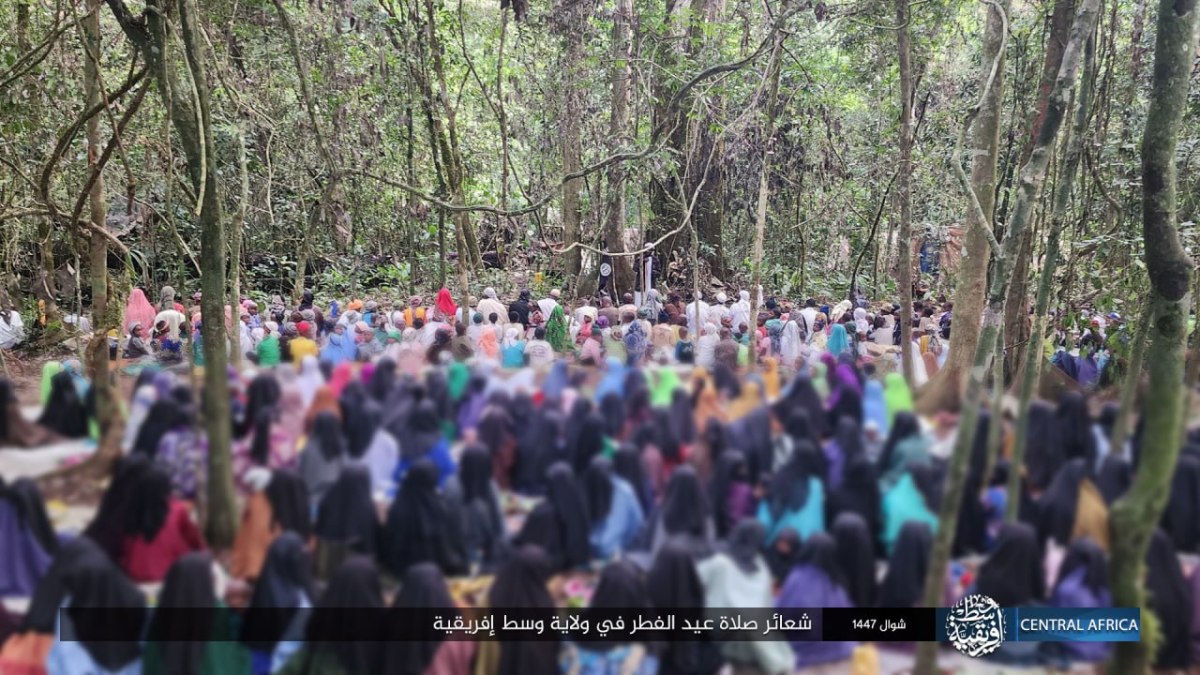
Abstract: The Islamic State Central Africa Province (ISCAP), locally known as the Allied Democratic Forces (ADF), remains one of the deadliest insurgent organizations operating in eastern Democratic Republic of the Congo. Over the past decade, the group has carried out repeated attacks against civilians, expanded its territorial presence across parts of North Kivu and Ituri Provinces, and strengthened its ideological and operational links to the broader Islamic State network. While existing research has focused primarily on the organization’s military activities, leadership structure, and ideological alignment with the Islamic State, far less attention has been devoted to the internal social systems, particularly among girls and women, that sustain the group’s long-term resilience. This article draws on findings from almost 400 interviews conducted with returnees from ISCAP camps, offering rare first-hand insight into the group’s internal gendered structures and daily camp life. Women are frequently portrayed as victims or as passive members of terrorist organizations. However, as this article shows in the case of ISCAP, this simplistic perspective obscures the broader set of functions women perform within the organization’s internal governance, logistical systems, and demographic reproduction.
On April 7, 2022, a female suicide bomber detonated herself within a crowded bar on a military base in Goma, Democratic Republic of the Congo, killing eight people.1 Though officially unclaimed, the bombing was in fact perpetrated by the Islamic State’s Central Africa Province (ISCAP), known locally as the Allied Democratic Forces (ADF), in the group’s first, and to date only, case of deploying a female member of the group as a suicide bomber.2 The use of a woman in this manner by a jihadi group, and indeed an Islamic State affiliate, is not uncommon, as seen in Nigeria,3 Somalia,4 and elsewhere.5
In fact, female members of jihadi groups play integral roles within such organizations. Scholars examining both al-Qa`ida and the Islamic Statea have shown that women often occupy roles extending beyond domestic responsibilities.6 Research on the Islamic State in Iraq and Syria, for example, demonstrated that women participated in governance structures, ideological propagation, and social regulation within insurgent communities.7 However, the specific ways these dynamics manifest in African Islamic State affiliates remain significantly less documented. And this is especially true for ISCAP, where existing research has focused primarily on the organization’s leadership structure,8 military operations,9 finances,10 media output,11 and ideological alignment with the Islamic State,12 with far less attention being devoted to the internal social systems, particularly among girls and women, that sustain the group’s long-term resilience.
Much like in other jihadi groups, women within ISCAP are frequently portrayed primarily as victims of abduction or passive members of insurgent communities rather than active, enthusiastic members. Although abduction is indeed a central component of ISCAP’s recruitment practices, this simplistic perspective obscures the broader set of functions women perform within the group’s internal governance, logistical systems, and demographic reproduction. In this way, women within ISCAP largely mirror what has been documented of women inside the Islamic State elsewhere in the world.
Utilizing interviews with returnees from ISCAP’s camps, this article seeks to examine more critically the various roles played by women inside the group.b These testimonies provide rare insight into everyday life inside the camps, including internal hierarchies among women and the mechanisms through which the group incorporates both voluntary members and abducted civilians into its structures. Evidence drawn from these individuals suggests that women play a central role not only in sustaining daily life within ISCAP camps, but also in reinforcing the governance mechanisms that regulate behavior, social hierarchy, and ideological continuity within the insurgent community. In particular, the study identifies a key internal distinction between bangwana and bazana—terms used within ISCAP’s camps to differentiate women who join voluntarily from those incorporated through abduction. This distinction provides an important analytical lens for understanding how ISCAP simultaneously combines ideological recruitment and coercive integration within its female cadres.
Terminology and Local Concepts
Before diving into the specific roles of women in ISCAP, it is first important to discuss several key local terms used by the group itself to distinguish between different types of women within the group. Interestingly, the group uses words originating in both Luganda and Swahili, representing both the core Ugandan component and lineage of ISCAP and the broader Swahili-speaking cultures in which it also exists. For instance, defectors frequently use the term muzana (plural: bazana), a word derived from Luganda, to refer to abducted women incorporated into the camps through coercion.13 In colloquial terms, the word means “slave,” reflecting the limited autonomy and restricted mobility these women experience within ISCAP’s camp system.c These women are almost always Congolese.
By contrast, mungwana (plural: bangwana) derives from Swahili and historically refers to a noble, honorable, or free person. Within ISCAP’s camps, defectors use this term to describe women who join the movement voluntarily and are recognized as so-called “legitimate” wives to male members within the insurgent community.14 These women are typically Ugandan or foreign fighters from regional countries, such as Rwanda, Burundi, Kenya, Tanzania, or from farther abroad. The linguistic contrast between mungwana and muzana reflects a clear social hierarchy between women who enter the movement voluntarily and those incorporated through coercion or forcibly abducted, which in turn directly impacts one’s status, experiences, and overall treatment in the camps.
Another important term is senga in Luganda or shangazi in Swahili, both of which translate roughly to “aunt.” Though these are common terms used throughout Uganda and wider Swahili-speaking Africa for senior women who are widely respected, within ISCAP’s camps, these terms refer to those elderly or senior women who serve as intermediaries between camp leadership and the female population, particularly in matters related to marriage, social conduct, and the regulation of relationships within the insurgent community.15 A senga/shangazi is therefore an important, powerful woman inside ISCAP’s camps and is considered a leader among the female population.
That said, these terms are not explicitly static. Women can, over time, be reclassified, thus improving their status within the camps (or perhaps even decrease their status). Defectors described several cases in which a muzana, or slave, who has spent a long period of time in ISCAP’s camps and is judged to be religiously and ideologically aligned with the movement by the camp’s sharia official, can then be reclassified as a mungwana following an additional assessment by senior women (the senga/shangazi) and approval by other camp authorities.16 Likewise, other defectors have stated that their status, or overall treatment within the camps, decreased when accused of acting in a non-Islamic fashion or wanting to defect.17 And to be clear, these terms have been utilized by ISCAP since before joining the Islamic State, though the ratio of bazana to bangwana women has increased exponentially since joining the Islamic State in 2017. Understanding these locally used terms is therefore essential for interpreting the internal hierarchy among women inside ISCAP camps.
Methodology
This article draws on a broader body of qualitative data collected by the Bridgeway Foundation over a period of approximately five years (2021-2026), comprising almost 400 interviews with ISCAP defectors, detainees, or survivors of its violence. Some of the individuals interviewed were also members of the former ISCAP splinter group, the Pan-Ugandan Liberation Initiative (PULI), which was folded back into the mainline ISCAP faction in early 2023.d All interviews include testimonies from men, women, and teenage children. These debriefs were carried out directly by Bridgeway (not through intermediaries) including in the Democratic Republic of the Congo, particularly in Kinshasa, Beni (North Kivu Province), and Bunia (Ituri Province). Additional interviews were conducted in Uganda, primarily in Kampala. Other information was gleaned from online communications with former ISCAP members who are now living as free citizens. The findings presented in this article are therefore based both on recurring patterns observed across a large body of qualitative data and on specific information detailed in testimonies from select interviews as cited throughout, allowing for wider depth in the authors’ analysis.
Bangwana and Bazana: Two Pathways for Women’s Integration into ISCAP
As outlined above, interviews with defectors reveal that women enter ISCAP through two primary pathways that shape their roles, status, and autonomy within the organization. These categories—known within the camps as bangwana and bazana—distinguish women who voluntarily join the movement from those who are forcibly abducted and integrated into its structures. This distinction represents a key organizing principle within the camp society. Women who join voluntarily often occupy more important positions within the internal hierarchy than those who are abducted. Their pathway into the movement frequently determines their labor responsibilities, marital autonomy, and proximity to authority within the camp structure. In practice, this distinction creates a gendered hierarchy of incorporation. That said, defector testimonies consistently indicate that these two categories are not necessarily evenly distributed across the entirety of ISCAP’s camp populations.
Across multiple interviews, the bazana appear to constitute the majority of the female population inside most ISCAP camps.18 Defectors have repeatedly described large groups of abducted women performing labor functions, including food collection, transport of supplies, and support during camp movements, often outnumbering both male combatants and voluntarily affiliated women.19 This dual system mirrors patterns observed across other Islamic State provinces, where both ideological recruitment and forced integration contribute to sustaining insurgent communities.20
Bangwana
As noted, the term bangwana refers to women who join ISCAP voluntarily and are considered ideologically and religiously aligned with the movement. Defectors frequently describe the bangwana as women who arrive in the camps with prior awareness of the group’s objectives, religious ideology, and/or social environment of living in jungle camps.21 Many of these women have strong social or familial ties to the group before officially joining, thus helping solidify their positions as being seen as more religiously legitimate or trustworthy.22 Upon arriving at the camps, they are also formally welcomed and are immediately treated as full members of the camp society.23 e
In living inside the jungle camps, the bangwana are generally regarded as religiously legitimate wives of male fighters, and marriage arrangements involving the bangwana typically follow a structured process overseen and approved by camp leadership.24 For example, a male fighter may request a wife to the camp emir or other leaders in the camp. The emir or camp leadership then chooses among the single bangwana population to find a bride for the male. Before being handed to her new husband by her male guardian (either a father or other male family member), the woman is made to undergo an HIV test given the prevalence of the virus in the region.25 Upon a negative result, camp leadership then approves the marriage in a formalized process with witnesses. A bangwana can also sometimes choose her own husband from the pool of eligible bachelors, in which case the subsequent marriage process still remains the same.26 Bangwana may also initiate divorce proceedings from her husband, which can also be approved or rejected by camp leadership.27
Defectors report that young girls may be requested from their families as early as age nine but are typically not transferred to the husband until adolescence, often around age 14.28 This selection can even extend beyond ISCAP’s camps, with some former female members reporting that the grooming process began in Uganda before being transported to the group’s camps in Congo when coming of age.29 Defectors indicate that marriage within the camps, in addition to being religiously fundamental within a jihadi group, also functions as a key intentional mechanism for inducing and stabilizing the male members within the group by providing them with wives that often lead to children. As such, these women are often directly assigned or offered to male fighters in order to encourage the latter’s loyalty, reinforce social integration and norms within the camp, and reduce the likelihood of defection.30 Even further, these women are socially encouraged to produce children with their husbands in order to further populate the camps and therefore provide the next generation of members, a logic endemic to various jihadi organizations.31 These assignments indicate that, even among the bangwana, girls’ autonomy remains heavily constrained by male camp and family authority.
As their presence is perceived as voluntary, bangwana typically occupy a higher social status within the camp hierarchy and often participate in religious study circles and community life within the camps. Though they may also participate in food and water collecting, as well as cooking for their husbands, more menial labor inside the camps is often relegated to the bazana. Similar dynamics can also be found in the Sahel, where full female members of al-Qa`ida’s Group for Support of Islam and Muslims contribute to the group by cooking or washing clothes for their husbands or other male members.32 More locally, female members of various Mai Mai groups (communal militias found throughout eastern Congo mobilized for a multitude of reasons) are also oftentimes employed in domestic tasks for their group and effectively take care of the male members.33 Female members of other Mai Mai groups are also expected to collect food, as well as oversee the group’s supplies.34
Bazana
In contrast, bazana refers to women who are incorporated into ISCAP’s structures through coercion, such as being forcibly abducted, which remains one of the primary mechanisms through which ISCAP replenishes its internal population. These women are typically Congolese civilians captured during raids on farms, villages, or roads, or in some rarer cases tricked to join the movement and transported to camps located deep within forested areas.35 Women captured during these operations are often forced to carry supplies looted during these same attacks before being transported through forested areas to established camps.36 And as stated above, the bazana greatly outnumber the bangwana in the majority of ISCAP’s camps.
Upon reaching ISCAP’s camps, the bazana, who are typically Christian given Congo’s demographics, are then assigned new Muslim names and outfits and integrated into the camp population.37 Defectors report that these women, in contrast with the bangwana, have little control over marriage arrangements—often being forcibly “married” or given to a male fighter in a non-formalized process—or even over their daily activities.38 Within the camps, the bazana are expected to participate in daily prayers and perform a wide range of labor-intensive tasks including food collection, cooking, construction of shelters, and transportation of supplies during camp movements (though bangwana may also carry supplies of their husbands and families). Defectors frequently describe camps where women and children significantly outnumber male combatants due to the number of bazana captured by that specific camp or transferred there from another one of ISCAP’s geographically disparate jungle camps.39
For instance, defectors indicate that marriage can be imposed on abducted girls at a very young age. In some testimonies, bazana may be assigned to older male members of the movement from approximately age nine onward, reflecting the extreme lack of autonomy governing abducted girls within the camp system.40 And whereas male members of ISCAP are allowed up to four legitimate wives, which is consistent with Islamic traditions, they may also theoretically obtain an unlimited number of sex slaves taken from the bazana population.41 All bazana, like the bangwana, must also pass a mandatory HIV test before being “approved” for marriage or given to a fighter as a sex slave or concubine.42 And much like with the bangwana, the divvying of bazana women among the male population of the camps serves an intentional purpose to reinforce social bonds within and loyalty to the group in order to stave off any potential defections, as many of the males within ISCAP are themselves also abductees or victims of coercive or deceptive recruitment tactics. In this regard, the allotment of bazana to male members of ISCAP is not dissimilar to women taken as slaves in other conflicts. For instance, in Sierra Leone, the Revolutionary United Front also utilized systematic rape of captured women to reinforce social bonds and loyalty among its male combatants, many of whom were also forcibly recruited.43 Even more locally, several Mai Mai groups have also historically utilized rape of captured women in the same manner.44
The taking of sex slaves is also consistent with wider Islamic State practice and teaching specifically from the time of its territorial caliphate in Iraq and Syria where the group took thousands of Yazidi women and girls as sex slaves and forced pregnancies were rife.45 The Islamic State’s leadership justified its sexual slavery of Yazidi women and girls under the pretext that they are mushrikin, or polytheists, and thus outside the scope of religious protections offered to so-called “People of the Book,” or Jews and Christians; there is little information on if it took Christian sex slaves in either Iraq or Syria.46 That said, during the height of the Islamic State’s territorial caliphate, it did issue a decree specifically on the taking of such slaves.47 In it, Christian women and girls are indeed considered permissible by the Islamic State as sex slaves, provided they are among the muharibiin, or those Christians waging war against the Muslims without any sort of protection arrangement with the Islamic State itself.48
To be clear, ISCAP’s sheikhs and religious leaders have continuously sanctioned the practice of taking Christian Congolese women as bazana even before the group joined the Islamic State in 2017.f However, it is unclear how widespread the practice was and what religious justifications were given under the leadership of its first emir, Jamil Mukulu, as forced abductions did not occur as frequently nor was the taking of bazana a standing policy of the group at that time. What is clear to the authors is that today ISCAP’s sheikhs and religious scholars are largely abiding by the Islamic State’s teachings on how to treat Christians, which would theoretically extend to rulings on bazana taken from the Congolese community. For instance, after joining the Islamic State, ISCAP’s leaders began utilizing the Islamic State’s broader teachings to justify looting Christian property.49 In more recent months, videos posted online featuring one of its Congolese sheikhs, Bonge La Chuma, explicitly underscore the common Islamic State line of pay jizya, or a tax paid by non-Muslims to a Muslim polity, convert to Islam, or be killed.g In doing so, La Chuma makes clear that those Christians who refuse to either pay the jizya or convert to Islam are considered at war with the group and will suffer the consequences.50 Reading between the lines, it is evident that ISCAP’s scholars are potentially now using the aforementioned muharibiin clause earlier established by the Islamic State in Iraq and Syria to perhaps retroactively justify the practice of taking Christian bazana. This logic can even be seen in operational attack claims in recent months, as ISCAP has begun to specifically disaggregate between those populations paying jizya and who are thus under a dhimmi (non-Muslims living under a Muslim polity with legal protections) pact that guarantees their safety, and so-called “muharibiin” Christian populations, or those villages refusing to pay the jizya, and/or are engaged in open conflict with the group.h In doing so, the group is thereby mirroring the ideological rhetoric espoused by its parent organization on this matter.
As described, experiences within ISCAP mirror patterns consistent with gender-based violence within other insurgent and jihadi environments.51 Abduction, forced marriage, restricted mobility, and the belief that women meet reproductive expectations and work domestic labor tasks under coercive conditions explicitly constitute forms of gender-based violence directly embedded within the group’s internal structure.
Governance and Social Control Inside ISCAP Camps
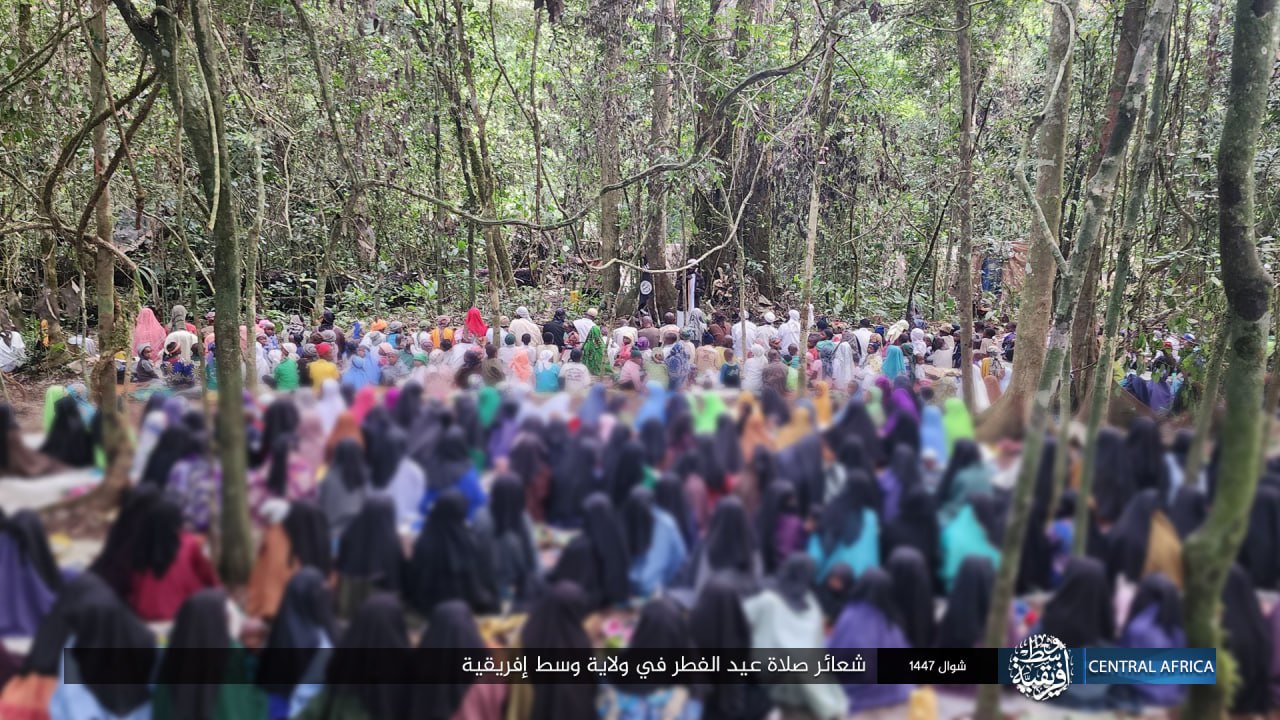
Like most other jihadi groups, or even other armed movements, ISCAP’s camps are highly structured environments governed through a combination of religious authority, military hierarchy, and social regulation enforced by its sharia courts. Although the organization operates primarily as an insurgent force engaged in armed conflict, daily life inside the camps is organized through social systems that regulate marriage, labor responsibilities, religious conduct, and interactions between men and women. These practices allow camp leadership to manage a diverse population composed of male fighters, abducted male and female civilians, and other voluntary members while reinforcing the strict ideological norms promoted by the movement.
And like other jihadi groups, at the top of the individual camp hierarchies stands the emir, often referred to within ISCAP as simply “commander,” who directly oversees both military operations and internal administration within his specific camp. Each camp emir, or commander, is directly subordinate to ISCAP’s overall emir, Musa Baluku, and its overall military emir, Hood Lukwago, better known as Mzee Pierro. Defectors report that camp commanders are responsible not only for carrying out and directing armed attacks, but also for resolving disputes among members, approving marriages, and enforcing religious discipline within the community, along with his deputies and the Islamic judges in each specific camp.52 In this sense, the authority of each camp’s leadership is such that the specific camp commander to which one is assigned controls most of one’s daily life inside the bush.
In this regard, marriage regulation represents one of the most important mechanisms through which camp authorities manage the internal population. As described above, defectors attest that formal requests for marriage for the bangwana are typically submitted through individuals responsible for overseeing women inside the camp.53 These intermediaries then communicate with the senior leaders of the camp before marriages are officially approved by the camp commander (or emir) himself.54 Through this system, the camp leadership maintains direct control over the formation of households within the insurgent community. Marriages between male fighters and bazana, or sexual ownership over them, is often handled by the male camp leadership themselves, including both the specific camp emir and Muhammad Kayiira (or simply Mzee Kayiira), one of ISCAP’s top officials whose purview includes overseeing and recording marriages throughout ISCAP’s disparate camps.55
These practices reflect broader governance patterns observed in other Islamic State-affiliated or broader jihadi environments, where regulation of marriage and family life forms a central component of social control within insurgent territories.56 Within ISCAP’s context, however, these governance practices operate alongside systems of coercion and abduction, producing a hybrid structure in which ideological discipline and forced incorporation co-exist within the same social order.
Senior Women as Marriage Intermediaries
Within this governance system, the senga or shangazi play an important intermediary role between camp leadership and the female population. Defectors describe these women as senior members of the camp community who are considered religiously learned and/or socially respected among the wider camp population.57 Most joined the group willingly and have been inside the camps for years, if not decades, and therefore developed closer relationships with senior commanders or religious authorities than other, newer members of the group.
The roles of a senga/shangazi are varied. These women may counsel newly abducted women about marriage expectations, perform HIV tests, explain camp rules and regulations, or prepare women for marriages arranged by the camp leadership.58 In some cases, they also facilitate communication between male authorities and women when marriage proposals are being organized or other issues arise among the female population of the camp.59 As communication between unmarried men and women is restricted within ISCAP’s camps, the senga/shangazi are the main conduit by which female members can hope to have their voices and concerns heard within the camp.
Although these roles performed by a senga/shangazi remain overall subordinate to male leadership, they nevertheless illustrate how women can and do participate in maintaining internal social order within ISCAP’s various camps. Through these intermediary functions, these senior women help translate the expectations of camp leadership to newly arrived or abducted women who may be unfamiliar with the social norms governing life inside the camps and also help to relay female issues and concerns to the male leadership. The importance of the senga/shangazi also reflects the incorporation of familiar local social roles into the governance structure of ISCAP: In many African societies and cultures, specifically in Congo and East Africa, figures such as the senga/shangazi traditionally advise younger women on matters related to marriage and family life. Within ISCAP’s camps, this role thus appears to have been adapted to support the religious and ideological regulation of relationships and family structures inside the insurgent environment.
Female Enforcement Roles and Social Regulation
Beyond acting as intermediaries and helping with the marriage processes within the camps, defector testimonies also indicate that certain women inside the camps—often but not necessarily the senga/shangazi—perform enforcement roles linked to internal discipline and social regulation. For example, in ISCAP’s camps, designated women may serve as Islamic policewomen (or hisbah) responsible for monitoring the behavior of other women and ensuring compliance with the group’s strict interpretation of Islam and broader camp rules.60 This includes religious infractions, such as missing a specific number of daily prayers, or even violations of a strict dress code. For example, defectors consistently, but perhaps unsurprisingly, describe strict expectations governing female clothing and modesty within the camps.61 Girls are often expected to begin wearing prescribed clothing, such as the niqab, from a very early age, between five to nine years old, in order to become accustomed to the camp’s interpretation of Islamic dress norms.62 Compliance with these expectations is monitored closely, and violations may result in punishment imposed by camp authorities.
As such, women in these authority positions may report violations to male leadership and even assist in implementing disciplinary measures (or hudud punishments) ordered by camp leaders, such as jailings, lashings, amputations, or even executions and other types of punishment.63 To note, these responsibilities undertaken by the female policewomen specifically focus on regulating the conduct of women within the camp rather than exercising authority over men, who are overseen by male policemen. The employment of female members in this manner is consistent with other jihadi groups. For example, the Islamic State had female enforcement wings for most locales and cities under its control,64 wherein it also operated a specific all-female battalion that also offered firearms training to the female hisbah officers.65 In Somalia, female members of al-Shabaab can also act as enforcers of the group’s religious and social codes upon other women.66
Additionally, women in ISCAP may also occupy specialized welfare and medical roles within the camp community. Defectors report the presence of female nurses responsible for treating injuries and illnesses among women and children, whereas male nurses and doctors treat the male population.67 In rare circumstances, these women may be allowed to provide medical assistance to male fighters when male medical personnel are unavailable, although such interactions are still closely supervised due to strict gender segregation norms within ISCAP.68
These practices demonstrate that women are incorporated into the mechanisms of governance and social regulation that structure everyday life within ISCAP camps. While ultimate authority remains concentrated in male leadership, female enforcement roles help regulate behavior among women and contribute to maintaining internal order within the insurgent community.
Fear as a Mechanism of Control
Even beyond such formalized governance and compliance structures, there exists another important mechanism by which camp authorities maintain control over women inside ISCAP’s camps: fear. Defectors report that newly abducted women, much like everyone else in its camps, are frequently exposed to narratives designed to discourage escape and reinforce dependence on the camp environment.69 Members may be told that attempting to flee will result in severe punishment if they are captured, including execution via beheading or other violent retaliation against themselves or others, such as family members if they joined or were abducted together.70 At the same time, members are frequently warned that if they escape and encounter external authorities, they may face imprisonment or harsh mistreatment outside the camp by either Congolese or Ugandan authorities.71
Such narratives thus create a climate of uncertainty that can discourage escape attempts, particularly among women who have been separated from their families or transported far from their communities. Over time, these messages may contribute to the normalization of camp life and reduce the perceived viability of escape, thereby reinforcing internal cohesion within the group’s jungle camps. The use of fear in this way reflects broader patterns of coercion within conflict environments, where psychological control complements physical constraints on mobility.72 Within ISCAP camps, fear therefore becomes part of a wider system of governance that helps maintain order among abducted civilians integrated into the insurgent population.
Operational and Logistical Roles of Women
Perhaps most obvious, women also play an important role in sustaining the operational capabilities of ISCAP. As stated earlier in this article, women can be active participants in military operations, such as suicide bombings or providing assistance during active combat, or can participate in other operations that help sustain the group in the remote forest environment of eastern Congo.
For example, one of the most common responsibilities assigned to both bangwana and bazana women involves participation in food acquisition operations alongside male fighters. Defectors report that women are typically among the first to enter civilian farms and fields, carry out the harvesting of crops and other food, and process and transport crops and other supplies back to the camps, while the male fighters accompany them primarily to provide security and oversight.73 In addition to the raids on civilian farms, women are also responsible for transporting food and other supplies delivered to ‘RVs,’ or rendezvous points, by external collaborators, to the camps, often carrying these supplies over long distances through the dense forest.74 During these operations, women with young children are reportedly sometimes required to leave them behind in the camps for several days while they participate in food raids or RV collection operations.75 This separation further reduces the likelihood of escape, as many women are unwilling to flee without their children and fear the consequences for those left behind.
Women also participate in offensive military operations undertaken by ISCAP. Though women are not typically at the front, defectors describe women as consistently accompanying the male fighters, typically their husbands, in support roles.76 This includes carrying and loading ammunition, assisting and treating wounded fighters (if a male doctor is not available), and transporting looted goods.77 i Although this direct participation in direct combat appears relatively limited, some defectors report that women still receive basic weapons training and may occasionally be expected to use firearms to defend the group if camps come under direct attack.78 Some defectors have even stated that bangwana may also undergo training to manufacture improvised explosive devices (IEDs) if they so wish.79 Women and girls can, on occasion, even actively participate in more extreme acts of violence, such as beheadings.80 In this regard, ISCAP is more in line with other African insurgent groups, such as the Revolutionary United Front in Sierra Leone or the Lord’s Resistance Army in Uganda, wherein those groups utilized female members in such extreme acts of violence as both a strategic choice and as a means to help bound the women to the group.81
Additionally, ISCAP’s expectation that women can participate in combat in a defensive manner is not dissimilar to women in other jihadi groups, including those living under the Islamic State’s territorial caliphate, where women played an integral role in the group’s attempts to defend Mosul from being recaptured by Iraqi forces.82 However, ISCAP’s prohibition of women in offensive frontline roles specifically contrasts with other armed groups in Congo’s militant landscape, mainly local Mai Mai groups, that often do deploy female combatants in this manner.83
Women also play a significant role during camp movements within the jungle, as ISCAP frequently relocates its physical camps in response to military pressure from Congolese and Ugandan forces as part of the countries’ joint Operation Shujaa.j During these relocations, women—mainly the bazana and children—are often expected to transport a large portion of the camp’s supplies, including food reserves, cooking equipment, and personal belongings of both themselves and their families, to the new camp positions.84 Males are typically expected to provide security for the relocation and may only carry heavy specialized equipment, such as generators, heavy weaponry, or material needed for IEDs.85 k Overall, however, these responsibilities illustrate that women contribute directly to the operational resilience of ISCAP beyond domestic labor alone.
Women and Martyrdom Operations
As noted at the beginning of this article, ISCAP does not prohibit the use of women in suicide bombings, or what it would describe as “martyrdom operations.” The group believes women, just like its male members, have the opportunity to participate in such operations. In this regard, ISCAP is again consistent with other jihadi groups’ use of women in this manner,86 including the Islamic State, which utilized this tactic in the defense of Mosul in 2017, and its predecessor in al-Qa`ida in Iraq.87 Still, like the other jihadi groups, ISCAP has yet to publicly claim the use of female suicide bombers.l
Nevertheless, ISCAP defectors describe the existence of internal lists of individuals willing to participate in suicide bombing operations or so-called “martyrdom operations.”88 Each of ISCAP’s camps takes note of such volunteers, whose names are then transmitted to ISCAP’s main camp, referred to as Madina. There, the group’s senior leadership approves or disapproves of a person’s inclusion on the list.89 Though ISCAP has not undertaken a suicide bombing inside Congo since 2022,90 the group still maintains these lists in case it resumes such operations.91 And like male members of the group, females may freely volunteer and are not discouraged from doing so.
According to defector testimonies, participation in such operations is framed through religious narratives emphasizing martyrdom, divine reward, and immediate spiritual forgiveness for all prior committed sins.92 Individuals who volunteer for these operations may undergo additional religious preparation before being selected.93 This is again not dissimilar to the process employed by other jihadi groups that make use of suicide bombings—the divine rewards expected for undertaking such an act being one of the most widely cited reasons for why one volunteers to participate in suicide bombings.94 Although the number of women involved in suicide attacks within ISCAP’s context is limited, the existence of such lists, with females also represented, reflects ideological narratives common across Islamic State-affiliated movements, where martyrdom is portrayed as a form of religious sacrifice and ultimate devotion to the cause.
Women and Long-term Sustainability
Much like women within the Islamic State at the height of its territorial caliphate in Iraq and Syria, women in ISCAP are expected to be mothers to the next generation of jihadis, which helps self-perpetuate the jihadi project.95 As such, women in ISCAP also contribute to the long-term sustainability of the insurgent system through demographic reproduction.
Defectors consistently report that childbirth within the camps is wholly encouraged, for both the bangwana and bazana, with male members of the group often having children with both his legitimate wives and allotted sex slaves.96 Male children born in the camps are then widely expected to become future fighters or religious authorities, while female children are integrated into the same gendered social structures governing adult women.97 Children raised in these environments grow up immersed in the ideological system promoted by the movement. Defectors indicate that boys may begin receiving religious instruction and exposure to weapons training at an early age, while young girls shadow their mothers to learn the domestic and other expectations of women.98
This process contributes to what several defectors describe as a “born in the bush” generation that grows up entirely within the insurgent environment.99 For ISCAP, the birth and socialization of children within the camps represent an important mechanism for maintaining its population over time despite losses experienced during military operations. This is the same concept as the Islamic State’s infamous “Cubs of the Caliphate” mantra, in which children born under the territorial caliphate, or young children who grew up in that era, were promoted as the “next generation” of jihadis for the organization.100
Conclusion
This article demonstrates that women play a central role in sustaining the internal functioning of ISCAP. Far from occupying purely domestic roles, women participate in governance structures, logistical operations, and demographic reproduction that enable the organization to maintain resilience despite sustained military pressure against it.
The distinction between bangwana and bazana reveals how the movement combines ideological recruitment with coercive abduction to maintain its population inside the camps. Women who join voluntarily often reinforce ideological cohesion within the insurgent community, while abducted women provide the labor necessary to sustain daily camp life. At the same time, women contribute to the movement’s long-term sustainability through childbirth and the socialization of children raised within insurgent environments to provide the next generation of ISCAP members.
Understanding these gendered structures is therefore essential for analyzing how insurgent organizations such as ISCAP maintain internal cohesion and survive prolonged counterinsurgency pressure. Greater attention to these dynamics is also essential for policymakers and practitioners seeking to design effective protection, disengagement, and reintegration strategies for women emerging from insurgent environments, particularly from other Islamic State groups. Examining these dynamics reveals that gender is not peripheral to insurgent organization but integrally embedded within the governance systems that sustain militant movements over time. CTC
Akonkwa Zawadi Ghislaine is the head researcher for the Bridgeway Foundation in Congo. LinkedIn: @ghislaine-zawadi
Caleb Weiss is the Bridgeway Foundation’s defection program manager in Uganda and an editor of FDD’s Long War Journal. X: @caleb_weiss7
Bridgeway Foundation is a philanthropic organization dedicated to ending genocide and war crimes and is currently focused on helping to stop violence committed by the Islamic State’s Central Africa Province.
© 2026 Akonkwa Zawadi Ghislaine, Caleb Weiss
Substantive Notes
[a] The authors use the term “Islamic State” throughout the article to specifically denote Islamic State central, or its global senior leadership. Specific global Islamic State affiliates are explicitly referenced otherwise.
[b] Returnees’ identities are anonymized by utilizing accompanying witness numbers in order to protect their privacy and safety.
[c] This is a common definition of the word muzana (plural: bazana), as attested to by almost all former ISCAP members and escapees spoken to by the authors.
[d] PULI was a relatively short-lived Ugandan jihadi group that splintered from ISCAP when it first joined the Islamic State; however, its leadership and overall membership were largely just a historical extension of the Jamil Mukulu-led Allied Democratic Forces prior to joining the Islamic State. As such, female members of PULI largely had the same experiences as a bangwana in the mainline ISCAP faction. For more on the formation, activities, and ideology of PULI, see Caleb Weiss and Ryan O’Farrell, “PULI: Uganda’s Other (Short-lived) Jihadi Group,” FDD’s Long War Journal, July 25, 2023.
[e] To be clear, available testimonies provide limited detail on whether formal vetting or screening mechanisms are systematically applied to the bangwana. While some defectors suggest that prior ideological alignment and existing social or familial connections to the movement facilitate immediate acceptance, it nevertheless remains unclear to what extent camp authorities conduct any structured verification of loyalty, perhaps behind the scenes. Author interviews with W-211 in Kampala, Uganda, July 2023; W-216 in Kampala, Uganda, May 2023; W-245 in Kampala, Uganda, May 2024; W-318 in Kampala, Uganda, August 2023; and W-324 in Kampala, Uganda, March 2025.
[f] For instance, the issues of bazana were also recorded during the leadership of ISCAP’s (then known as ADF) first emir Jamil Mukulu. See “Letter dated 12 January 2015 from the Chair of the Security Council Committee established pursuant to resolution 1533 (2004) concerning the Democratic Republic of the Congo …,” United Nations Security Council, January 12, 2015, p. 5.
[g] This refrain has since been repeated ad nauseum in various ISCAP videos, but it was first propagated by Bonge La Chuma in a video posted by ISCAP on YouTube in August 2025. Video on file with the authors. The video was released in Swahili, Lingala, and French—the three most common languages in eastern Congo—in a clear attempt to reach as many people as possible within its areas of operation.
[h] ISCAP has specifically claimed attacks on “muharibiin,” or warring Christians, since December 2025. Prior to this, the group never used such verbiage to describe Christians it attacked or killed. This is based on authors’ collation of ISCAP operational claims.
[i] This can also be seen in videos and photos of ISCAP attacks, wherein women and children can sometimes be seen assisting in battle by carrying weapons and ammunition, and/or collecting looted goods. Videos and photos on file with the authors.
[j] Operation Shujaa is the ongoing joint Ugandan-Congolese military operation against ISCAP, which was launched in late 2021 following ISCAP’s triple suicide bombing in Kampala in November of that year.
[k] Men can also be seen carrying such equipment in photos and videos produced by ISCAP itself. Photos and videos on file with the authors.
[l] Though many jihadi organizations deploy women as suicide bombers, most of these attacks go officially unclaimed. This is likely due to the jihadi groups not wanting to alienate civilian populations who may be supportive of the group and/or dissuade future recruits from joining the group itself, as such attacks go against societal norms and gender expectation and could therefore harm the group’s public support if officially claimed.
Citations
[1] “Letter dated 16 December 2022 from the Group of Experts on the Democratic Republic of the Congo addressed to the President of the Security Council,” United Nations Security Council, December 16, 2022, p. 8; authors’ interview, Congolese source in Beni, DRC, February 2023.
[2] Ibid.; authors’ collation of ISCAP attack data.
[3] Jason Warner and Hilary Matfess, Exploding Stereotypes: The Unexpected Operational and Demographic Characteristics of Boko Haram’s Suicide Bombers (West Point, NY: Combating Terrorism Center, 2017).
[4] Jason Warner and Ellen Chapin, Targeted Terror: The Suicide Bombers of al-Shabaab (West Point, NY: Combating Terrorism Center, 2018).
[5] Such as in Chechnya and the wider North Caucasus. See Anne Preesman, “Female Suicide Bombers: An Uncomfortable Truth,” Kings College London, March 16, 2021. For an attempted female suicide bombing in Uganda, see Caleb Weiss and Ryan O’Farrell, “Analysis: Islamic State attempts suicide bombing in Uganda,” FDD’s Long War Journal, June 4, 2025. And on Islamic State female suicide bombers in Iraq, see Charlie Winter and Devorah Margolin, “The Mujahidat Dilemma: Female Combatants and the Islamic State,” CTC Sentinel 10:7 (2017).
[6] See, for example, Jennifer Philippa Eggert, “Women Fighters in the ‘Islamic State’ and Al-Qaida in Iraq: A Comparative Analysis,” Die Friedens-Warte 90:3/4 (2015), pp. 363-380 and Katharina Von Knop, “The Female Jihad: Al Qaeda’s Women,” Studies in Conflict and Terrorism 30:5 (2007), pp. 397-414.
[7] Devorah Margolin, “The Changing Roles of Women in Violent Islamist Groups,” George Washington University’s Program on Extremism, 2019; Devorah Margolin and Joana Cook, “The Agency and Roles of Foreign Women in ISIS,” Center for Justice and Accountability, August 2023.
[8] “Inside the ADF Rebellion: A Glimpse into the Life and Operations of a Secretive Jihadi Armed Group,” Congo Research Group, November 2018; Tara Candland, Adam Finck, Haroro J. Ingram, Laren Poole, Lorenzo Vidino, and Caleb Weiss, “The Islamic State in Congo,” George Washington University’s Program on Extremism, March 2021.
[9] Tara Candland, Ryan O’Farrell, Laren Poole, and Caleb Weiss, “The Rising Threat to Central Africa: The 2021 Transformation of the Islamic State’s Congolese Branch,” CTC Sentinel 15:6 (2022); Tara Candland, Ryan O’Farrell, and Caleb Weiss, “Breaking the Walls in Butembo: The Islamic State in Congo’s Capabilities are Growing,” George Washington University’s Program on Extremism, September 6, 2022.
[10] Caleb Weiss, Ryan O’Farrell, Tara Candland, and Laren Poole, “Fatal Transaction: The Funding Behind the Islamic State’s Central Africa Province,” George Washington University’s Program on Extremism, June 2023.
[11] Caleb Weiss and Ryan O’Farrell, “Media Matters: How Operation Shujaa Degraded the Islamic State’s Congolese Propaganda Output,” CTC Sentinel 17:3 (2024).
[12] Ryan O’Farrell, Caleb Weiss, Tara Candland, and Laren Poole, “Clerics in the Congo: Understanding the Ideology of the Islamic State in Central Africa,” Hudson Institute, April 11, 2024.
[13] Based on authors’ interviews with ISCAP defectors, such as: W-331 in Kampala, Uganda, May 2025; W-332 in Beni, Democratic Republic of the Congo, May 2025; and W-333 in Beni, DRC, May 2025. However, this is a common term used by almost all former members and escapees of the group spoken to by the authors.
[14] For instance, this was attested to by author interviews with W-332 in Beni, DRC, May 2025; and W-373, also in Beni, DRC, February 2026. However, this is again a common term used by almost all former members and escapees of the group spoken to by the authors.
[15] This was described in detail in an author interview with W-327 in Beni, DRC, April 2025, though this dynamic among the senga/shangazi of various ISCAP camps is described by most female defectors from the group.
[16] Author interviews with W-293 and W-359 in Kampala, Uganda, February 2026.
[17] As attested to in author interviews with W-203 in Kampala, Uganda, July 2023; W-225, in Kampala, Uganda, October 2023; and W-226 in Kampala, Uganda, October 2023.
[18] Author interviews with W-254, W-293, W-359, and W-360 in Kampala, Uganda, February 2026; author discussion with W-4 via online communications, March 2026.
[19] Ibid.
[20] See, for instance, Chitra Nagarajan, Francesca Batault, Siobhan O’Neil, and Fatima Yetcha Ajimi Badu, “Survival and Struggle: The Experience of Women and Girls With and After Boko Haram,” Managing Exits from Armed Conflicts, December 2024 and Amanda N. Spencer, “The Hidden Face of Terrorism: An Analysis of the Women in Islamic State,” Journal of Strategic Security 9:3 (2016): pp. 74-98.
[21] Author interviews with W-332 in Beni, DRC, May 2025 and W-373 in Beni, DRC, February 2026. However, this dynamic is widely understood by former ISCAP members spoken to by the authors.
[22] Author interviews with W-211 in Kampala, Uganda, July 2023; W-216 in Kampala, Uganda, May 2023; W-245 in Kampala, Uganda, May 2024; W-318 in Kampala, Uganda, August 2023; and W-324 in Kampala, Uganda, March 2025.
[23] As described in author interviews with W-298 in Kampala, Uganda, February 2025; W-311 in Kampala, Uganda, February 2025; W-312 in Kampala, Uganda, February 2025; W-326 in Kampala, Uganda, May 2025; and W-330 in Kampala, Uganda, May 2025.
[24] Author interview with W-373 in Beni, DRC, February 2026.
[25] Author discussion with W-4 via online communication, March 2026.
[26] Author discussion with W-373 in Beni, DRC, February 2026; W-376 in Kampala, Uganda, April 2025; author discussion with W-4 via online communication, March 2026.
[27] Ibid.
[28] Author interviews with W-293 and W-254 in Kampala, Uganda, February 2026.
[29] Author interviews with W-211 in Kampala, Uganda, July 2023; and W-312 in Kampala, Uganda, February 2025.
[30] Author interviews with W-324 in Kampala, Uganda, March 2025; W-328 in Kampala, Uganda, May 2025; and W-330 in Kampala, Uganda, May 2025.
[31] Lydia Khalil, “Behind the Veil: Women in jihad after the caliphate,” Lowy Institute, June 25, 2019.
[32] Jeannine Ella Abatan, “The role of women in West Africa’s violent extremist groups,” Institute for Security Studies, October 12, 2018.
[33] Rumbi Chakamba, “In DRC, girls choose to become child soldiers to escape poverty,” Women’s Media Center, January 6, 2017.
[34] Bisimwa Bulangalire Kalambi, “La Participation des femmes et filles dans la résistance locale Maï-Maï en Territoire d’Uvira (1996-2017),” ISDR Bukavu, March 2019.
[35] Author interviews with W-203 in Kampala, Uganda, July 2023; W-284 in Kampala, Uganda, October 2024; W-371 in Beni, DRC, November 2025; and W-373 in Beni, DRC, February 2026.
[36] Author interviews with W-234 in Kampala, Uganda, November 2023 and W-373 in Beni, DRC, February 2026. However, this is a common experience among former ISCAP bazana spoken to by the authors.
[37] Author interviews with W-198 in Kampala, Uganda, July 2023; W-327 in Beni, DRC, April 2025; and W-374 in Beni, DRC, February 2026.
[38] Author interviews with W-198 in Kampala, Uganda, July 2023; W-203 in Kampala, Uganda, July 2023; W-209 in Kampala, Uganda, July 2023; W-226 in Kampala, Uganda, in October 2023; W-289 in Beni, DRC, October 2024; and W-372 in Beni, DRC, January 2026.
[39] Author interviews with W-254 in Kampala, Uganda, July 2024; W-373 in Beni, DRC, February 2026; and W-374 in Beni, DRC, February 2026. This is also a common estimation of camp composition for most camps by former ISCAP members spoken to by the authors.
[40] Author interviews with W-327 in Beni, DRC, April 2025; and W-293 in Kampala, Uganda, February 2026.
[41] Information from Ugandan source, May 2023; author interviews with W-309 in Beni, DRC, December 2024; W-332 in Beni, DRC, May 2025; author discussion with W-4 via online communications, March 2026. This is also a common understanding among most former ISCAP members spoken to by the authors.
[42] Author discussion with W-4 in online communications, March 2026.
[43] Dara Kay Cohen, “Explaining Rape during Civil War: Cross-National Evidence (1980–2009),” American Political Science Review 107:3 (2013).
[44] Torang Asadi, “The Mai Mai Rape,” Journal of Religion and Violence 2:2 (2014): pp. 281-307; Kalambi.
[45] Devorah Margolin and Gina Vale, “In the Shadow of the Caliphate: A Decade of Islamic State Gendered Violence,” CTC Sentinel 17:7 (2024); Fionnuala D. Ní Aoláin, “The Complexity of Sexual Violence, Birthing, and Status After the Fall of the Caliphate,” in Kimberly Theidon, Dyan Mazurana, and Dipali Anumol eds., Challenging Conceptions: Children Born of Wartime Rape and Sexual Exploitation (Oxford: Oxford University Press, 2023), chapter 11.
[46] Nadia al-Dayel, Andrew Mumford, and Kevin Bales, “Not Yet Dead: The Establishment and Regulation of Slavery by the Islamic State,” Studies in Conflict and Terrorism 45:11 (2020): pp. 929-952.
[47] Aymenn Jawad al-Tamimi, “Unseen Islamic State Pamphlet on Slavery,” Aymenn Jawad al-Tamimi’s blog, December 29, 2015.
[48] Aymenn Jawad al-Tamimi, “Islamic State Question and Answer Pamphlet on Slavery and Slave-Women,” Aymenn Jawad al-Tamimi’s blog, March 30, 2021.
[49] O’Farrell, Weiss, Candland, and Poole.
[50] Video posted by ISCAP to YouTube in August 2025. Video on file with authors.
[51] Christina Schmid and Alexandra Phelan, “Insurgencies as gendered organisations: a synthetical approach to understanding gender relations in insurgent groups,” Critical Studies on Terrorism 18:1 (2025): pp. 19-44; “Iraq: ISIS Escapees Describe Systematic Rape,” Human Rights Watch, April 14, 2015.
[52] Author interviews with W-254, W-293, W-359, and W-360 in Kampala, Uganda, February 2026; author discussion with W-4 via online communications, March 2026.
[53] Author interviews with W-376 in Kampala, Uganda, April 2025; W-332 in Beni, DRC, May 2025; author discussion with W-4 via online communications, March 2026.
[54] Ibid.
[55] Author interviews with W-254 in Kampala, Uganda, July 2024; W-372 in Beni, DRC, January 2026; author discussion with W-4 via online communications, April 2026.
[56] Khalil; Orly Maya Stern, “The Invisible Women of al-Shabaab: Understanding the role of women in, and their influence on sons, husbands and brothers in, the processes of joining al-Shabaab, defecting from al-Shabaab, rehabilitation, and reintegration,” Adam Smith International, September 2019.
[57] Author interview with W-293 in Kampala, Uganda, February 2026; author discussion with W-4 via online communications, March 2026.
[58] Ibid.
[59] Ibid.
[60] Author interviews with W-245 in Kampala, Uganda, May 2024; W-328 in Kampala, Uganda, May 2025; and W-332 in Beni, DRC, May 2025.
[61] Author interviews with W-110 in Kampala, Uganda, November 2021; W-230 in Kampala, Uganda, October 2023; and W-327 in Beni, DRC, April 2025.
[62] Author interviews with W-254, W-293, W-359, and W-360 in Kampala, Uganda, February 2026.
[63] Author interviews with W-203 in Kampala, Uganda, July 2023; W-225 in Kampala, Uganda, October 2023; W-376 in Kampala, Uganda, April 2025; and W-332 in Beni, DRC, May 2025.
[64] “Subject: The Reactivation (of the Female Division) in Some Cities of the Islamic State: Department of the Hisba,” Combating Terrorism Center at West Point, 2017; Gina Vale, “Piety Is in the Eye of the Bureaucrat: The Islamic State’s Strategy of Civilian Control,” CTC Sentinel 13:1 (2020).
[65] Kathy Gilsinan, “The ISIS Crackdown on Women, by Women,” Atlantic, July 25, 2014.
[66] Stern.
[67] Author interviews with W-332 in Beni, DRC, May 2025; W-333 in Beni, DRC, May 2025; and W-372 in Beni, DRC, January 2026.
[68] Author interviews with W-359 and W-360 in Kampala, Uganda, February 2026.
[69] Author interviews with W-260 in Beni, DRC, August 2024 and W-324 in Kampala, Uganda, March 2025. That many lies are told to members about potential effects of escaping is a common refrain among most former ISCAP members spoken to by the authors.
[70] Author interviews with W-203 in Kampala, Uganda, July 2023; W-225 in Kampala, Uganda, October 2023; W-372 in Beni, DRC, January 2026; and W-373 in Beni, DRC, February 2026.
[71] Author interview with W-293 in Beni, DRC, October 2024; W-311 in Kampala, Uganda, February 2025; and W-312 in Kampala, Uganda, February 2025.
[72] See, for instance, Haroro J. Ingram, “Fear & Loathing in the Bangsamoro: Defection & Reintegration Lessons from the Southern Philippines,” George Washington University’s Program on Extremism, July 13, 2022; Ibraheem Bahiss, Ashley Jackson, Leigh Mayhew, and Florian Weigandand, “Rethinking Armed Group Control: Towards a New Conceptual Framework,” Centre on Armed Groups, April 2022; and “LRA using fear to mould recruits,” New Humanitarian, March 19, 2004.
[73] Author interviews with W-217 in Kampala, Uganda, August 2023; W-237 in Kampala, Uganda, December 2023; and W-331 in Kampala, Uganda, May 2025.
[74] Author interviews with W-187 in Kampala, Uganda, July 2023; W-198 in Kampala, Uganda, July 2023; and W-234 in Kampala, Uganda, July 2023.
[75] Author interview with W-371 in Beni, DRC, November 2025.
[76] Author interviews with W-198 in Kampala, Uganda, July 2023; W-200 in Kampala, Uganda, July 2023; W-201 in Kampala, Uganda, July 2023; author discussion with W-4 via online communications, March 2026. However, this is also widely discussed by most former ISCAP members spoken to by the authors.
[77] Author interviews with W-348 in Beni, DRC, June 2025; W-363 in Beni, DRC, October 2025; W-376 in Kampala, Uganda, April 2025; author discussions with W-4 via online communications, March 2026.
[78] Author interviews with W-199 in Kampala, Uganda, July 2023; W-225 in Kampala, Uganda, October 2023; and W-234 in Kampala, Uganda, November 2023.
[79] Author interview with W-254 in Kampala, Uganda, July 2024; author discussions with W-359 and W-360 in Kampala, Uganda, March 2026; author discussion with W-4 via online communication, March 2026.
[80] Author interviews with W-225 in Kampala, Uganda, October 2023; and W-311 in Kampala, Uganda, February 2025.
[81] Susan McKay, “Girls as ‘Weapons of Terror’ in Northern Uganda and Sierra Leonean Rebel Fighting Forces,” Studies in Conflict and Terrorism 28:5 (2005): pp. 385-397.
[82] Winter and Margolin; Aymenn Jawad al-Tamimi, “ISIS’ Female Suicide Bombers are No Myth,” Foreign Affairs, September 22, 2017.
[83] Sophie Neiman, “Women’s Agency in the DRC War,” New Internationalist, November 4, 2024.
[84] Author interviews with W-299 in Beni, DRC, November 2024; and W-311 in Kampala, Uganda, February 2025.
[85] Author discussion with W-4 via online communications, March 2026.
[86] Warner and Matfess; Warner and Chapin.
[87] Winter and Margolin; al-Tamimi, “ISIS’ Female Suicide Bombers are No Myth;” Elizabeth Pearson, “Wilayat Shahidat: Boko Haram, the Islamic State, and the Question of the Female Suicide Bomber” in Jacob Zenn ed., Boko Haram Beyond the Headlines: Analyses of Africa’s Enduring Insurgency (West Point, NY: Combating Terrorism Center, 2018), pp. 33-52.
[88] Author interviews with W-330 in Kampala, Uganda, May 2025; W-254, W-293, W-359, and W-360 in Kampala, Uganda, February 2026; author discussion with W-4 via online communications, March 2026.
[89] Ibid.
[90] Based on ISCAP attack data and claims collated by the authors.
[91] Author interviews with W-330 in Kampala, Uganda, May 2025; W-254, W-293, W-359, and W-360 in Kampala, Uganda, February 2026; author discussion with W-4 via online communications, March 2026.
[92] Ibid.
[93] Ibid.
[94] See, for instance, Abdulrazaq Kilani and Ibrahim Suberu, “Martyrs or Terrorists: Suicide Bombing in Islamic Hermeneutics,” Ilorin Journal of Religious Studies 5:1 (2015): pp. 119-137, and Edomi Saputra, “The Myth of Martyrs Behind Suicide Bombings,” Formosa Journal of Science and Technology 3:7 (2024): pp. 1,637-1,646.
[95] Noman Benotman and Nikita Malik, “The Children of Islamic State,” Quillam Foundation, 2016 (accessed via the Wayback Machine); John Saleh, “The Women of ISIS and the Al-Hol Camp,” Washington Institute for Near East Policy, August 2, 2021.
[96] Author interviews with W-254, W-293, W-359, and W-360 in Kampala, Uganda, February 2026; author discussion with W-4 via online communications, March 2026.
[97] Ibid.
[98] Ibid.
[99] Ibid.
[100] Benotman and Malik; Saleh; Tore Hamming and Amar Amarasingam, “Cubs of the Caliphate,” Center for Justice and Accountability, August 2023.
