
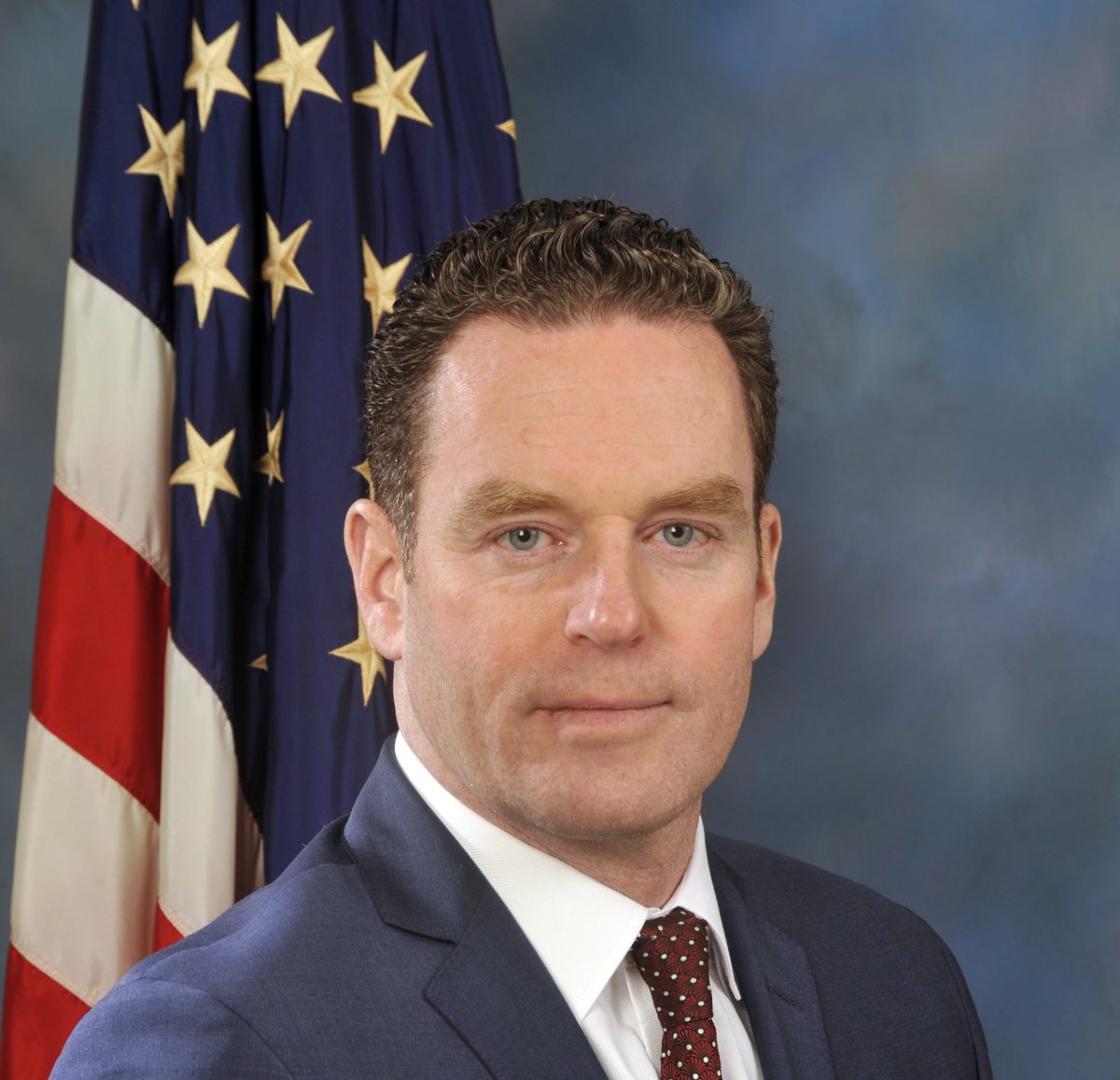
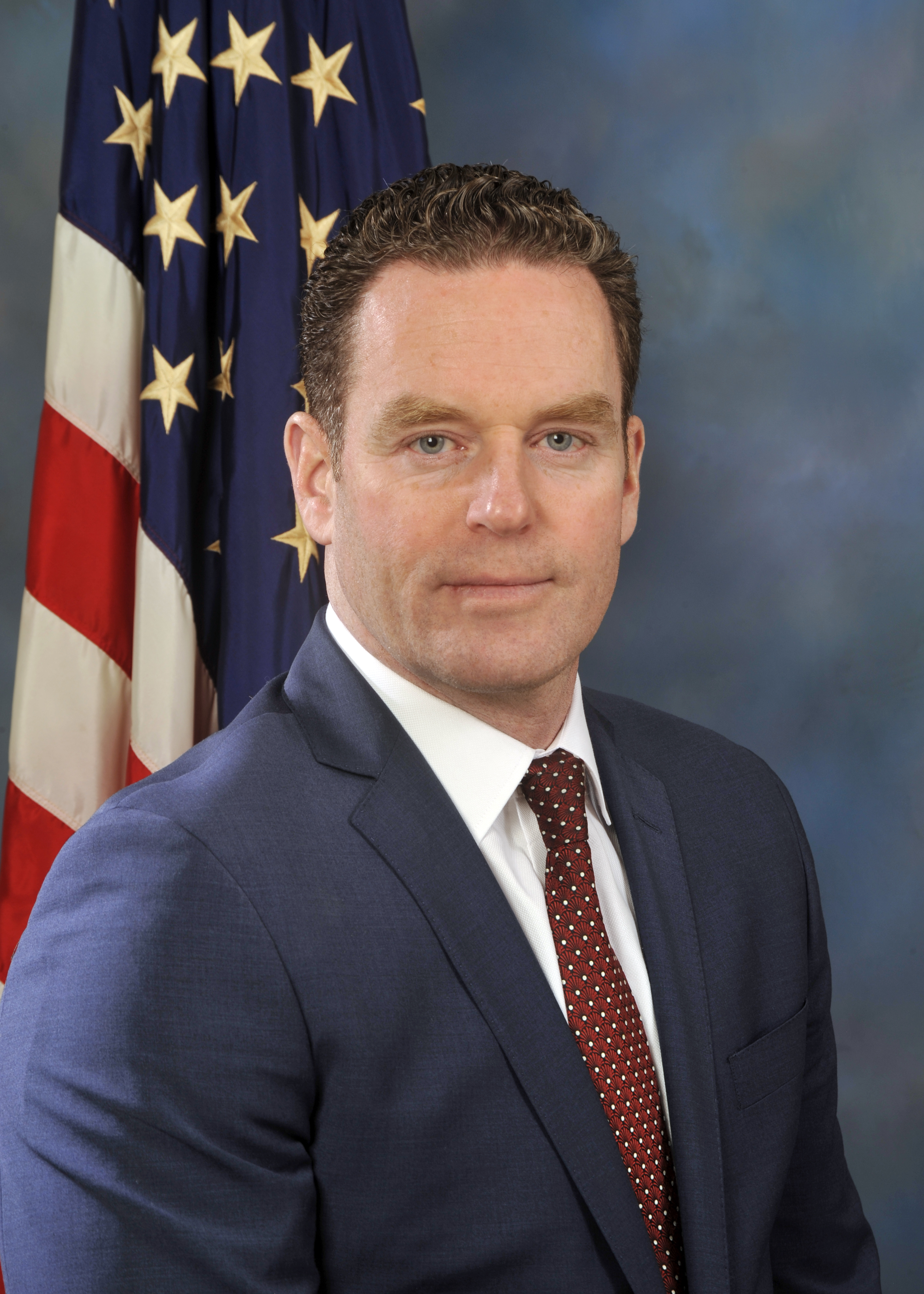
Robert C. Kissane retired from the Federal Bureau of Investigation in April 2026 after 23 years of service with the Bureau. In his last role, Kissane served as the Special Agent in Charge of the Counterterrorism Division of the New York Field Office, where he also oversaw the New York Joint Terrorism Task Force. Prior to that, Kissane served as a section chief and acting deputy assistant director in the Counterintelligence Division at FBI Headquarters in Washington, and as the Chief of a China operations section in the Counterintelligence Division at Headquarters that covers intelligence services, technology transfer, and espionage. Kissane received the FBI Director’s Award for Excellence in the human intelligence program for his role on the team that located an operative wanted for his role in the 2000 USS Cole attack. Before joining the FBI, Kissane served in the U.S. Army and worked in banking and finance.
CTC: You graduated from West Point in 1994 and served in the U.S. Army for a number of years. In 2003, you joined the FBI. What drew you to the work of the Bureau?
Kissane: I went to West Point and graduated in 1994. I spent five years in the Army, got out, and worked for four years at a bank from 1999 to 2003. And during that time, of course, the 9/11 attacks occurred here in the United States, particularly hitting New York City hard. I’ve always been a very patriotic person that enjoyed serving, and looking at the 9/11 attacks, where we were as a country, and looking at the threat environment, I made a very simple decision that I wanted to be on a team that was going to work to prevent attacks like that from happening again anywhere in the United States, certainly in New York City. And also to track down those individuals responsible, bring them to justice, and then provide some level of justice for the victims. That was the motivating factor for me to join a team that was dedicated to doing that.
In terms of the FBI, it’s funny, a lot of people I work with, they wanted to be FBI agents from the time they were 10 years old. That just wasn’t me; I never really thought about the FBI until after 9/11. I looked at the FBI, CIA, and a couple other places, applied to several agencies, and the FBI is what worked out. Twenty-three years later, I’m really glad it was the FBI that worked out because I wanted to be on a team that was focused on that mission. In all my years, I’ve never been in such a positive, energetic, impactful team environment as the FBI has been.
CTC: Over the course of your career at the Bureau, you held a number of critical assignments, including time investigating the terrorism threat emanating from East Africa, particularly while at the New York City Joint Terrorism Task Force. If you had to compare what you were seeing then, in the 2009 timeframe, to the threats we see today emanating from East Africa in terms of terrorism, what stands out to you?
Kissane: Back in 2009, the focus was al-Shabaab and the remnants of al-Qa`ida in East Africa, and they were very much aligned and connected. In 2010, there was a significant attack, the Kampala attacks, during the final World Cup game in South Africa. There were several viewing parties in Kampala, Uganda, and [this was an] al-Shabaab-directed plot involving suicide bombers and other explosive devices that killed over 100 individuals, to include one American, Nate Henn. We responded to that. So, back then, it was al-Shabaab/al-Qa`ida East Africa.
When you look at the landscape today, it’s changed significantly just as the landscape throughout the globe has changed. You had the rise of ISIS a few years later. And today, you’ve got ISIS branches all over Africa: ISIS Somalia, ISIS DRC, and others. You have senior leaders of ISIS Global that are in Africa, in Somalia specifically. You also had evolving technology, social media, other things, which has given groups the ability to recruit, encourage, and influence people to conduct attacks on their behalf from wherever they are. It’s almost like a ‘recruitment in place.’ So, you have ISIS, al-Shabaab, others that are identifying individuals to do attacks in the United States, in Europe, anywhere. So, you go from mostly focused on directed plots to also focusing on those groups—ISIS and others—tapping into homegrown violent extremists, lone actors, and encouraging them to do things where they are. It’s a much more dynamic and diverse threat environment today than it even was then in so many different ways. Back then, we had many people that were looking to travel—dozens of Americans traveling—to join al-Shabaab. Now we’re more focused on people that are staying where they are, being radicalized and recruited to do things from where they are.
On a positive note, I would say that we had great relationships with our East Africa partners back then. But I think that the relationships are even deeper and more impactful today than they even were then. And those relationships are focused on countering that diverse and dynamic threat.
CTC: The New York City Joint Terrorism Task Force has prepotency for East African cases, right?
Kissane: That’s right. The FBI looks at the globe and assigns OCONUS geographic areas to one of its four main field offices. New York has investigative responsibility for everything in Africa, Western Europe (including the U.K.), and Canada. Washington Field Office has the Middle East, Eastern Europe, and the Arabian Peninsula. Miami has everything to the south of the United States, and LA has everything in Asia.
CTC: In 2017, you were named the chief of a unit in the Counterterrorism Division at FBI headquarters focused on terrorism threats originating in the Arabian Peninsula as well as Africa. Which group in the Arabian Peninsula concerned you the most then?
And is that different at all from the threat picture you see there today?
Kissane: So back then, the group that we were most focused on—and again, the Washington Field Office has main responsibility for Arabian Peninsula—was AQAP, al-Qa`ida in the Arabian Peninsula, arguably the most capable terrorist group at that point in time. A lot of their capability has been significantly degraded over the years. We’ve seen a rise in the Houthis since then. Both are of significant concern right now, the Houthis and AQAP, and one of the more concerning things is actually the convergence and the collaboration that we see between both those groups. They’ve historically been at odds for various reasons in terms of religious, tribal, and other differences. But we’ve seen significant increase in collaboration and cooperation among those groups, which poses significant challenges for the FBI, the U.S., and friendly agencies trying to prevent terrorism.
CTC: We recently published an article in CTC Sentinel in which the author describes how “the Houthis have deepened their relationships with AQAP and al-Shabaab, both of which have evolved into logistical partners that help move weapons components and other materiel through Horn of Africa smuggling corridors.”1 When you look out into the future, do you foresee more of those types of alliances developing, some that may be unexpected?
Kissane: We absolutely have. Historically, al-Shabaab and AQAP have been very close, have been very well connected—sharing intelligence, sharing training, fighters going back and forth, operatives going back and forth, bringing technology and various equipment. And now, we’re seeing more of that with the Houthis as well. And that is very concerning. The Houthis are somewhat more advanced in terms of drone capability and other technology than some of the other terrorist groups. So, a significant concern is the proliferation of that drone technology and drone parts, but also that capability to other groups as well. It’s a significant concern for the U.S., for the FBI, and for our partners.
CTC: In 2021, you were appointed chief of a China operations section in the counterintelligence division at FBI headquarters, specifically covering intelligence services, technology transfer, and espionage. From your perspective, what is the most significant threat that China poses to the U.S. domestically?
Kissane: Historically, I would say that the biggest threat from China to the U.S. has been tech transfer—technology that has been stolen or obtained through various means from the United States and from our allies; critical technology, sometimes very sensitive technology that they’ve been able to obtain in all manner of ways. Sometimes it’s through espionage, targeting individuals with clearances at defense contractors and other places. Sometimes it’s through talent programs and other platforms, targeting people that are working in research and development at universities or labs. China has used that for their economic purposes and putting a lot of U.S. companies out of business, which has had a significant negative impact on us economically, but also to advance their military over the years significantly. What that means, not just for the United States, but also for our allies is that the U.S. and allied militaries are outmatched in the Pacific. And that makes China a significant threat to the U.S. and our freedom-loving allies.
Going forward, we’re also concerned about their ability to use espionage, talent networks, and other connectivity that they have or can develop to attack our critical infrastructure, whether it’s through cyber-attacks or cyber-enabled human attacks, here in the United States and other places, as well as their ability to cause significant negative consequences for the United States economically and in other ways through their control of supply chains. It’s particularly concerning when you look at the Russia-Ukraine conflict going on right now. You [also] have what an Iranian proxy, Hamas, did to Israel on October 7, 2023, and the ensuing Middle East conflict. As global conflict spreads, you think, ‘Where is the next conflict?’ Well, I think a lot of people are rightly concerned about a conflict in Asia between the PRC and Taiwan. If that happens, the China threat to the U.S. domestically grows significantly. Again, China would likely step up their already brazen and aggressive use of espionage, talent networks, and other platforms to target U.S. critical infrastructure, supply chains, and other high-impact targets.
CTC: We mentioned convergence earlier. How closely are Chinese actors working with networks such as the Houthis or cartels and other criminal enterprises in Mexico and Latin America?2
Kissane: We’ve obviously seen technology going into China. And the concern when you look at the Houthis and cartels is technology and other things that are leaving China and then going to those groups to advance their objectives. The Houthis want military technology and drone technology so that they can advance their aims in the Middle East against the Saudis and others. And then you look at the cartels, they’re mainly drug trafficking organizations, and certainly the massive flow of fentanyl from China and other places to the cartels significantly aids their objectives. I think there’s a lot of pressure on China to curtail that proliferation of fentanyl that can aid cartels and technology that could aid terrorist groups. But certainly, it’s had a significant impact here in the Western Hemisphere as well as in places like the Middle East. And the convergence of Chinese actors with cartels and terrorist groups will likely continue to have a significant negative impact globally.
CTC: We know that the threat to the U.S. homeland today is heightened given the ongoing war against Iran. There has been much in the news about the threat of so-called ‘sleeper cells.’3 Can you help to clarify what the threat to the U.S. homeland from Iran is? Is it inspired attacks, sleeper cells, particularly when we’re talking about terrorism, or both? How should the U.S. public be viewing this threat?
Kissane: Iran largely works through proxies against Israel as well as against the United States and others. Some of the most significant threats to the United States from Iran over the last several years have been very specific, very individualized assassination plots against current and former government officials, Iranian dissidents, prominent anti-Iranian voices, a lot of them being Jewish people. So that’s been one of the most significant threats to the United States and people in the United States that we’ve seen. And a lot of that has been carried out not through Iranians, but through Iranians co-opting individuals. We’ve seen them co-opt Azeri organized criminal groups. We’ve seen them co-opt criminal networks and drug traffickers here in the United States and other individuals to try to carry out those assassination plots.
Historically, three of the most prominent and impactful Iranian proxy groups have been Hamas, Hezbollah, and the Houthis. In the United States, back in the 2017 timeframe, the New York JTTF arrested three individuals that were Hezbollah External Security Organization operatives here in the United States that were conducting pre-attack operational surveillance on critical infrastructure and prominent sites here in New York City—the Empire State Building, Statue of Liberty, and many other places as well.4 We use the term ‘sleeper cells’ a lot, but those individuals were in essence a sleeper cell. They were sent here, they had received training, they tried to fit into U.S. culture and society seamlessly and not stand out, and to a large extent, they did. We identified them [by] sharing intelligence and information with our USIC [U.S. intelligence community] partners and others. We identified those individuals and the team did an amazing job investigating and mitigating that threat.
Looking forward, one of the big things we’ve been increasingly concerned about over the last several years is the convergence of the nation-state threat with traditional terrorism actors. That’s the idea that a hostile nation-state such as Iran, Russia, maybe China could co-opt or influence—wittingly or unwittingly—an individual, whether that individual is part of a traditional international terrorist group, a domestic terrorist group, or the more recent emergent nihilist violent extremists that want to conduct violence. And direct or influence those non-state actors to conduct an attack. And again, they might not know who they’re connecting with, but they could be influenced, encouraged, or directed to do something significant for that hostile nation-state. That convergence of threats concerns me the most in this dynamic threat environment.
CTC: You mentioned nihilistic violent extremism. NVE is increasingly at the fore of CT conversations, particularly here domestically in the United States, and it has manifested as a particular threat to minors and younger adults.5 Given NVEs’ lack of a coherent ideology,6 but instead its commitment to criminal activity derived from “a hatred of society at large and a desire to bring about its collapse by sowing indiscriminate chaos, destruction, and social instability,”7 how difficult has it been for federal law enforcement to combat this type of threat? Does the CT community need to rethink our approach when it comes to something like NVE or do traditional tools serve us well?
Kissane: The traditional tools that we’ve used against al-Shabaab, al-Qa`ida, ISIS, for the most part, has been criminal legal process such as subpoenas and search warrants, national security tools such as FISA 702 for technical surveillance, and the federal criminal charge of material support of a Foreign Terrorist Organization for mitigation. Legal process, of course, still works well in NVE cases, but we can’t use FISA 702 on domestic groups and NVEs are not foreign terrorist groups so the federal charge of material support does not come into play. And not being able to use the material support charge has made it difficult for federal law enforcement to combat NVEs. When you’re talking about homegrown violent extremists, lone wolves, or now NVEs, it’s a lot more challenging because they’re not supporting a designated terrorist organization. So, the material support charge just really isn’t there. You have to find some other criminal act that they’re doing. And because of the First Amendment rights that we have, a lot of their speech and a lot of the things that are concerning about what they’re saying or what they’re doing online or in other places, sometimes it just doesn’t rise to a charge right away. So that’s a challenge.
The other significant challenge that we’re having, not just with NVEs, but with any group or network, is the increasing use of encrypted applications to communicate, where law enforcement or other people we work with, are just flying blind. So, we might identify individuals that we’re concerned about, throw a lot of resources at trying to learn more about them, investigate them, and try to mitigate them. But so much of what they’re doing online, we just don’t see. The other thing is, you look at a group like al-Shabaab, al-Qa`ida, ISIS, oftentimes, there’s a hierarchical structure for these groups. There’s a leadership structure; there’s command and control to some extent. When you’re looking at NVEs, it’s just very broad, very spread out. If they’re affiliated, they’re very loosely affiliated, and they’re all over the place. It’s much harder to track them and to have an understanding of who’s a part of a group and what they’re doing and who’s influencing their activities. So, it’s just much harder to track those NVE groups online and wherever else they might exist, and then to have an impact on them.
CTC: Does the fact that NVE involves a lot of minors and youth pose unique challenges for the FBI?
Kissane: Absolutely. Federally, we have significant challenges. Again, they skirt the line of criminality oftentimes. So, if somebody’s supporting a foreign terrorist organization, providing money, anything else, it’s something that we can focus on for investigation and developing charges. But an individual that’s part of a nihilistic violent extremist group such as a 764, oftentimes they’re skirting the line of criminal acts. And then you throw in the fact that a lot of them are young makes it much more challenging for us to use search warrants, criminal complaints, arrest warrants, to investigate or to mitigate them. But we work very closely with our local and state partners, who have closer relationships with schools and local medical resources to mitigate some of those threats from juvenile subjects. But also, one of the challenges is a young person that’s part of 764, one day they might be a victim, two weeks later they might be the perpetrator. So that’s a challenge as well.
CTC: On the NVE entities front, you mentioned 764. Can you talk about how insidious that threat is? How vulnerable are we as a society to its impacts? And finally, does law enforcement have the tools it needs to effectively combat it?
Kissane: It’s pervasive. We have 764 investigations in 50 states. And I don’t know that we could say 10 years ago we had ISIS investigations in 50 states. It’s pervasive in that way and a very dangerous group. 764 members have encouraged multiple suicides, significant self-harm, and school shootings. So, it’s incredibly impactful in a very negative way. But I think it’s also particularly evil because they use and they prey upon some of our youngest, most vulnerable members of society. People in their teenage years often have a lot of confusion and are trying to figure things out. The most vulnerable teenagers are the ones that they seem to pick off and really focus on to victimize, but then also to turn them into perpetrators as well. It’s incredibly insidious.
In terms of tools, the biggest challenge that we have is encryption. So, it’s the ability of these groups to mask what they’re talking about and who they’re connecting with online. Gaming apps are a big challenge for us because you could have people that are having conversations, communicating, directing people, doing all kinds of things on these gaming apps and there’s no record of it. It’s very hard to investigate; it’s very hard to monitor. One of the things we’ve been doing is not just talking to private sector, but also talking to schools around the country and informing them so they can inform parents of how the threat from these NVEs—764 and others—manifests itself and what precautions parents can take in dealing with their kids to try to protect them as much as possible.
CTC: This summer has a number of high-profile special activities happening across the United States: World Cup matches in major cities across the U.S. and then our 250th anniversary celebrations in Manhattan. What threats should we be most concerned about when it comes to these events? What keeps you up at night when you think about those big, well-attended, widely televised events?
Kissane: We’re in a very diverse and dynamic threat environment in terms of the actors. We’re still concerned about AQAP and ISIS, we’re still concerned about al-Shabaab, we’re still concerned about all the groups that we’ve been concerned about for a long time. And now we have the growth of nihilist violent extremists and a resurgent domestic extremist threat. We have hostile nation-states that we’re in a state of war with. And all those groups use encrypted apps and have access to advanced technology such as AI and drones.
The evolution of drone technology is probably what keeps me up most at night. The use of drones has completely changed the face of warfare overseas. You look at Russia and Ukraine; it’s completely changed the way groups fight wars. You look at what’s happening with drones in the Middle East. It’s only a matter of time before that comes to the United States in the form of an attack. We’ve certainly seen disruptions of potential drone attacks here in the United States. We’ve seen drones used to attack critical infrastructure. But certainly one of the biggest concerns that federal, state, local entities have preparing for these special events this summer, one of their biggest concerns is the threat from various threat actors and their ability to use drones—targeting large, open groups, whether it’s inside of a stadium, at a viewing party, watching the beautiful tall ships come down the Hudson River. There will be large gatherings of people for multiple special events all over New York City and the surrounding area.
As we see conflict spreading throughout the globe and the increasing use of drones in those conflicts, the concern that our adversaries use drones to attempt an attack here in the homeland is significant. There’s significant ongoing effort to try to get us in a better place. Legislation has been passed to make it easier for state and local entities to do drone detection and ultimately mitigation. The FBI has significantly expanded training for state and local entities to do drone detection and mitigation. Private companies are doing amazing things overseas in counter-drone defense, and increasingly working more closely with federal, state, and local partners domestically on cUAS. So, there’s a lot of good things happening. But when you look at the way drones are being used overseas, we don’t have any time to waste.
CTC: In your view, what else can we as a country be doing to stay ahead of that drone threat? Obviously, there’s been some important developments. There’s the Safer Skies Act, which is now allowing state, local, tribal, territorial authorities to be able to at least have a pathway to be able to mitigate drones. But is there anything else that we can do to just try to proactively get ahead of it? Because we all know it’s coming and we’re doing things, but bureaucracies move slowly.
Kissane: You look at a place like New York City, it’s a layered defense. It’s the private sector. It’s the NYPD. It’s New York State Police. It’s Port Authority. It’s the FBI. We work incredibly closely together sharing information. We have counter-UAS working groups, and we’re trying to pull information from the groups that protect the ports, that protect Hudson Yards, that protect different sites around the city, analyze what information they collect on drone activity with AI and other advanced software technology to try to find the anomalies, to try to find the individuals and the drones that we should be focused and concerned about. We’re also working with international partners to identify the actors that are most likely to try to do something around the world, but specifically here in the United States: identify those individuals; find their connectivity here in the United States; work proactive, aggressive investigations to try to identify those people that are most capable of doing an attack here in the United States.
We also focus a lot on tripwires, just like we have over the years with IEDs, explosives, and other things. The challenge there is that with technology such as 3D printing and the ability to buy a drone that is right off the shelf [and] add on a delivery system that you buy from China legally off of an e-commerce site, it is increasingly difficult to stay ahead of the proliferation of potentially dangerous drone technology. We are working to expand our tripwire program with an increasing focus on drone technology. There’s certainly more that we can do. Technology is moving fast, and we’re working with some really good private sector partners to get ourselves in a better spot quickly.
CTC: This fall, the United States will mark 25 years since the attacks of September 11, 2001. As we get further and further from that terrible day, how do we best ensure the accrued CT knowledge from the current generation is successfully passed to the next generation? How do we not allow that to atrophy?
Kissane: I joined the Bureau in 2003. First time I got to the JTTF was in 2009. Now it’s 2026. And I look at the folks that are on the team now—the investigators, the analysts, the supervisors—and it’s in great hands. I look at those people and I look at their commitment, their aggression, their competence, and their passion to protect New York City and the country. And I’m confident that those lessons have not been lost on the people that are still in the fight today. In terms of how do we continue to ensure that will not happen, it’s education in schools and other places to make sure that people understand the threat environment, what’s happened in the past, and how if we don’t keep our guard up, and if we don’t keep the right people focused on the right things, how it can happen again.
CTC: We talked about a lot of different threats. Is there a threat or threat area that you think we’re not thinking enough about that keeps you up at night?
Kissane: The thing that I’m most concerned about is really the convergence of the nation-state actor with any one of those other actors, particularly an NVE. The NVE threat is so broad and so diverse. You have anti-government, anti-society, anti-very specific things, anti-ICE, anti-natalism. We had an attack out in California against a fertility clinic.8 You name the positive thing in society, there’s an NVE group that wants to attack that and bring it down. The hostile actors, Russia and others, they understand the dynamic here in the United States, and they understand how to use that dynamic and tap into those people to do bad things here and in other places. That’s probably my biggest concern: You have a threat actor, he might be somebody inspired by ISIS or somebody inspired by somebody in the NVE world, and they might be of limited capability. But then when you get a sophisticated Russian or other hostile actor that can tap into them, provide them information, increase their capability, that becomes very dangerous. CTC
Citations
[1] Michael Horton, “Will the Center Hold? The Houthis’ Fraying Tribal Alliances,” CTC Sentinel 19:3 (2026).
[2] Vanda Felbab-Brown, “How Chinese criminal networks fuel illicit markets across the Americas,” Brookings, December 9, 2025.
[3] Aaron Katersky and Josh Margolin, “Iran may be activating sleeper cells outside the country, alert says,” ABC News, March 9, 2026.
[4] Editor’s Note: “Two Men Arrested for Terrorist Activities on Behalf of Hizballah’s Islamic Jihad Organization,” U.S. Department of Justice, June 8, 2017.
[5] “Director Patel’s Opening Statement to the Senate Committee on the Judiciary,” FBI, September 16, 2025.
[6] Peter Smith, Cat Cadenhead, and Clara Broekaert, “True Crime Community: Understanding the Depths of Digital Fandom and Performative Violence,” CTC Sentinel 19:2 (2026).
[7] Seamus Hughes and Peter Beck, “#122: Why ‘Meaningless’ Matters to the FBI,” Court Watch, April 18, 2025.
[8] Editor’s Note: “FBI Joint Terrorism Task Force Update to Investigation of May 17 Palm Springs Vehicle Explosion,” FBI Los Angeles, May 23, 2025.
