
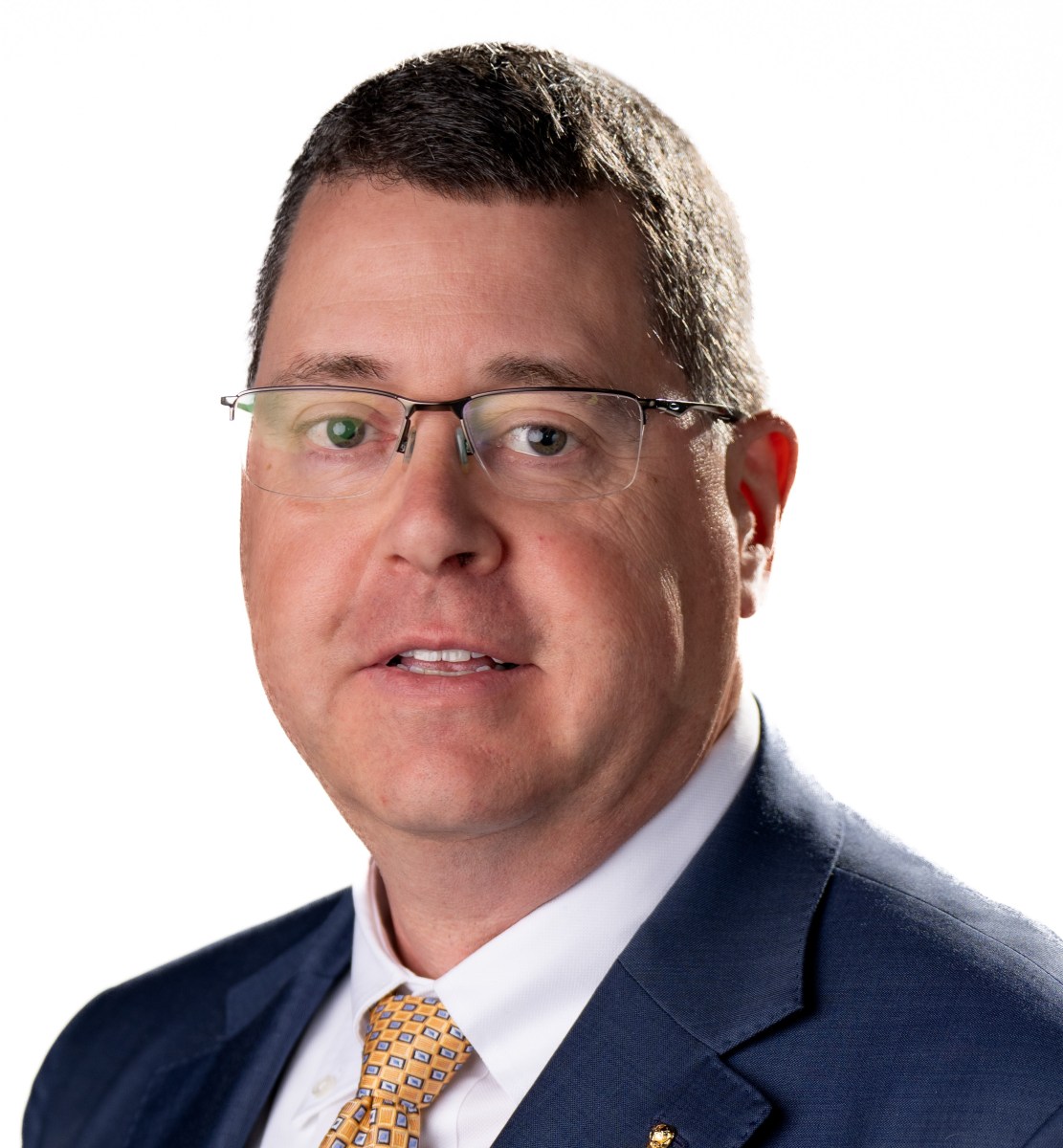
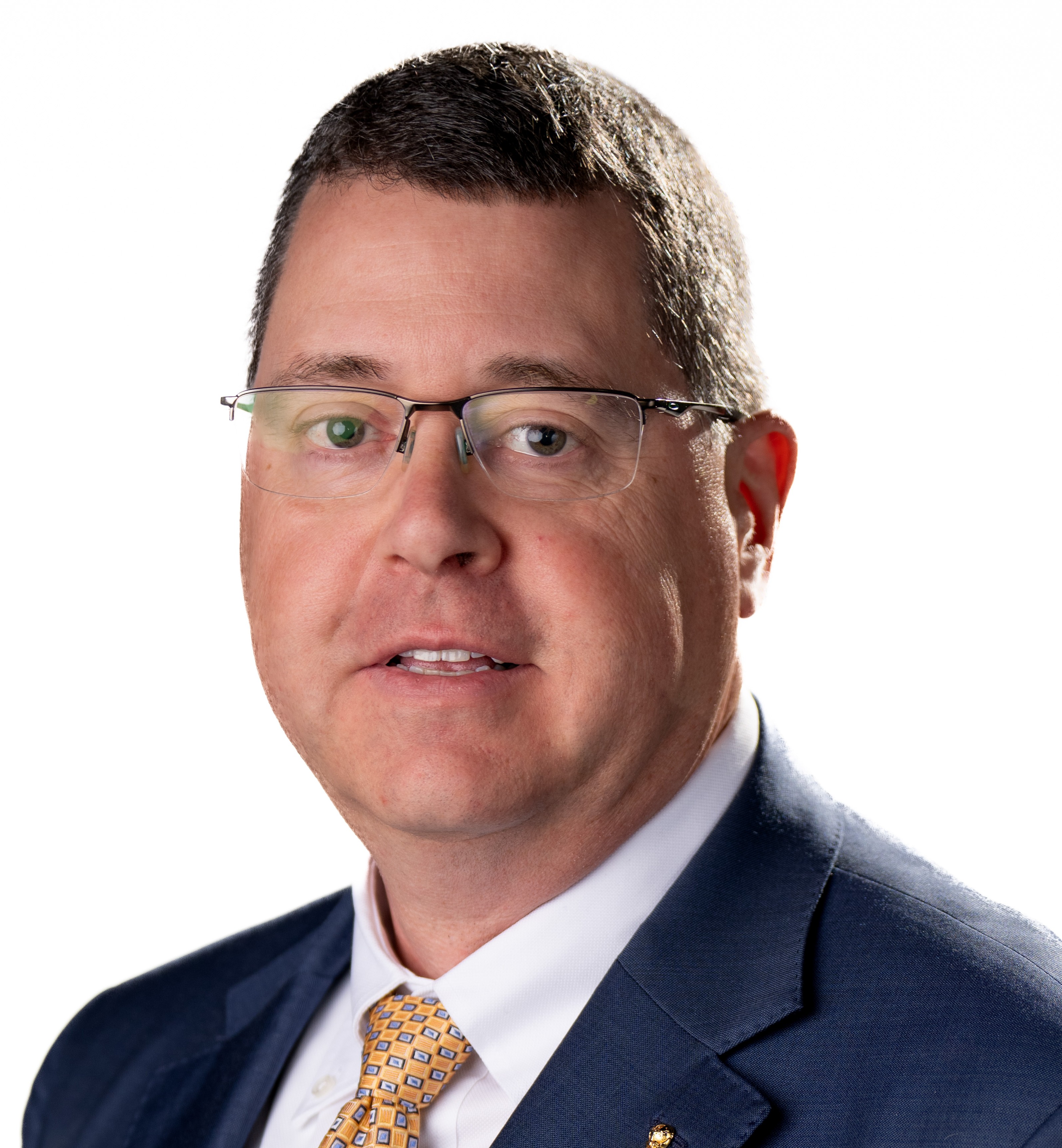
G.B. Jones is the Chief Safety and Security Officer for the FIFA World Cup 2026, where he is responsible for leading safety and security, access control, accreditation, medical, and emergency preparedness planning for the FIFA World Cup 2026 and its test events.
Prior to joining FWC2026, Jones was the International Security Director for the National Football League, where he led security planning for the NFL’s international markets, including the games in London, Germany, and Mexico. He retired from the Federal Bureau of Investigation in May 2019 after 23 years of service, where his assignments included directing counterterrorism programs for special events, aviation security, and maritime security. He was a sworn law enforcement officer for more than 31 years and has experience as a municipal police officer, deputy sheriff, Minnesota State Trooper, and FBI Agent.
CTC: You bring a unique set of skills to your role as the Chief Safety and Security Officer for the FIFA World Cup 2026. You spent 23 years with the FBI, during which time you served in various CT leadership roles, and also as the Unit Chief of the Bureau’s Special Events Management Unit. Prior to your current role, you were the NFL’s International Security Director. How have your prior roles prepared you for your current position, and what are some of your most memorable and meaningful moments from your career?
Jones: My professional career started about 35 years ago, but my preparation started earlier than that. I was very active in Scouting growing up; I was an Eagle Scout. The motto of the Boy Scouts is ‘be prepared,’ and that is the motto that has best informed my career. It’s all about preparedness. It’s all about doing the right thing, about being ethical in what you do, and looking out for others. So, the preparedness theme and the service theme really go hand in hand for me. My folks were very much community service-focused and service-oriented. They worked in the private sector and in the volunteer and nonprofit sector. They weren’t in public safety, but I learned about service commitment very early on at home.
When I was 19 years old, I began policing. I hadn’t been to the police academy yet; I was in college. In fact, at the time I was working part-time as a security officer at my university and then was licensed as a part-time peace officer. At 19 years old in Minnesota, I couldn’t buy my own bullets, so my mom bought my bullets, the department gave me my gun, and I went on patrol. Still hadn’t been to the police academy, but I started policing my hometown. I did that as a city police officer and as a deputy sheriff. Ultimately, I graduated from college and went off to a police department in an exurb of Minneapolis called Elk River, Minnesota. I did that for about three years and then became a Minnesota State Trooper. During my time with the State Patrol, I encountered a guy who was a retired FBI agent. He worked at the local courthouse. We had a really good, deep conversation about what service meant at the next level. That led me to apply to the FBI, and in 1996, I was hired as a special agent.
I was sent right back to Minneapolis out of training and did my first five years there. During that time, I became the case agent on a top 10 fugitive case on Andrew Cunanan, the guy who shot Gianni Versace in South Miami Beach. I was six months in the Bureau, and I thought, ‘As a brand new agent, I’ve already peaked. What else is left for me?’ But five years later, I found myself as the acting supervisor of the International Terrorism Squad in Minneapolis. And we made the decision to arrest a guy named Zacarias Moussaouia three weeks prior to 9/11 and spent the next three weeks trying to convince FBI headquarters that we had a no kidding, real-life terrorist in our custody. That was met with deaf ears, really, at FBI headquarters. They insinuated, ‘You’re Minneapolis. Nothing ever happens in Minneapolis,’ and we experienced a number of obstacles that ultimately led to some very trying and troubling times. But those trying and troubling times reinforced for me what doing the right thing was: keeping detailed notes, talking about threat and risk in a way that resonates with people to try to get their attention, and then ultimately acting with conviction on those things that are really most important to you.
9/11 was a trying and very personal time for me because I was leading, for the first time ever, an international terrorism case with a squad of young agents, all of whom had really good depth in international terrorism despite their young age. All of them were veterans and had worked in foreign countries prior to 9/11 and understood what the threat was. But again, they were up against this machine that was FBI headquarters, that didn’t allow us to really move forward with our case. So, there were several formative things that happened in my early career that led me to this service, that led me to threat and risk, that led me to planning, communication, integration with the interagency, and cross-talking preparedness operations up to and through operational delivery.
CTC: What are the primary threats that you’re tracking and prioritizing as we head into this summer’s World Cup?
Jones: Folks ask me what keeps me up at night, and I often tell them, ‘It’s just easier not to sleep, because it’s everything.’ It really is all the threats that I’m concerned about. One of the biggest threats that I encountered very early on—and this is not so much a threat as it is a challenge—is within the United States, there’s a bit of hubris that goes with special events. We have big agencies and experienced stadium teams, and they often say, ‘We do big events all the time. We got this.’ But what we’re asking them to do now has such intensive resource demands over the course of 40 days that the sustainability of resources is going to really be called into question.
We’re going to do 104 matches in 16 cities in three nations in 39 days. It’s the largest sporting event in the history of the world. Nothing like this has ever been attempted before. There are no models out there. In fact, when I took this job, there was no handbook despite FIFA’s 100 years of doing the World Cup. And the reason there is no handbook is every time the World Cup is delivered, it’s done in a different location, it’s done with a different geopolitical landscape, and it has to be cast almost from scratch. Now, there’s a general framework and we know what has worked well in the past for FIFA World Cups, but you can’t even look at Qatar 2022 as an effective framework for what we’re doing here. It’s a state that is run by an emir. It’s got one Minister of the Interior that controls all of the domestic police services. So, if you need 15,000 cops, you call one guy, you get 15,000 cops. In the United States, there’s 18,000 police agencies, 50 percent of which have fewer than 10 officers. So, if I need 15,000 cops, I have to call 18,000 chiefs and ask them to send one or two. And their first question is, ‘Who’s going to pay for this, and where’s the equipment going to come from? Who’s going to transport them?’ So, resources is probably one of the biggest challenges we have—this hubris of ‘we do big events all the time’ followed by the resource and demand challenges.
Additionally, we’ve got threats of international scope and scale. The geopolitics of the day certainly are influencing what we’re doing in terms of planning. When some people approach special event planning, they take a look at a perimeter, and they’ll protect that perimeter with guards, gates, and guns. They think their planning is done. That’s not what we’re doing here. We can’t afford to do that here. We know that at some point, guards, guns, or gates are going to fail. So, our level of planning goes into the resources and the responders and the relationships that are going to be leveraged when those guards, gates, and guns fail. It doesn’t matter to me what the threat is, as long as we’ve got the right people in the right places who are already connected, they will be able to sort that issue out, solve it, and move on. And importantly, the way that we do our planning is victim-centered. How are we going to treat the people that are going to be impacted by this event? And do we have the resources to help them recover as quickly as we can? It’s that resilience piece that really is important, because the victims are the ones that are going to be judging how well we did if an incident occurs.
If you just want to go to pure threat, of course there’s always the hostile vehicle mitigation that we have to worry about because of vehicle-borne threats. There’s drones and counter drones as the newest emergent threat. The geopolitical threats and risks of the day, counterterrorism, counterintelligence, cyber, criminal, WMD, all of those things are hugely impactful to us. Transportation capacity to me is a huge threat. Just this weekend, I was flying home from Huntsville, Alabama, where I was at the FBI’s new counter-UAS training school, and I was passing through Atlanta. A weather delay of three hours led to a flight cancellation, and cancellation of 200 other flights, and now all of those people were displaced into the Atlanta area with no place to stay, with no flight guarantees going out the following day. The capacity of our aviation system is stressed to the max on a blue sky day. What happens when you introduce another five million people that are travelers to the United States to go and see the World Cup, and you’ve got weather delays, hazardous weather of any kind, you’ve got this transportation infrastructure threat and the inability to move large numbers of people in a short period of time?
And in a broader geopolitical context, we’re certainly very concerned about things that are happening overseas. That does have an impact on the World Cup. The World Cup is the world stage, and it is a microcosm of everything that’s happening in the world. Because 48 teams, for the first time ever—the largest field ever—are represented in the World Cup. Those 48 teams don’t check their politics at the door. They don’t leave their issues at home, nor do their fans. Those issues that have to do with each of those countries tend to follow where those fans are. And that’s not intended to be a negative spin or a connotation. It’s not a threat. It’s just the real context. This is religion, politics, nationalism, civics—all of this is in soccer, and that’s what travels with our soccer fans.
And then, of course, when we talk about international football, we talk about fan conduct and we talk about some of the challenges that may come with some of these spirited fans. I have heard the term ‘hooliganism’ in the past; I really shy away from that because hooligans were really just a very small set of people who were defined in the late ‘80s as people that were particularly focused on violent criminal activity in the context of soccer. It wasn’t that they were soccer fans who happened into some activity. They were violent criminals that targeted soccer matches. So that’s different than what we expect to see at the World Cup. What we’ll see at the World Cup are passionate fans who are spirited, focused, nationalistic, patriotic, and almost religious in their following of their teams. They’re not criminal or destructive or violent unless different conditions [arise] that are consistent with any crowd dynamic, not just an international football dynamic.
There’s a whole world of threats out there, and the way we’re trying to approach that is by looking two and three magnitudes into the threat and ensuring that we’ve got the resources, the relationships, and the responders to respond to whatever the threat is.
CTC: You mentioned the threat posed by drones, particularly small drones, and this is an area where you have a great amount of experience. The threat from small drones is a serious and evolving problem. It’s a problem that you dealt with at the FBI and at the NFL. And I understand that you’re also a drone pilot. In your view, when it comes to large events, how has the drone threat evolved, and what does it mean for FIFA World Cup 2026?
Jones: The drone threat continues to evolve, and it’s been an existent threat since at least 2005. That was my first introduction to drones and what drones were really capable of doing. We were planning for the presidential inauguration, and I did a red cell meeting with some government partners while I was still working with the FBI, to understand what that threat looked like. The discussions kind of faded away; they were always present there, but they faded away in the context of special events until as many as 10 years later.
One of my colleagues, Cathy Lanier, has stayed on this threat the entire time because she was in the position of police chief in Washington, D.C. And so, she was really attuned to what those issues were and how they could impact special events. In 2020, when I joined the NFL, Cathy and I had some conversations about drones and drone threats. Prior to my time there, the NFL believed that drones were bad, full stop. That was it. That was the NFL’s position. We didn’t want anything to do with it. But by the time 2020 came around, drones were being used for commercial applications and for good as well. And so, we made a very conscious decision to try to embrace the good and the utility in drones; at the same time, we were balancing keeping bad drones out of the airspace. So, we created a way to integrate drones for good into special events, really understanding the airspace domain. It was unique to the NFL. We were a private company. We had no authority or standing to be able to do this, but the brand, the shield of the NFL, is pretty strong. And when we were partnering with the teams and the broadcasters and the commercial partners that wanted to fly drones in this space, they would listen to what it is we had to say because we were establishing a new landscape in the drone space.
We created a process whereby if a commercial drone operator wanted to fly, we would ask them where they wanted to fly, how high they wanted to fly, and what they were going to fly. We would vet the pilot. We would vet the registration on the aircraft. We would vet their history and make sure that they had appropriate emergency procedures and insurance and some of the other pieces to make it happen. Then we would integrate them into the drone airspace. We would whitelist the good guy drones, and then we could discern between the good guys and the bad guy drones.
Understanding how you can leverage this technology for good enhances our situational awareness, and we can use drones of course for broadcast and commercial purposes as well. But we have to offset that with the rogue drones and the damage that can be done from bad drones. So, airspace domain awareness is really the thing that is most important with this emerging threat. And the NFL, and now FIFA, are leading this airspace domain awareness effort as private entities, bringing the government authorities and commercial partners to the table to talk about what the threat is, how to control against that threat, and how to build in some layers of protection, even while we’re trying to leverage this new technology.
CTC: If we can pull on the thread a little bit on airspace domain awareness, can you help our readers understand the counter-UAS aspect of that? How are you approaching that, to the extent that you can share? It’s long been discussed how different C-UAS approaches have various strengths, but there are also different types of limitations and different trade-offs that first responders need to consider when thinking through their counter-UAS framework.
Jones: We have seen more traction in the counter-UAS space in the past year than we have the previous eight years. A lot of that is thanks to the leadership from the White House, from DHS, from the FBI, and other key private sector partners like the NFL, Major League Baseball, Commercial Drone Alliance, Association for Uncrewed Vehicle Systems International (AUVSI), and other industry partners. These groups have all coalesced around the fact that this is a threat, and we can do something about that.
The biggest gap we had was the expansion of authorities into the hands of state, local, tribal, and territorial law enforcement so that they could enhance the capabilities of the FBI and DHS and those federal partners that had this unique counter-UAS mitigation authority. I advocated for—and have been for several years, as has Cathy Lanier, as have some others in this space—expansion of this authority in a really thoughtful way. There were some great models we reviewed. For instance, all bomb technicians in the United States, public safety bomb techs, are trained at the same schoolhouse. It’s at Redstone Arsenal down in Huntsville, Alabama. It doesn’t matter if you’re an LA cop, an NYPD cop, or an FBI agent, you go through the same schoolhouse. You’re learning the same equipment, you’re learning the same procedures, and you’re learning the same language so that you’re truly interoperable. What that does is not only level up an individual capability, but it grows collective capacity across the country so that we can lift and shift bomb technicians wherever we need them whenever there’s an issue.
I have been an advocate for a long time of doing exactly the same thing in the counter-UAS space: Have a centralized schoolhouse that teaches people the same procedures and how to utilize the same equipment so that today it’s the FIFA World Cup as a potential event, but two years from now it’s going to be LA28 [the 2028 Summer Olympics in Los Angeles, California]. If we’re going to get state, local, tribal, and territorial cops smart on this threat and how to mitigate this threat, and then we’re going to use federal funds to equip them to address this threat, we should do so in an interoperable and thoughtful way so that while we’re building individual capacity in individual cities, we’re building this collective capacity across the nation to be able to address not only special events, but counterterrorism response, criminal incidents, natural disaster response, and other incidents and events.
I think we’re absolutely on the right path right now. I think we have a long way to go because although this authority is now extended to state and locals, they have to be trained at a single schoolhouse that only has a finite amount of capacity to train them. And then they have to roll out with only two weeks of training and work in this really, really complex world. And there’s probably no place more complex in the counter-UAS space than in urban, high radio frequency, GPS-denial locations where threats in and around stadiums have to be addressed without impacting legitimate technology and operations in the stadium environment.
CTC: You mentioned the expansion of authorities to state, local, tribal, and territorial for drone mitigation. That was further enabled by the Safer Skies Act and the passage of that last fall here in the United States. What does the authority landscape look like in Canada and Mexico, in terms of their ability to provide a broader collective coverage of C-UAS mitigation authorities? Is it similar to the United States? Is it different?
Jones: It’s similar to what the U.S. was prior to the passage of the Safer Skies Act. Canada and Mexico both have primarily federal mitigation authority. In Canada, the Canadian Armed Forces are the ones that, by statute, have the responsibility for mitigation, but they have an ability to implement that mitigation authority through a partnership with RCMP.b And RCMP can actually operationalize that over special events. But it’s primarily a federal responsibility. In Mexico, it’s very much the same thing. It’s the military forces in Mexico that are going to help us with that counter-UAS capability.
Now I’m very pleased to say that Canada, Mexico, and the United States trilaterally and collectively are really on the same page in terms of how we’re going to mitigate and what they’re going to do to protect the World Cup. We have two people in our organization that are airspace security specialists who were hired particularly for this purpose. When I was with the NFL, I had that as a collateral duty on top of my regular day job, and it was an emerging area of coverage that needed a lot more attention. So here we actually built a deliberate airspace security team that is focused on building the right relationships with government partners to ensure we have consistency and thoughtful integration of counter-UAS measures across the entire tournament footprint.
CTC: If we can switch focus a little bit, there’s been a lot of discussion over the last couple of years about issues surrounding misinformation and disinformation. How might that shape or skew perceptions of events related to the World Cup and especially security incidents, and how do you plan to manage those challenges?
Jones: This is a significant issue, and it’s really an emerging problem with the advent of AI. We just lived this with the fallout in Guadalajara and Jalisco in the wake of the death of El Mencho. AI-generated images and videos, news stories, and content painted this horrible picture of what was happening in Mexico. And fortunately, we had boots on the ground. We had connectivity to the Mexican government as well as to the U.S. government, who have folks in Mexico that we’re operating with and interacting with on a regular basis. Even after the authorities regained control, though, the misinformation persisted and people had this perceived concern that Mexico was devolving to violence from which it would never recover. We had to get ahead of that. We did get ahead of that as quickly as we could, and we were messaging out, ‘We support the Mexican government and what it is they’re doing.’ And we knew that they supported us.
The government of Mexico is treating the World Cup as not only a matter of national significance but one of national pride. This is the third World Cup they’ve hosted. They have a lot of skin in the game here, and they’re not going to be overrun by thugs and criminal groups that are going to take that celebration away from the Mexican people. It’s nearly impossible right now to assess what is fact versus fiction within social media and AI-generated content. But what we’re trying to do is leverage our intelligence unit to understand what is really happening on the ground, to identify those sources of truth and have those verified sources of truth available to the folks that are paying attention to what’s happening with the World Cup.
When we built the intelligence apparatus here, I very deliberately told our team, ‘The focus of your attention is not on counterterrorism, counterintelligence, transnational organized crime, cyber, all of those things that public sector partners are focused on. Our focus is on soccer intelligence. What uniquely do we do to add value to the intelligence community in Canada, Mexico, and the United States about what soccer culture is, what fan culture is, what the teams are, and what we’re seeing around the world as it impacts the World Cup?’ So, we are very narrowly focused on soccer intelligence that is going to level up all of our partners. And we pass our soccer intelligence through all of the normal channels: Fusion centers at the state and local level, through FBI, through DHS, through RCMP Intel, through the Center for National Intelligence in Mexico.
And then we also have a tremendous number of private sector partners, many of whom have their own global security operation centers, and we’re leveraging them to say, ‘Hey, just add hashtag World Cup to what you’re already collecting to protect your brands and your personnel in your companies and to add value to what our sponsors and our partners are typically collecting.’ So, we are focused on leveraging personal relationships and professional relationships on the private side and on the public side, to understand what the landscape is and to push out vetted intelligence to level-set people on where the truth lies.
CTC: You mentioned the killing of El Mencho. The recent killing of El Mencho, the leader of the Jalisco New Generation Cartel (CJNG) in Mexico, sparked a violent reaction by CJNG members in various locations across the country. It forced the closure of Mexican airports and pushed the U.S. Department of State to issue shelter-in-place guidance for American citizens in the country. The event showed the influence of the cartels and the ability they have to cause widespread disruption. How is FIFA preparing for this challenge, and does it pose any unique insider threat concerns?
Jones: The Mexican government has been planning full-time for the World Cup for at least three years. I’ve met with them a number of times during those three years. National Guard leaders have reviewed—I was really struck by this—every historical incident and issue with respect to international soccer tournaments. They’ve sought input from crowd management specialists and behavior assessment personnel to understand crowd dynamics and threats, and they’ve conducted really, really good and extensive training and drills. So, they are taking this extremely seriously. And again, as I mentioned at the outset, they’re treating the World Cup as a matter of national pride and national significance. So, they’re all in. They’re proud, they’re skilled, they’re really working hard. What they may lack in some technical expertise, they’re either making up for in education or they’re making up for in the dispatch of personnel to cover down on the threats.
When I was working for the NFL down in Mexico, the Mexico City Police Department provided 1,500 Mexico City cops outside the stadium and 1,500 cops inside the stadium. We don’t see anything like that anywhere in the United States. And just that officer presence has a huge impact on dissuading terrorism and criminal threats from emerging, certainly at those centers of gravity like the stadiums. The Mexicans are also working really, really hard with bilateral and trilateral partners. I was there recently in the context of counter-UAS with Canada and with the U.S., talking about counter-drone threats and how to better position Mexican authorities, Canadian authorities, and U.S. authorities to share information on drone threats and mitigation strategies.
Insider threats are a challenging problem no matter where you are. This isn’t limited to Mexico. But this is why we have a really robust background and name check process to try to vet and validate all credential holders across all three countries. We have an integrated name check process that connects to the Mexican authorities, the U.S. authorities, and the Canadian authorities. So, anybody who applies for a credential to be any part of the World Cup—if you’re a vendor, if you’re a staff member, if you’re a player or a referee, anybody who’s coming into the World Cup, who’s going to be credentialed into a space for greater than public access—they’re going to be reviewed through a government name check process.
CTC: As any of us who have watched this event over the years knows, you’re going to get thousands of fans who show up to a city, who don’t have tickets to the game, but are just there for the good time. How do you think about those challenges? I imagine a lot of it’s related to what you just said, particularly liaising with the member organizations from the various countries.
Jones: Again, a lot of what we’re doing to focus on this is education: education of our law enforcement partners, our fire and EMS partners, homeland security partners, and private sector partners about what fan culture really is. There’s a very real distinction between club football fans and national football fans. If you think of the club fans: Messi plays for Inter Miami, that’s his club team. He’s an Argentinian, though. When it comes to the World Cup, he plays for Argentina. And the passion that runs in club football, with history that can be a couple of hundreds of years old, is really very specific to their club. We see a lot more nationalism and civic pride in the national team matches and less of that really directed passion that we see in the club matches. So, you should think of a World Cup game as more of a corporate event, if you will, or more of a family event than what you would see maybe on a Saturday night during a high-stakes club match anywhere else in the world. It’s a different dynamic. We’re trying to educate all of our stakeholders on how that is different.
I’ll give you probably the best example that I found that resonates with folks, which is the difference between the World Cup and a traditional NFL game: On a Sunday, when you go to a regular season game up at MetLife Stadium, 90 percent of the people that are going into that game are season ticket holders. They’ve waited an entire generation to get those season tickets from their parents before them or their grandparents before them. There are already guardrails around their behavior because they’ve waited for those tickets and they don’t want to lose them. They show up four hours early because they tailgate. They park in the same spot, they go in the same gate, they sit in the same seats. They don’t need wayfinding information. They don’t need any additional information about what to do, because this is culturally appropriate for what they’re doing every given Sunday. The NFL’s best practices for safety and security are built around that fan. It’s 100 years of the NFL experience. You can’t take those best practices and lift and shift them over to the World Cup and have them align 100 percent because all of the assumptions are wrong. The international traveler may never have been to the United States before. They certainly haven’t been to that stadium before. They don’t know about this thing called tailgating because that’s not part of the international soccer culture. So, they will stay at the bars and the restaurants until 30 minutes before kickoff, and they’re going to rush the gates, expecting to be in to hear their national anthem played in a stadium that’s not theirs in a country that’s not theirs. So, our model calls for 70 percent of the capacity of the stadium arriving in the last hour. That’s different than planning for the steady flow of people that have trickled in over four hours at an NFL game. And when the soccer fans get into the stadium, they may not even sit in their assigned seats. They’re going to migrate behind the goals where the most spirited and passionate fans are because they want to be a part of that support for their team. There are fewer guardrails around their behavior because they’re not afraid to lose the season tickets. They don’t have them, right? They’re there for a single day.
It’s about understanding that fan and that fan culture. It’s the intelligence and information sharing that we’re offering to our partners here to help them better prepare for that traveling international fan. We need better signage. We need more wayfinding. We need multi-language wayfinding and engagement with folks. We need active engagement with the organized supporter groups so that they know what our expectations are, what we will and what we won’t allow at a North American stadium that are going to be different than their home stadiums. All of these things are important to managing that boisterous fan, if you will. But it’s cultural awareness, and it’s this emphasis on safety, security, and service.
With respect to safety, security, and service, the safety and security cases are pretty much foregone conclusions. Safety is essential to everybody’s enjoyment of the game. We don’t want to send people off to the hospital and have them miss the game. For that, we’re planning to do a lot of treatment up to physician-level care in the stadiums so that we’re not overburdening the local community health system. If someone is injured or ill after traveling to see one of our events, we’re going to patch them up with hopes they can return to watch the match. They’ve traveled a long way. We want them to go and enjoy the game. Security, of course, is ever present and an important component. But safety and security are both enhanced if you have a better customer service experience. The more you can engage with fans ahead of time, share information and expectations with them, provide them support via wayfinding in their native language, provide them information about where we want them to go and what we want them to do, the better you have a safe and secure experience. And so, it’s that customer service ethos. It’s leaning into it; it’s meeting somebody with a smile when you’re the very first security guard they meet to set the tone for their day. If we are approachable and if we are service-oriented, we’re going to get more information and intelligence that’s going to enhance safety and security as well. Safety and security have to work in concert with service, and that’s the mantra that we have. That’s the model that we have. That’s the vision that I cast early on for our team to fully understand. This isn’t about a security event with a little bit of a soccer ethos. This is a sporting event that’s got a security overlay to it. And so, it’s got to be service oriented, service focused to enhance our safety and security overall.
To enhance that further, we do a lot of training. We do supporter engagement and understanding, and focus a lot on fan communications. One of the ways that we enhance the awareness of culture and what the fans are doing is we consolidate the efforts of international police officers, or National Football Information Point (NFIP) officers, in an International Police Cooperation Center (IPCC). And for this tournament, it’s going to be just outside of Washington, D.C., so that the IPCC is a source of truth and understanding of the culture of different traveling fans. That information can be pushed out by the cops that police those fans on a regular basis to the host city police that are charged with policing them during the World Cup.
Then lastly, we talk a lot about crowd management versus crowd control. You don’t want these external forces on crowds to try to tell them what to do. You want that control to be done organically from within. By establishing dialogue with the leaders or liaisons of the supporter groups, we can work together to achieve common goals. They want to celebrate their teams and show their spirit, and we want to facilitate that safely within the parameters permitted by authorities.
CTC: You’ve mentioned already the various ways in which the World Cup this summer will be unique. It’s happening in three different countries—the United States, Canada, and Mexico jointly hosting the games—matches at 16 different venues in those three nations, including in 11 U.S. cities. How are you and your team working to shrink the problem and manage the complexity of the task? It seems pretty daunting.
Jones: It certainly is daunting, but it’s not insurmountable. We leverage what all of our networks know. And those of us that are working with this problem set have done large-scale special events before. Never anything of this magnitude, so we go in with our eyes wide open. But one of the first things we did was we spoke to each of the host cities and we spoke to each of the host nations, and we asked them what they do when they plan for a major special event. And we knew a number of models that worked in the United States; NSSE [National Special Security Event] models typically have a committee structure with a bunch of subcommittees underneath them, and they’ll focus on particular areas as they do their planning. It turns out almost everybody has a planning model that has some similarities when it comes to the major special events. They’ve got certain things that they focus on.
So, what we did in those conversations was we identified 18 areas of planning that were common to each of the host cities and each of the host nations, and we built a common plan around those 18 areas. In concert with subject matter experts from each of the host cities and host nations, we wrote a specific definition for what each of those 18 areas meant. Once everyone agreed to the common definition, we identified six or eight strategic objectives for each one of those 18 areas of focus. It may be ‘create a crisis communications plan that is specific to your area.’ They were fairly broad and strategic, but what that did was it created a foundational document for us called our Safety and Security Concept. The document identified the 18 validated definitions that everyone could anchor on and six to eight strategic objectives in each of those 18 areas of focus that each of the host cities agreed to deliver. With that foundational product, we are able to hold everybody accountable to the same standard. That becomes our foundation that we can always level up from, but we can never go below. If another city wants to layer on something on top of that, they can do that. But at a baseline, we wanted to ensure that everybody could deliver this safety and security concept at an acceptable level across the entire tournament footprint in a consistent way.
In addition to those 18 areas of focus, we also had six areas of focus that were federal in nature, and we got the federal authorities to coalesce around those definitions and the strategic objectives there as well. That created a framework around which we could start to do our planning. FIFA focuses on those FIFA areas, and we do much more tactical planning on the things that happen from the stadium outer security perimeter in. The host cities have a responsibility to work with us on those stadium sites, but they also have a broader responsibility for public safety and transportation security and fan march security and the areas outside of the stadium. So, with this foundational document—the safety and security concept—we then put a planning guide together that fleshed out how to implement the concept. We wrote a handbook that also identifies what our expectations are, and we’ve shared that with each of those cities.
So, shrinking the problem by building consistency into our overall framework was part of a deliberate strategy. It is important to me that teams and traveling fans have the same experience in Guadalajara, Mexico, that they have in New York. They experience the same things that they can take into the stadium in Vancouver that they can take in in Miami. We’re not creating 16 World Cups. We’re creating one World Cup with 16 really unique flavors from each of the contributing host cities.
CTC: You mentioned before some of the challenges with funding, particularly for state and local agencies, and this has been a bit of a topic of public discussion in the last month or two. What role does FIFA play in helping those agencies work through those challenges?
Jones: Our role has really been one of endorsement. We recognize that the subject matter experts for special event planning in each community reside in their communities. So, if a host city or a host nation is asking for something from their funding authority—be it their city council or from Congress—we certainly are quick to endorse them and say, ‘They’re the subject matter experts. We fully support. Whatever they’re asking for, we think it is useful in terms of the World Cup.’ We’re very careful not to ask for funding from government sources. That’s not our responsibility. Our agreements principally are with the host cities and with the stadiums under the contractual agreements that go with the bid process. They are on the hook then to deliver those resources that they’ve agreed to contractually. That’s where the public funding comes in. So, we’re very much aware of the public funding. We’re very much concerned about ensuring that the public funds and privately raised funds, which are also a part of the bid process, are sufficient to be able to support the safety and security apparatus. We’re not out soliciting for those funds, but we do lean our shoulder into it.
I will talk to anybody anywhere about what our plans are. Particularly, I spend a lot of time at Congress talking to them about our plans and how they work because I know that educates them about the exposure that we have to certain threats and risks that they’re in a position to help mitigate through funding. So, we’re full partners with the host cities and the host nations in their quest for funding. But we’re careful not to be asking for it because we do that through different mechanisms, including the bid process.
CTC: What are the primary lessons that you and your team have drawn from prior World Cups and other notable large events, recognizing that every World Cup is different? We just had the Summer Olympics in Paris, the recent Olympic Winter Games in Italy, and the Super Bowl. What are the most unique aspects of this event that will require new approaches and solutions for you and your team?
Jones: There are a couple of incidents that I reference for all of our new people, and for all of our safety and security leaders, to really fully understand and unpack in preparation for what we’re doing. One is the 2020 Euros final that was played at Wembley Stadium in 2021, subject of “The Final: The Attack on Wembley” on Netflix, which is an interesting show to watch if you haven’t seen it yet. It is interesting to help understand fan dynamics and the impact they have on special event planning. And the other is the 2022 UEFA Champions League final at Stade de France in Paris. Those were both major international soccer events, both of which narrowly missed historic calamity. They were real near-misses with potential for tremendous negative impact and perhaps even loss of life because of the way the challenges unfolded and the way they were managed. So, our focus is on the lessons learned and takeaways from sporting events that are closest in context to what we are planning—international football.
A couple of takeaways from the 2022 Champions League final included a lack of dynamic risk assessment and redeployment of personnel to effectively protect the safety and security of supporters. As I talk about the differences between the NFL and what FIFA is trying to do, I talk about the difference between best practices planning and dynamic risk assessment. The NFL uses best practices planning based on 100 years of experience with NFL fans and games. We have to approach planning by leveraging dynamic risk assessment because so much changes with each of our matches. For example, we’re looking at each one of the teams individually. There’s a team threat profile that goes with each team, just as they stand alone in isolation on a blue sky day. When they meet another team, that dynamic changes, and every meeting is different. So, every match is assessed individually, and two days before the match, each of the partners that we’re working with will get a match risk assessment that tells them historically what’s happened when these teams have met. If they’ve never met before (which is happening quite a bit in this tournament because we’ve got such a big new field), we will assess what has happened in other matches that they have played around the world. Every time they play, there’s a different match risk assessment. When they play in the course of the tournament matters because in the group stage, there’s less at stake because they have a guaranteed three games. As they move through the knockout stage and into the final stage, that dynamic changes, so you have to reassess with every match.
Where teams play geographically matters as well, because if there’s a large local diaspora, you must consider the potential for local fans who may descend on the stadium. This is exactly what we saw at Hard Rock Stadium in July of 2024 when Argentina and Colombia were playing. It wasn’t 150,000 traveling Colombians that came to Miami that put pressure on the gates. It was some of the 150,000 that already call Miami home. One of the big takeaways is you’ve got to be changing that risk assessment with every match, with every day, and throughout the course of the tournament. So dynamic risk assessment is one way we’re controlling for that.
In that same ‘22 after action report, UEFA, which was the organizing body, was found to have not provided clear oversight of the planning.1 They weren’t really focused on interoperability. They didn’t study the communication strategies. They didn’t fully account for the integration of public and private resources. It was seen as basically a policing event and then the UEFA soccer event. One of the things that came out of this after action was that UEFA’s safety and security department was revamped; it got new leadership, it got more resources, and they became the ones that are now the final arbiters of the safety and security plans for all of the UEFA tournaments. They are excellent partners, and we have worked with them and shared with them and learned from them. This is the value in the international networks.
I have taken that same book and said, ‘Look, FIFA at the end of the day has to be the one that owns the safety and security process for the World Cup.’ We have three different national governments that are participating here. No one government has oversight of the entire footprint. So even as a private partner, FIFA has to be the one that’s laying over the top as the honest broker, ensuring that we’ve got all of the resources necessary from the public and the private side to fully integrate on private security and public law enforcement, fire, EMS, homeland security across the entire footprint. So, we have a much larger role than historically we’ve seen in World Cups. Formerly, a single nation, which is accountable to a single national authority, has been the lead safety and security planner for the World Cup. With the 2026 World Cup, FIFA must be the entity to knit together those federal governments as well as the host cities to make sure that what is delivered meets our FIFA international standard.
CTC: Pulling together all the complexity that we’ve talked about, how is FIFA leveraging technology to assist its efforts in this regard? Whether it’s integrated use of artificial intelligence or other technical tools that might be available now that maybe haven’t been at past events.
Jones: Technology is a huge enabler to what it is we’re doing. And one of the things that we are focused on to minimize training and to maximize the impact that we have at each one of the stadiums is leveraging the technology that’s already in place at the stadiums. So, if we’re going to increase the perimeter and we need more screening systems, we’re using the same screening systems that the incumbent stadium is using to ensure that we don’t have to retrain everybody in a brand new system. But many of those systems are cutting edge, and we’ve evaluated all of those to make sure they are well suited to our needs. Many are AI-enabled screening systems, for instance, with some of the best-in-class technology. The stadiums in the United States are living, breathing laboratories for security technology, and many of them are early adopters of technology. So, we’re leveraging some of that.
We do have a commercial partnership with Lenovo that is helping us with an AI integration that brings several data feeds into a single interface for our tournament operation center so that we get real-time updates on ticketing data, on access management data, and on the status of other critical systems and operations. So, every time the turnstile spins and somebody comes in, that feeds into a system that is all aggregated together and enhanced by AI so we can track how quickly people are coming in as well as wait times, dwell times, and other key metrics. We know if there are faults at the gates. We know if there’s a backup at a gate. And we can use that situational awareness to be more responsive to operations.
We’re using AI also in some of those threat and risk assessments to ensure that that dynamic risk assessment fully integrates large volumes of information and produces digestible products that can be shared with our public and private partners, to ensure that the intelligence information is moving as quickly as it can. Now, as with anything that is AI, you still need to have really experienced humans in the loop. We still need good awareness. We need experienced judgment to help with all of this. We are also mapping all of the command-and-control nodes across the entire footprint to know where the centers of gravity for decision-making are in each of the host cities and host nations. This will enable us to leverage those key decision makers through the FIFA Tournament Operations Center for key tournament-wide issues.
This tournament will follow a dispersed decision-making model, so we fully empower the people that are in the venues to be making decisions in the venues. Ninety-five percent or more of the decisions that are going to happen with every one of these matches are going to be happening with the stadium teams and their public safety partners on the ground. They have access to the most current information, the most relevant information, the most complete information. We shouldn’t be making decisions at the Tournament Headquarters in Miami that should be made in the stadiums. We reserve the right to make larger decisions that are going to have a broader tournament impact back at our tournament operation center. And of course, we’ll do that in concert with our senior leadership and also in concert with federal partners in the relevant nations and any local incident commanders who are stakeholders in the decisions.
CTC: Is there anything else that we haven’t asked that you’d like to share with our readers?
Jones: This is an epic challenge. It really is to me the opportunity of a lifetime to take 35 years of experience in fire and EMS, in law enforcement, in federal intelligence operations and counterterrorism operations to work a really interesting problem set. None of this is possible without the networks of networks and the experience that exists around the entire world to make sure that this is delivered safely and securely. Delivery of safety and security with a customer service-oriented focus, I think, is the pathway to ensure that we can achieve the greatest results.
The world is a really challenging place right now. We get that. What I want to see is the delivery of an international football tournament this summer that serves to unite the world. It gives everybody pause, to step away from all of the ills of society and celebrate what can be unity and power. That’s what the FIFA president means when he frequently says that ‘football unites the world.’ I truly do believe that football can unite the world. And we’re prepared to do exactly that. We want people who are attending the World Cup to enjoy the experience and to be focused on what happens on the pitch. Safety and security should not be the story. An exciting and uniting World Cup is what we intend to deliver so the focus remains where it should be—on the play that will result in awarding the trophy to the 2026 World Cup champions. CTC
Substantive Notes
[a] Editor’s Note: Zacarias Moussaoui, “the only prisoner ever convicted in the United States of having ties to the Sept. 11, 2001, attacks”, … “was arrested in Minnesota a month before the hijackings, which killed nearly 3,000 people in New York, at the Pentagon and in Pennsylvania.” Carol Rosenberg, “‘20th Hijacker’ Is Denied Transfer From Federal Supermax to French Prison,” New York Times, July 31, 2024.
[b] Editor’s Note: The Royal Canadian Mounted Police (RCMP) is Canada’s national, federal, provincial, and municipal police service.
Citations
[1] Editor’s Note: See “Independent Review, 2022 UEFA Champions League Final,” Independent Review Panel, February 2023.
